
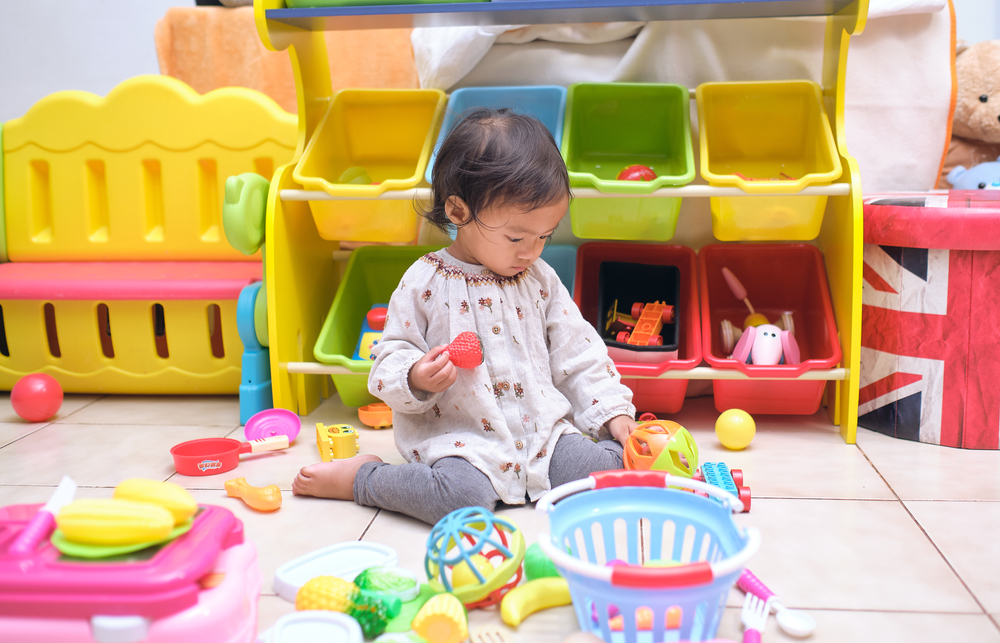
As parents, we are often told about the importance of play. We see our children drawn to it, whether they are stacking blocks, running in circles, or pretending to be a superhero. We instinctively know it’s good for them. But what if we understood that play is not just a way to pass the time? What if we saw it as the single most important activity for building a healthy, resilient, and well-organized brain?
Play is the deep, foundational work of early childhood. It is how a young child’s brain architecture is formed, one joyful and repetitive interaction at a time. It’s not about fancy toys or structured lessons; it is about the simple, instinctual drive to explore, connect, and make sense of the world. Understanding what is happening inside your child’s brain during these moments can shift how you see your role—not as an entertainer, but as a safe harbor and the source of all essential ingredients from which this incredible growth can unfold.
Play Is Not Just Fun. It Is How the Brain Grows.
When a young child plays, their brain is lighting up. It’s an active, dynamic process that is far more complex than it appears on the surface. The importance of play in early childhood is not a new idea, but modern neuroscience gives us a window into just how critical it is. Learning through play is not a passive activity; it is the brain’s preferred method for developing essential skills for life.
From the moment they are born, children are driven to understand their environment and the people in it. Play provides the perfect context for this exploration. It is a low-stakes, internally motivated activity where children can experiment with ideas, test physical limits, and process emotions. Activities that support brain development for toddlers are not about flashcards or apps; they are about giving them the time and space to engage with their world in a hands-on, curious way. Every time your child stacks a block, pours water from one cup to another, or engages in a game of peek-a-boo, their brain is hard at work, building and strengthening vital connections.
What Happens in the Brain During Play
During play, a child’s brain is engaged on multiple levels. The prefrontal cortex, responsible for executive functions like problem-solving and self-regulation, gets a workout as a child figures out how to build a tower that won’t fall. The cerebellum, which coordinates movement and balance, is activated as they climb, run, and jump. The limbic system, the brain’s emotional center, processes feelings of joy, frustration, and connection.
Simultaneously, play releases a cocktail of neurochemicals that make the brain more receptive to learning. Dopamine, associated with pleasure and motivation, surges when a child accomplishes a small goal, encouraging them to try again. Endorphins, which create feelings of well-being, are released during physical play. When play involves a safe, attuned caregiver, the brain is flooded with oxytocin, the “bonding hormone” that wires the brain for trust and connection. This neurochemical environment makes learning not only effective but also deeply relational and rewarding.
Why Repetition, Joy, and Safety Strengthen Neural Pathways
Have you ever wondered why your toddler wants to do the same puzzle over and over again? Or why do they find endless delight in dropping a spoon from their highchair, waiting for you to pick it up, only to drop it again? This repetition is not just a quirk of childhood; it is a fundamental mechanism of brain development.
Each time a child repeats an action, they are strengthening a specific neural pathway. Think of it like walking through a grassy field. The first time, you barely leave a trail. But if you walk the same path every day, you eventually create a well-worn dirt path. In the brain, this is called myelination. The more a pathway is used, the more it becomes coated in a fatty substance called myelin, which makes the transmission of neural signals faster and more efficient.
Safety, curiosity and joy are the secret ingredients that accelerate this process. When a child feels joyful and connected, their brain is in an optimal state to be curious for learning. Conversely, when a child feels stressed, scared, or disconnected, their brain shifts into a state of freeze and self-protection. The learning centers go offline as the survival-oriented parts of the brain take over. A safe, predictable environment and a warm, responsive relationship with a caregiver are what allow a child’s brain to move out of survival mode and into the state of discovery where true, lasting learning occurs.
The First Years Build the Brain’s Foundation
The first five years of life are a period of breathtakingly rapid brain growth. A child’s brain doubles in size in the first year and reaches about 90% of its adult volume by age five. During this critical period of brain development, early experiences have a profound and lasting impact on the brain’s architecture. The interactions, relationships, and environments a child is exposed to literally shape the physical structure of their brain, creating the foundation for all future relating, learning, behavior, and health.
This doesn’t mean parents need to orchestrate a perfect, endlessly stimulating environment. In fact, the opposite is often true. The brain development of children ages 0-5 thrives on simple, relational moments. Toddler brain development, in particular, is fueled by consistency, connection, and the freedom to explore within a safe container. It is the quality of these early experiences, not the quantity of activities, that shapes the brain in the most meaningful ways.
Why Everyday Moments Matter More Than You Realize
The most powerful brain-building moments are often hidden in the ordinary routines of daily life. The way you smile at your baby while changing their diaper, the tone you use when you talk to your toddler as you make breakfast, the patience you show when they struggle to put on their shoes—these are not small things. These are the bricks and mortar of your child’s developing brain.
Each of these interactions sends a message to your child’s nervous system: “You are safe. You matter. You are seen and loved.” When this message is sent consistently, the brain wires for security and resilience. It learns that relationships are a source of comfort and that the world is a generally predictable and manageable place. This felt sense of safety is the platform upon which all higher-level skills—like emotional regulation, social competence, and academic learning—are built. You don’t need a curriculum; you just need to be present in these small, everyday moments.
Serve-and-Return: The Back-and-Forth That Wires Connection
One of the most essential concepts in early brain development is “serve-and-return.” It is the simple, back-and-forth interaction between a child and their caregiver. A baby babbles (the serve), and the parent babbles back (the return). A toddler points at a dog (the serve), and the parent says, “Yes, that’s a big, fluffy dog!” (the return). A child looks at you with wide, teary eyes (the serve), and you scoop them up for a hug (the return).
These seemingly simple exchanges are the primary way the brain wires for connection. Each time you return your child’s serve, you are reinforcing a crucial neural circuit. You are telling their brain, “I hear you. I see you. What you do matters.” This responsive caregiving strengthens the parent-child bond and builds a child’s confidence that their needs will be met. Over thousands of repetitions, serve-and-return interactions create a robust neural foundation for social and emotional skills. They teach children how to communicate, manage their feelings, and form healthy relationships throughout their lives.
Play Helps Organize a Child’s Nervous System
A young child’s nervous system is still under construction. They do not yet have the fully developed capacity to manage big feelings or calm themselves down from a state of high alert. This is where co-regulation comes in. Co-regulation is the process by which a calm, regulated adult lends their nervous system to a child, helping them move from a state of distress back to a state of calm and balance. Play is one of the most powerful arenas for this process to unfold.
Through playful, connected interactions, we can support nervous system regulation in children. The predictable rhythm of a game, the shared laughter, and the physical comfort of a caregiver’s presence all send signals of safety to a child’s developing nervous system. This repeated experience of being brought back to a state of calm by a trusted adult is what eventually helps children learn to regulate their own emotions. This aspect of emotional development in early childhood is often overlooked, but it is fundamental to a child’s well-being.
From Big Feelings to Growing Regulation
Young children experience emotions in a big, all-encompassing way. When a toddler is angry, their whole body is angry. When they are sad, their sadness feels bottomless. They have not yet developed the brain pathways for emotional nuance or control. Play provides a safe container for them to experience and express these big feelings without becoming overwhelmed.
In play, a child can be the roaring lion, the crying baby, or the powerful giant. They can act out scenarios of frustration, fear, or excitement. When a parent joins this play without judgment, they are communicating, “All of your feelings are welcome here. They are not too big for me to handle.” This acceptance allows the child to move through the feeling, rather than getting stuck in it. Gradually, through thousands of these playful encounters, the child’s brain begins to build the pathways for self-regulation. They learn that feelings come and go, and that they have the capacity to manage them, especially with the support of a caring adult.
How Predictable Play Builds a Sense of Safety
Predictability is a balm for the developing nervous system. When a child knows what to expect, their brain can relax its state of high alert and move into a mode of rest and connection. Simple, repetitive games are a powerful way to provide this sense of predictability.
Think of a game of peek-a-boo. The cycle of disappearance and reappearance, always ending with a joyful reunion, is deeply reassuring for a baby. It teaches them on a pre-verbal, nervous system level that separations are temporary and that connection will be restored. Games with a clear rhythm, like pat-a-cake or rocking back and forth while singing a song, have a similar organizing effect. The predictable sensory input helps the child’s body and brain feel settled and secure. This felt sense of safety, built through simple, predictable play, is the bedrock of emotional resilience. It creates a baseline of calm from which a child can venture out to explore their world, knowing they have a safe place to return to.
Movement, Sensory Exploration, and the Developing Brain
For young children, thinking and learning are not activities that happen from the neck up. The brain learns through the body. Movement and sensory play are not just ways for kids to burn off energy; they are essential for building a well-integrated brain. Every time a child climbs, spins, touches something gooey, or splashes in water, they are feeding their brain critical information about their body and the world around it. The benefits of sensory play and physical activity are deeply tied to cognitive development.
Physical play for toddlers, whether it’s tumbling on the floor or carrying heavy objects, helps develop body awareness and motor skills. This physical competence translates directly to a sense of confidence and agency. When a child masters a new physical skill, their brain gets a powerful message: “I can do hard things.” This belief is foundational for all other types of learning.
Why the Brain Learns Through the Body
The brain’s map of the body, known as the sensory-motor cortex, is vast and complex. This map is not pre-programmed; it is built through experience. When a child moves and engages their senses, they are sending a constant stream of information to the brain, which uses this input to refine its understanding of where the body is in space, how to coordinate movements, and how to interpret sensory information.
This process, called proprioception, is our internal sense of body position. The vestibular system, located in the inner ear, governs our sense of balance and spatial orientation. Activities like swinging, spinning, and hanging upside down provide intense input to this system, which has a powerfully organizing effect on the brain. This is why many children instinctively seek out these movements. They are not being “wild”; their brains are actively seeking the sensory input they need to grow and organize themselves.
Climbing, Spinning,Building, Crashing — It All Has Purpose
It can be easy to look at a toddler’s seemingly chaotic play and see only mess and risk. But from a developmental perspective, this activity is rich with purpose. When a child climbs a play structure, they are not just strengthening their muscles; they are practicing problem-solving, risk assessment, and perseverance. Their brain is calculating distances, coordinating limbs, and managing a slight sense of fear with the thrill of accomplishment.
When children build a tower of blocks only to knock it down with a gleeful crash, they are exploring cause and effect, gravity, and power. This cycle of creation and destruction is a healthy and necessary part of understanding how the world works. When they spin in circles until they fall down dizzy, they are feeding their vestibular system the intense input it craves for organization. Seeing the purpose behind these actions can help us relax and trust that our children’s bodies know exactly what they need to do to help their brains grow. Our role is often just to provide a reasonably safe space for this essential work to happen.
Imagination Is Brain Work
When a child picks up a banana and pretends it’s a telephone, they are not just being silly. They are engaging in one of the most sophisticated forms of cognitive exercise: imaginative play. The ability to make one object stand in for another—a process known as symbolic thinking—is a giant leap in brain development. This skill is the foundation for understanding abstract concepts like letters and numbers later on.
Pretend play is a powerful engine for creativity and flexible thinking. It allows children to explore different roles, experiment with social rules, and create worlds where they are in charge. This is not frivolous; it is a critical way that children build problem-solving skills and develop a more nuanced understanding of themselves and others. The benefits of imaginative play are far-reaching, impacting everything from social competence to academic success.
How Pretend Play Strengthens Flexible Thinking
In pretend play, there are no fixed scripts. A cardboard box can be a car, a spaceship, or a castle, all within the span of a few minutes. This fluid shifting of rules and realities requires a high degree of mental flexibility. When children engage in this type of play, they are exercising their brain’s ability to hold multiple ideas in mind at once, adapt to changing circumstances, and think outside the box.
If a disagreement arises during play—”No, the spaceship can’t have wheels!”—the children have to negotiate, compromise, and come up with a new solution. This process strengthens the prefrontal cortex, the part of the brain responsible for negotiation, planning, and impulse control. Imaginative play is a safe laboratory where children can practice these complex social and cognitive skills without the high stakes of real-world consequences. This practice builds a more agile and adaptable brain, better equipped to handle the complexities of life.
Creativity Begins Long Before School
We often associate creativity with artistic pursuits like painting or music, but its roots are formed much earlier, in the open-ended world of childhood play. Creativity is, at its core, the ability to generate new ideas and make novel connections between existing ones. This is precisely what happens in imaginative play.
When a child decides that a pile of pillows is a mountain and a blanket is a river, they are making creative connections. They are looking at ordinary objects and seeing extraordinary possibilities. This habit of mind, cultivated in early childhood, is essential for innovation and problem-solving in adulthood. Protecting the time and space for this kind of unstructured, child-led play is one of the most important things we can do to nurture our children’s innate creativity. It does not require special materials or instruction; it simply requires the freedom for their minds to wander, explore, and invent.
The Brain Develops Best in Relationships
While all forms of play are beneficial, play that happens within the context of a safe and attuned relationship is uniquely powerful. The human brain is a social organ, wired to connect. When parents play with their children, they are doing more than just sharing a fun moment. They are strengthening the attachment bond, which is the very foundation of a child’s mental and emotional health.
These shared moments of joy, silliness, and connection fill a child’s emotional cup and reinforce their sense of safety and belonging. This doesn’t mean every interaction has to be playful, or that you need to be a perfect playmate. It simply means that making time to join your child in their world, on their terms, is one of the most profound investments you can make in their developing brain. These moments of connection with your child build a buffer of resilience that will last a lifetime.
Why Playing Together Matters More Than Perfect Parenting
In our fast-paced, high-pressure culture, it’s easy to get caught up in the idea of “perfect parenting.” We worry if we are doing enough, teaching enough, or providing enough enrichment. But the truth is, a child’s brain does not need perfect parenting. It needs connected parenting.
Taking just ten minutes a day to get on the floor and enter your child’s world—following their lead, showing interest in what they are doing, and sharing in their delight—is more powerful than any educational toy or structured activity. In these moments, you are not a teacher or an instructor; you are a fellow traveler. This sends a powerful message to your child: “You are worth my time. Your world is interesting to me.” This feeling of being seen and valued by the most important people in their life is what allows a child to thrive.
Shared Joy as a Builder of Trust
Joy is a relational experience. When you and your child share a genuine moment of laughter or delight, your brains and bodies synchronize. This experience of shared positive emotion is a potent builder of trust and security. It wires your child’s brain to see you as a source of comfort, pleasure, and safety.
These moments don’t have to be grand. It can be the shared giggle when a block tower tumbles, the smile you exchange when you finish a puzzle together, or the simple pleasure of blowing bubbles in the backyard. Each of these small moments of shared joy strengthens the attachment bond and deepens the well of trust between you. This trust is the foundation upon which your child will build their ability to form healthy relationships, navigate challenges, and move through the world with confidence.
Play Is Not Extra. It Is Essential.
In a world that often prioritizes academic achievement and structured activities from a very young age, it is easy to view play as an optional extra—something to be squeezed in after the “real” learning is done. This is a profound misunderstanding of how children develop. Free, unstructured play is not a luxury; it is a biological necessity for healthy brain development.
The benefits of unstructured play are immense. It is during this time, free from adult direction and performance expectations, that children develop their own interests, learn to manage their own time, and practice solving their own problems. When we protect time for free play, we are giving our children’s brains the space they need to integrate information, consolidate learning, and grow in the ways they are naturally wired to. Is play necessary for child development? The answer from neuroscience and developmental psychology is an unequivocal yes.
What Children Miss When Play Gets Replaced by Performance
When play becomes another area for performance—with the “right” way to do an activity or a focus on achieving a specific outcome—its brain-building power diminishes. The joy, curiosity, and internal motivation that fuel deep learning are replaced by pressure and anxiety. A child’s brain cannot be in a state of open, creative exploration and a state of performance-based stress at the same time.
When the schedule becomes too packed with lessons, sports, and other adult-led activities, children miss out on the crucial opportunities for self-discovery that unstructured play provides. They miss the chance to be bored and then find their own way out of it. They miss the chance to negotiate social rules with peers without an adult intervening. They miss the chance to simply be, to follow their own thoughts, and to discover what truly interests them. These are not trivial losses; they are losses of essential developmental experiences.
Protecting Time for Play in a Busy World
In our modern world, protecting time for play requires a conscious and deliberate effort. It means resisting the pressure to overschedule our children. It means prioritizing downtime and unstructured time as much as we prioritize homework or music lessons. It means valuing a lazy Saturday morning spent building forts in the living room as much as a soccer tournament.
This can be challenging, but it is one of the most important advocacy roles a parent can play. It involves saying “no” to some things so you can say “yes” to the open-ended time your child’s brain desperately needs. It means trusting that in those moments of seemingly “doing nothing,” your child is actually doing the most important work of all: building a healthy, resilient, and fully integrated brain.
Simple Ways Parents Can Support Brain-Building Play
Supporting your child’s development through play doesn’t have to be complicated or expensive. It’s less about what you do and more about how you are. The parent’s role in child development is not to be a director or entertainer, but to be a safe, curious, and present companion. Creating an environment that encourages play at home is often about simplifying, slowing down, and trusting your child’s innate wisdom.
You don’t need the latest toys or elaborate setups. Some of the best play ideas for toddlers involve simple, open-ended materials like cardboard boxes, blankets, pots and pans, or natural elements like water, sand, and leaves. The goal is to provide a foundation of safety and connection, and then get out of the way.
Follow Your Child’s Lead
One of the most powerful things you can do is to simply watch your child and follow their lead. Let them choose the activity and set the rules. If they want to spend twenty minutes lining up their cars, join them. Narrate what you see: “You are making a long line of cars. The red one is next to the blue one.” This shows them you are paying attention and that their interests are valid. Resisting the urge to redirect them to a “better” or more “educational” activity communicates profound respect for their inner world.
You Don’t Have to Entertain — Just Be Present
Many parents feel a constant pressure to keep their children entertained. This is an exhausting and unnecessary burden. Your child does not need a cruise director; they need a calm, present anchor. Sometimes, the best way to support their play is to simply sit quietly nearby while they explore independently. Your quiet presence creates a circle of safety that allows them to feel secure enough to take risks and dive deep into their imaginative worlds. You can be available for connection when they seek it, without feeling responsible for directing the action.
Connection Matters More Than Getting It “Right”
There is no “right” way to play with your child. You don’t have to be great at pretend play or have amazing ideas. The only thing that truly matters is your intention to connect. If you feel awkward or unsure, just be honest. You can say, “I’m not sure how to play this game. Can you show me?” Let your child be the expert. What your child will remember is not how well you played the game, but the feeling of being with you—the feeling of being seen, enjoyed, and loved. That is the connection that matters most.
When Play Doesn’t Come Easily
For most children, play is a natural, spontaneous activity. But for some, it doesn’t come so easily. A child who has experienced early stress, trauma, or has underlying developmental concerns may struggle to feel safe enough to play. For these children, the world may feel too threatening or overwhelming to allow for the vulnerability and openness that play requires.
A child not interested in play or a toddler who doesn’t seem to engage might be communicating that their nervous system is stuck in a state of high alert or shutdown. Their behavior is not a choice, but a reflection of their internal state. They may need more support to find the felt sense of safety that is the prerequisite for all playful exploration. Recognizing these signs is the first step toward getting them the help they need.
Some Children Need More Support to Feel Safe Enough to Play
A child who struggles with play may appear rigid, controlling, or repetitive in their activities. They might become easily frustrated or overwhelmed, or they may prefer to watch from the sidelines rather than join in. Sometimes, a child who has experienced trauma may repetitively act out scary themes without the sense of release or resolution that is typical of trauma play.
These are all signs that the child’s nervous system is struggling to regulate. They need a caregiver who can provide an exceptional amount of co-regulation, predictability, and gentle, patient invitations to connect. It’s not about forcing them to play, but about creating an environment of such profound safety that their natural impulse to play can slowly begin to re-emerge.
When It Might Help to Reach Out
If you are worried about your child’s play, or if you find yourself feeling consistently overwhelmed, frustrated, or disconnected when you try to engage with them, it can be incredibly helpful to reach out for professional support. A therapist specializing in early childhood and parent-child relationships can help you make sense of your child’s behavior and your own reactions.
Therapy can provide a space to explore what might be getting in the way of playful connection. It can offer you tools to help co-regulate your child’s nervous system and strategies to help them feel safe enough to explore their world. Reaching out is not a sign of failure; it is a sign of strength and a commitment to giving your child and your family the support you deserve.
Play Is the Language of Childhood
If we want to understand our children, we need to learn their language. And for young children, that language is play. It is through play that they show us their world: their joys, their fears, their questions, and their understanding of how things work. It is a direct window into their inner experience, offered to us without the filter of adult words.
Understanding children through play requires us to slow down, quiet our own agendas, and become curious observers. It asks us to trust that what they are doing has meaning, even if we don’t understand it at first. Play is not just something children do; it is how they communicate who they are.
What Children Show Us When We Slow Down and Join Them
When we take the time to get on the floor and join our children in their world, they will show us everything. We might see them process a recent trip to the doctor by giving their teddy bear a check-up. We might see them explore feelings of power and control by building the tallest tower and deciding when it falls. We might see them practice nurturing and care by gently tucking their dolls into bed.
In these moments, they are not just playing. They are making sense of their lives. They are integrating their experiences. They are building their brains. And by joining them with warmth and curiosity, we are telling them, in the most powerful way possible, that they are not alone.