
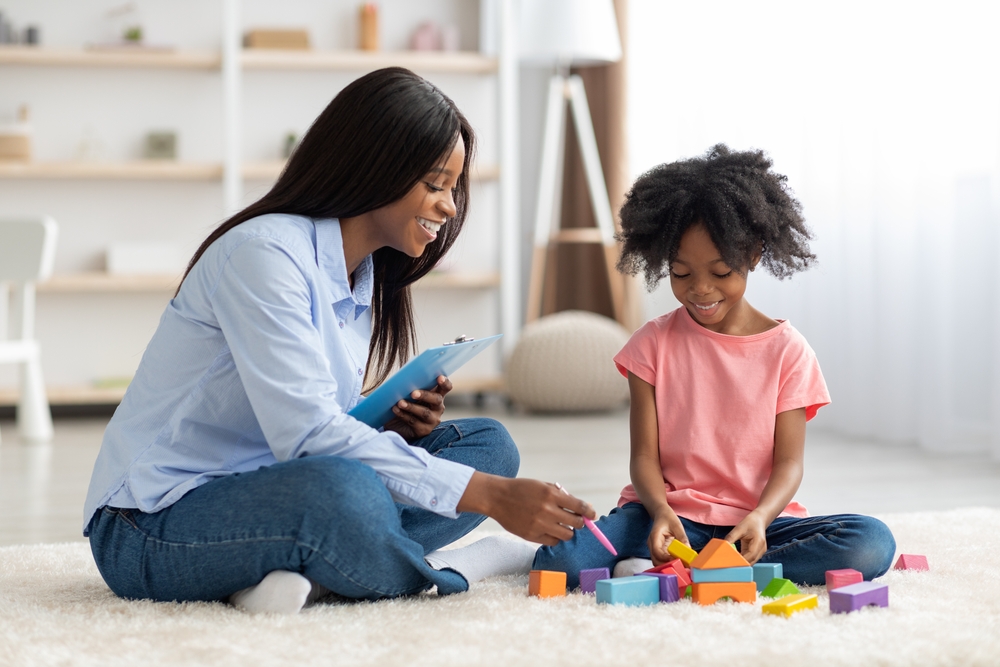
We often think of play as something children do for fun—a break from the “real work” of growing up. But if you watch closely, you will see that play is actually where the hardest work happens. It is where children grapple with the world, make sense of their experiences, and perhaps most importantly, learn about themselves and their feelings.
For a young child, emotions are big, messy, and often overwhelming. They don’t yet have the words to say, “I felt embarrassed when I dropped my ice cream,” or “I felt jealous when you held the baby.” Instead, they have play. Play is the language they use to speak about their internal world. It is the safe container where they can pour out their joy, their fear, their anger, and their confusion, and then step back to look at it all.
At Therapy & Play, we view play as the primary way children develop emotional literacy and resilience. It isn’t just a pastime; it is a rehearsal for life. When we understand what children are learning about their emotions through play, we can stop trying to simply “manage” their behavior and start supporting their deep, internal growth.
Play Is How Children Learn to Feel Safely
Imagine feeling a surge of emotion so powerful it takes over your entire body, but having no idea what it is, where it came from, or if it will ever end. This is the reality for many young children. Emotional development in early childhood is a process of moving from this raw, unorganized experience to a place of understanding and regulation.
Play provides the safety net for this learning. In the real world, big feelings can have scary consequences. Screaming might get you in trouble; hitting might hurt someone. But in the world of play, a stuffed bear can scream as loud as he wants, and a tower of blocks can be smashed to the ground without hurting anyone. This safety allows children to approach their feelings rather than run from them.
Before Words Come Feelings
Long before a child can say “I am sad,” they can act out a scene where a baby doll is crying. This is how children learn emotions—through embodiment and action. We often rush to give children the “right” words, urging them to “use your words” when they are upset. But for many children, the feeling exists long before the vocabulary does.
Play bridges this gap. It allows the feeling to exist and be expressed without the pressure of finding the perfect label. A child who is feeling small and powerless might play a game where they are a giant stomping through a city. They are exploring the feeling of power—what it feels like, what it does—without needing to explain it to anyone. This pre-verbal processing is essential. It validates the emotion as real and meaningful, laying the groundwork for language to catch up later.
Why Emotional Learning Starts in the Body
Emotions are not just thoughts in our heads; they are physical events in our bodies. A racing heart, a tight chest, a hot face—these are the signals of our emotional state. Play and emotional development are linked because play is an active, physical process.
When a child runs, jumps, crashes, or spins during play, they are experiencing and regulating physiological arousal. They are learning what “high energy” feels like and what “calm” feels like. Social emotional learning in young children often starts here, with the physical regulation of the body. By engaging in active play, children learn to tolerate the physical sensations of strong emotions. They learn that a racing heart doesn’t always mean danger (it can mean excitement!), and that they can move their bodies to help themselves feel better.
Big Feelings Show Up in Play for a Reason
Parents often worry when they see their sweet child acting out aggressive, loud, or chaotic themes in their play. It can be unsettling to watch a toddler smash cars together or bury a doll in the sand. But these big behaviors are rarely a sign of a “bad” kid. They are a sign of a child who is working hard to process toddler big emotions.
Emotional regulation in children is not about suppressing feelings; it is about metabolizing them. Play is the digestive system for these emotions. If a child has had a day full of being told “no” and having their choices limited, they might come home and play a game where they are the boss of everyone. This isn’t defiance; it’s balance. They are using play to regain a sense of agency and discharge the frustration of the day.
Anger, Fear, Excitement, and Joy All Belong
In the safe container of play, all feelings are welcome. There is no such thing as a “bad” emotion in the playroom. Tantrums and emotional development often go hand in hand because the tantrum is the explosion of feeling, while play is the processing of it.
You might see a child act out a scary scene involving a monster or a doctor’s visit. By playing the monster, the child takes control of the fear. They decide when the monster roars, who it scares, and when it goes away. By playing the doctor, they become the one with the power, rather than the one getting the shot. This role reversal is a powerful tool for a child expressing emotions. It turns passive experiences into active mastery. Whether it is the explosive energy of anger or the quiet withdrawal of sadness, play allows these feelings to be seen, felt, and integrated.
When Play Looks Intense, Messy, or Repetitive
Sometimes play looks less like a story and more like chaos. A child might dump all the toys on the floor, throw things, or run in circles screaming. While this can be overwhelming for parents to witness, it is often an attempt to organize a disorganized internal state.
Repetitive play—like crashing cars over and over—can be a way for a child to get “stuck” feelings moving. They are replaying a sensation or an emotional tone until it feels resolved. Instead of stopping this play (unless it is unsafe), we can view it with curiosity. What is this intensity telling us? Usually, it is telling us that the child is carrying a heavy emotional load and needs a safe place to set it down.
Play Helps Children Practice Emotional Regulation
We all want our children to be able to calm themselves down when they are upset. But self-regulation is a complex skill that takes years to develop. It is not something you can teach with a lecture; it has to be practiced. And play is the ultimate practice ground.
How children learn emotional regulation is often through the “stop and go” nature of play. Think of a game of tag. You run as fast as you can (high arousal), and then you reach “base” and have to stop and breathe (regulation). Or think of building a tower. You have to be careful and steady (regulation) even when you are excited to see how high it can go.
From Overwhelm to Settling
Self-regulation skills in early childhood are built in these moments of transition. Moving from high energy to low energy, from loud to quiet, from fast to slow—this is the workout the nervous system needs.
Parents can support calming strategies for toddlers by introducing play that involves these shifts. “Freeze dance” is a classic example. The music plays and the child dances wildly; the music stops and they have to freeze. This requires them to put the brakes on their impulses. Over time, this practice strengthens the neural pathways that allow a child to pause before reacting in real life. It helps them move from a state of overwhelm back to a state of settling, a skill they will use every time they feel frustrated or angry in the future.
Learning Limits Without Shame
One of the most powerful aspects of play is that it has natural limits. You can’t crash the car if you don’t build the track first. You can’t play the game if you don’t follow the rules. In the context of the parent-child relationship, play allows for co-regulation—the parent helps the child navigate these limits.
If a child gets too rough during a wrestling game, the parent can pause and say, “Whoa, that was too hard. Let’s slow down.” This sets a boundary without shaming the child or the emotion. It teaches the child that they can be excited and physical, but they also need to stay attuned to safety. This learning—that feelings are okay, but behavior has limits—is the cornerstone of emotional health.
Through Play, Children Learn What Emotions Mean
Feelings are confusing. Why does my tummy hurt when mom leaves? Why do I feel hot when my brother takes my toy? Play helps children connect these physical sensations to emotional meaning. It fosters emotional awareness in children by giving them a concrete way to explore abstract concepts.
Understanding emotions in toddlers is a process of cause and effect. In play, they can experiment: “If the baby doll doesn’t get her milk, she cries. She is hungry and sad.” This simple narrative helps the child understand their own internal signals. It builds the bridge between “I feel bad” and “I am sad because I wanted that cookie.”
Sorting Through Feelings at Their Own Pace
One of the beautiful things about play is that it happens at the child’s pace. There is no rush. Naming emotions in early childhood doesn’t have to happen immediately. A child might play out a separation theme—animals getting lost and found—for weeks before they ever talk about missing their grandma.
This slow sorting process is crucial. It allows the child to approach difficult feelings in small, manageable doses. They can dip a toe in, feel the feeling, and then retreat to safety. This titration prevents them from becoming flooded and allows them to truly integrate the emotional lesson.
Why Repetition Helps Emotions Make Sense
If you have ever read the same bedtime story fifty times in a row, you know that children love repetition. The same is true for play. A child might act out the same scene—the dog running away, the tower falling down—day after day.
This repetition is not a sign of getting stuck; it is a sign of mastery. Each time they replay the scene, they are processing a little bit more of the emotion attached to it. They are making sense of it. Emotional literacy is built on this repetition. It confirms for the child that feelings have patterns, that scary things can be resolved, and that they have the capacity to handle it.
Social Play Builds Emotional Understanding
As children grow, their play often moves from solitary to social. This shift opens up a whole new world of emotional learning. Social emotional development in children explodes when they have to navigate the complex waters of playing with others.
Learning empathy through play happens naturally when a peer says, “Stop! I don’t like that.” The child has to pause, look at their friend’s face, and realize that their actions caused a feeling in someone else. This is a profound realization. It shifts their perspective from “me” to “we.”
Learning Empathy, Turn-Taking, and Repair
Social skills in early childhood are learned in the sandbox, not the classroom. Cooperative play development requires negotiation, patience, and the ability to tolerate frustration. “I want the blue shovel, but Sarah has it.” The child has to manage their disappointment and find a solution—wait, ask, or find another toy.
These interactions are full of micro-ruptures and repairs. Kids argue, they get their feelings hurt, they storm off. And then, usually, they come back. They learn to apologize, to compromise, and to forgive. They learn that a relationship can survive conflict. This resilience is a vital emotional skill that will serve them in every friendship and partnership they have for the rest of their lives.
What Conflicts During Play Actually Teach
We often want to jump in and solve conflicts between children immediately. But if safety isn’t at risk, stepping back can be a gift. The conflict is the curriculum.
When two children are fighting over the rules of a game, they are doing high-level emotional work. They are advocating for their needs, listening (hopefully) to another perspective, and managing the heat of anger. By navigating these bumpy moments, they learn that conflict is a normal part of life and that they have the tools to work through it.
Children Learn Emotional Safety Through Relationships
Ultimately, the most important lesson children learn through play is about safety. Not just physical safety, but emotional safety for children. They learn that they can bring their whole self—the happy, the sad, the angry, the messy—into a relationship and still be loved.
Secure attachment and emotions are deeply connected. When a parent sits on the floor and plays with their child, following their lead and delighting in their ideas, they are sending a powerful message: “I am here with you. You are safe with me.” This parent child emotional connection is the foundation of mental health.
Why Presence Matters More Than Fixing
In our desire to be good parents, we often think we need to “fix” our children’s negative emotions. If they are sad, we want to cheer them up. If they are angry, we want to calm them down. But in play, we have the opportunity to just be with them.
Responsive caregiving in play looks like witnessing. It looks like saying, “Wow, that dinosaur is really mad!” instead of “Don’t make the dinosaur hit.” It honors the child’s expression without judgment. This presence teaches the child that their feelings are manageable and that they don’t have to face them alone.
Play as a Shared Emotional Language
Play creates a shared language between parent and child. It gives you a way to connect that doesn’t rely on logic or explanations. You can communicate understanding through a glance, a gesture, or a shared laugh.
This shared emotional language builds trust. It tells the child that you “get” them. When you enter their world and play by their rules, you validate their reality. This deepens the attachment bond and creates a reservoir of connection that you can draw on when times get tough.
Parents Are Emotional Guides During Play
You don’t have to be a play therapist to support your child’s emotional growth. You just have to be a willing companion. How parents support emotional development is less about leading and more about following.
Emotional coaching for parents can sound intimidating, but in play, it is quite simple. It means noticing what your child is doing and feeling, and reflecting it back to them. It means being a calm anchor in their stormy seas.
Following, Naming, and Staying Close
One of the most effective ways to support emotional learning is to narrate the play. “You are burying the baby. She is all covered up.” “Crash! That tower fell down hard.” This is not teaching; it is acknowledging.
Helping children manage emotions starts with validating them. If a child is acting out frustration, you can say, “You seem really frustrated that the block won’t stay.” This gives the feeling a name. It tames the overwhelming sensation by putting it into a container of words. And simply staying close—sitting nearby, watching with interest—provides the safety the child needs to keep exploring.
You Don’t Have to Get It Perfect
There is no “perfect” way to play. You might feel bored sometimes. You might get annoyed. You might not understand what your child is doing. That is okay. Playing with your child benefits them even if you aren’t doing it “right.”
Your effort to connect is what matters. If you miss a cue or misunderstand a feeling, you can repair it. “Oh, I thought the bear was sad, but you’re saying he’s angry. I get it now.” This models humility and the willingness to understand, which are powerful emotional lessons in themselves.
When Emotional Learning Through Play Feels Hard
For some children, play doesn’t come easily, or it seems to get stuck in dark or distressing places. A child struggles with emotions might show this through play that is rigid, repetitive without resolution, or consistently destructive.
Emotional delays in toddlers or a child avoids play altogether can be signals that the emotional burden they are carrying is too heavy to process on their own. It might mean their nervous system is in a state of protection rather than connection.
Some Feelings Need More Support
If a child has experienced trauma, loss, or significant stress, their play might reflect this. They might replay a scary event over and over without ever finding a “safe” ending. Or they might avoid themes of emotional vulnerability entirely.
In these cases, the child isn’t being “difficult.” They are showing us that they are overwhelmed. They need more support—more co-regulation, more safety, and perhaps a different kind of container—to process these big experiences.
When Extra Help Can Make Play Feel Safer
When to seek support child emotions is a question many parents ask. If play feels consistently hard, disconnected, or distressing for you or your child, it might be time to reach out.
Therapies like Play Therapy or Child-Parent Psychotherapy are designed exactly for this. They provide a specialized space where a therapist can help the child (and parent) navigate these stuck places. They help make the scary feelings manageable so that play can become a source of joy and healing once again.
Play Builds Emotional Skills That Last
The emotional work children do in the playroom lays the foundation for the adults they will become. Lifelong emotional skills like empathy, self-regulation, flexibility, and resilience are forged in the fires of pretend play.
Emotional resilience in children predicts better mental health outcomes, better relationships, and better ability to cope with stress in adulthood. The long-term benefits of play are profound. By protecting and prioritizing play now, we are investing in their future well-being.
From Early Play to Everyday Life
The skills learned in play translate directly to real life. The child who learned to wait their turn in a game becomes the adult who can handle traffic with patience. The child who learned to soothe a crying doll becomes the friend who can offer compassion in a crisis. Childhood emotional development is the blueprint for human connection.
Why Emotional Learning Can’t Be Rushed
We live in a fast-paced world, but emotional growth cannot be hurried. It is a slow, winding process. There will be regressions. There will be days when it feels like no progress is being made.
But when we trust the process of play, we allow development to unfold in its own time. We give our children the gift of being fully who they are, at every stage. We honor their unique pace and trust that through play, they are doing exactly what they need to do to grow.