
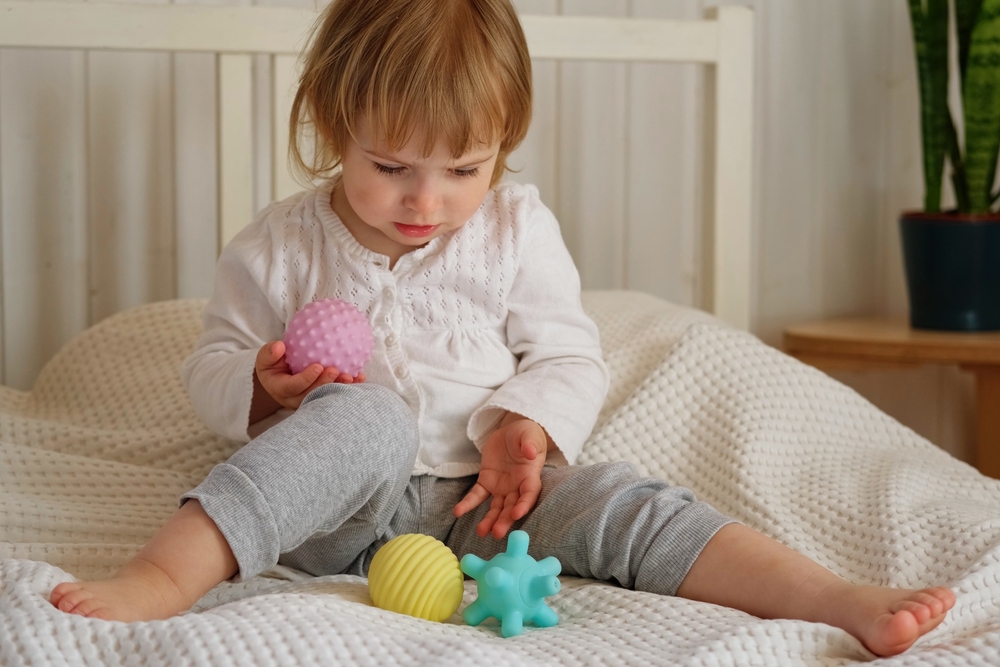
We live in a world that often measures childhood success by milestones, academic readiness, and structured activities. Parents are frequently bombarded with messages about the “right” educational toys, the “best” enrichment classes, and the importance of getting a head start. In this noise, it is easy to lose sight of the most fundamental, biologically driven tool for growth: play.
Play is not just a way to fill time between naps and meals. It is not merely a break from “real” learning. Play is the engine of early development. It is the primary way young children make sense of their world, build their brains, and develop the emotional and social skills they will rely on for the rest of their lives.
At Therapy & Play, we see play not as a frivolous activity, but as a critical developmental necessity. It is the language of childhood and the foundation upon which mental health, resilience, and cognitive flexibility are built. Understanding why play is so powerful can help us shift our perspective—from seeing play as “extra” to seeing it as essential.
Play Is How Young Children Make Sense of Their World
When you watch a toddler repeatedly fill a bucket with sand and dump it out, or a preschooler set up a tea party for their stuffed animals, you are witnessing deep cognitive work. The benefits of play in early childhood go far beyond simple amusement. Play is the laboratory in which children test hypotheses, explore cause and effect, and integrate new information.
Why is play important for child development? Because it is the mechanism through which children digest their experiences. Just as adults might talk through a difficult day or journal about their feelings, children play them out. If they went to the doctor and got a shot, you might see them giving shots to their dolls later that day. This isn’t just imitation; it is a way of mastering a scary experience and regaining a sense of control.
Children Don’t Separate Play From Learning — Their Brain Doesn’t Either
Adults often draw a hard line between “play” and “learning.” We tend to think of learning as something that happens at a desk with a teacher, and play as something that happens at recess. But for a young child, these concepts are inseparable.
When a child builds a tower, they are learning about physics, gravity, and balance. When they negotiate the rules of a game with a friend, they are learning about diplomacy, empathy, and social contracts. When they pretend to be a chef, they are learning about sequencing, roles, and symbols. Learning through play research consistently shows that when children are engaged in play, their brains are in a state of high plasticity—meaning they are open, receptive, and ready to wire new connections. Their brains do not distinguish between “fun” and “work”; they simply see engagement.
Exploration Is the Brain’s Favorite Teacher
The early childhood brain is wired for exploration. It craves novelty and sensory input. Early childhood development and play are linked because play provides the perfect vehicle for this exploration. It allows children to follow their curiosity wherever it leads, without the fear of failure that often accompanies structured learning.
In play, there are no wrong answers. There is only “What happens if I do this?” This freedom allows the brain to make unexpected connections and develop flexible thinking patterns. When a child is free to explore, they are not just memorizing facts; they are learning how to learn. They are building the neural architecture for curiosity, which is the driving force behind all future intellectual growth.
A Developing Brain Needs Experience, Not Just Instruction
In our desire to help our children succeed, we often rush to instruction. We buy flashcards to teach colors or apps to teach counting. While there is a time and place for direct instruction, the developing brain learns best through experience.
Experiential learning in early childhood is powerful because it engages the whole child—their body, their senses, and their emotions. Brain-based learning for toddlers isn’t about sitting still; it’s about moving, touching, and doing. When a child learns the concept of “heavy” by trying to lift a big rock, that knowledge is encoded in their muscles and their sensory system, not just their memory.
Why Worksheets Can’t Compete With Real Experiences
A worksheet can show a picture of an apple and the letter “A,” but it cannot replicate the experience of holding an apple, smelling it, feeling its smooth skin, and hearing the crunch when you bite into it. The brain builds its understanding of the world through multisensory input.
When we rely too heavily on active learning vs passive learning, we risk bypassing the deep, embodied understanding that young children need. Passive learning—like watching a video or filling out a sheet—uses a very small part of the brain. Active, playful learning lights up the entire neural network. It creates rich, multi-dimensional memories that are easier to recall and apply in new situations.
The Science Behind Hands-On Discovery
Neuroscience tells us that the brain learns by connecting neurons. The more frequently a connection is used, the stronger it becomes. Hands-on discovery provides the repetition and intensity needed to strengthen these connections.
When a child is trying to fit a square peg into a round hole, their brain is firing rapidly. They try one way, it fails. They turn it, it fails again. They push harder, no luck. Finally, they find the square hole and it slides through. That moment of success triggers a release of dopamine, the brain’s reward chemical. This reinforces the learning pathway and motivates the child to keep trying. This cycle of trial, error, and discovery is how deep learning happens, and it cannot be replicated by simply telling a child the answer.
Emotion Drives Attention — And Attention Builds the Brain
We often think of attention as a discipline—something children need to “pay.” But in reality, attention is driven by emotion. We pay attention to things that make us feel something—joy, surprise, curiosity, or even fear.
Emotional development and brain growth are deeply intertwined. When a child is emotionally engaged, their attention system is fully activated. This is why a child can spend an hour building a Lego castle but struggles to sit still for five minutes of circle time. The Lego castle engages their emotions; it matters to them. Attention development in toddlers grows not through forced focus, but through following their natural interests and passions.
Joy, Surprise, and Curiosity as Brain Activators
Positive emotions like joy and curiosity are like fertilizer for the brain. When a child is delighted by a game of peek-a-boo or fascinated by a bug on the sidewalk, their brain is flooded with neurochemicals that promote plasticity.
Secure attachment brain development relies on these positive emotional states. When a child feels safe and happy, their brain is in “growth mode.” They are open to new information and willing to take risks. Conversely, when a child is stressed or anxious, their brain shifts into survival mode, and the learning centers shut down. Play is the most reliable way to generate these positive emotional states, making it a potent activator for brain development.
When Children Feel Safe, the Brain Opens to Learning
How emotions affect learning is a critical piece of the puzzle. A stressed brain cannot learn well. It is too busy scanning for danger. This is why safety is a prerequisite for play.
True play only happens when a child feels safe. You won’t see a child playing deeply if they are terrified or in distress. Therefore, the very act of playing is a signal that the child’s nervous system is regulated. By prioritizing play, we are prioritizing the emotional safety that makes learning possible. We are creating an environment where the brain can relax, open up, and do the work of development.
Unstructured Play Builds Skills That Structured Activities Often Miss
In a culture that values productivity, we often fill our children’s schedules with structured activities—soccer practice, music lessons, organized playdates. While these have value, they cannot replace the unique benefits of unstructured play.
Free play vs structured activities is a balance many parents struggle with. Unstructured play is play that is directed by the child, not an adult. It has no specific goal or outcome. It is simply play for the sake of play. The importance of free play lies in the fact that it forces the child to be the driver. They have to decide what to do, how to do it, and when to stop.
Flexibility, Initiative, and Self-Trust
When a child engages in independent play benefits, they are practicing executive function skills. They have to come up with an idea (“I’m going to build a fort”), plan the steps (“I need blankets and chairs”), and execute the plan. If the fort collapses, they have to problem-solve and adapt.
This process builds cognitive flexibility—the ability to switch gears and try a new approach. It also builds initiative and self-trust. The child learns that they are capable of entertaining themselves and solving their own problems. They don’t need an adult to tell them what to do next. This sense of agency is a critical component of self-esteem and resilience.
Why Boredom Can Quietly Support Brain Growth
“I’m bored.” It’s a phrase every parent dreads. But boredom is not a problem to be fixed; it is an invitation. When we immediately rush to entertain a bored child, we rob them of a valuable opportunity.
Boredom is the precursor to creativity. It is the empty space where new ideas are born. When a child sits with their boredom for a little while, their brain starts to search for stimulation. They might pick up a stick and start drawing in the dirt. They might start singing a song. They might invent a new game. By allowing boredom to exist, we are giving the brain the space it needs to stretch and grow. We are teaching children that they have the internal resources to create their own engagement.
Play Strengthens the Brain Systems Children Will Rely on for Life
Play is like a gym for the brain’s executive functions. These are the high-level cognitive skills that allow us to plan, focus, remember instructions, and juggle multiple tasks. Executive functioning skills in children are better predictors of academic success than IQ, and play is one of the best ways to build them.
Cognitive flexibility in kids, memory development in early childhood, and self-regulation skills are all honed in the sandbox, the dress-up corner, and the block area.
Building Memory Through Repetition and Story
When children engage in pretend play, they are exercising their working memory. If they are playing “restaurant,” they have to remember who ordered the pizza and who ordered the spaghetti. They have to remember that the rock is a cookie and the leaf is a plate.
They also build memory through repetition. Young children love to hear the same story or play the same game over and over again. This repetition helps consolidate memories and strengthen neural pathways. It allows them to predict what comes next, which feels safe and empowering. Through story and repeated play, they are building the narrative structure of their own lives.
Growing Problem-Solving Without Pressure
In play, problems are challenges, not threats. If a block tower falls, it’s a chance to build it better, not a failure. If the doll’s dress doesn’t fit, it’s a puzzle to be solved.
This low-stakes environment is ideal for growing problem-solving skills. Because there is no pressure to get it “right” for a grade or an adult’s approval, children are willing to take risks and try unconventional solutions. They learn that failure is just data—information about what didn’t work so they can try something else. This growth mindset is essential for lifelong learning.
The Early Roots of Self-Regulation
Self-regulation—the ability to manage your emotions and behaviors in accordance with the demands of the situation—is a skill that takes years to develop. But its roots are in play.
In games with rules, like “Red Light, Green Light,” children have to practice impulse control. They have to stop their bodies even when they want to run. In dramatic play, they have to stay in character. If they are the baby, they have to crawl and cry, even if they can walk and talk. This constant practice of inhibiting impulses and following social rules helps wire the brain for self-regulation.
Connection Makes Play Even More Powerful
While independent play is valuable, play that happens within a relationship is supercharged. At Therapy & Play, we believe that connection is the active ingredient in development.
Parent child connection activities don’t have to be elaborate. They just have to be present. Attachment through play happens in the giggles, the eye contact, and the shared delight. When you get on the floor and play with your child, you are telling them, “I see you, I like you, and I enjoy being with you.” This builds a secure base from which the child can explore the world.
Why Being With Your Child Matters More Than Entertaining Them
Many parents feel pressure to be the “entertainer”—to constantly come up with fun activities and keep the energy high. But responsive parenting isn’t about performing; it’s about attunement.
Your child doesn’t need you to be a clown. They need you to be a partner. They need you to notice when they are frustrated and offer a little help. They need you to celebrate their victories. They need you to be a calm presence when the game gets too exciting. This co-regulation—lending your calm nervous system to their developing one—is what helps them learn to manage big feelings.
Shared Attention as Brain Fuel
Shared attention—when you and your child are both focused on the same thing—is a powerful driver of language and cognitive development. When you are both looking at a book and you say, “Look at that big bear!”, your child’s brain is mapping the word “bear” to the image.
This shared focus creates a synchrony between parent and child. Your brain waves actually align. This state of connection is incredibly fertile ground for learning. It teaches the child that their interests are valid and that communication is a two-way street. It turns play into a conversation, even before the child has words.
Play Also Supports the Body — And the Brain Depends on Both
We often think of the brain and body as separate, but they are deeply integrated. Movement and brain development in children are inextricably linked. The brain relies on sensory input from the body to organize itself.
Physical activity and cognitive development go hand in hand. When a child climbs a tree, they are not just using their muscles; they are planning their route, judging distances, and maintaining balance. Motor development and learning are two sides of the same coin.
Movement Helps Organize the Brain
The vestibular system (balance) and the proprioceptive system (body awareness) are foundational for all other learning. When a child spins, swings, or hangs upside down, they are stimulating these systems.
This sensory input helps organize the brain. It improves focus, attention, and emotional regulation. A child who has had plenty of time to move their body is often better able to sit still and focus when they need to. Movement discharges energy and reduces stress, leaving the brain in a calm, alert state that is optimal for learning.
Sensory Experiences That Support Integration
Sensory experiences brain development by providing the raw data the brain needs to build its map of the world. Playing with sand, water, playdough, or finger paint provides rich tactile input.
For some children, sensory integration can be a challenge. They may be over-sensitive or under-sensitive to certain stimuli. Play offers a safe way to explore these sensations at the child’s own pace. By gradually exposing themselves to different textures and sensations in a playful context, they can learn to integrate this information more effectively.
What Happens When Play Gets Pushed Aside
In our modern world, play is under threat. With the rise of technology, academic pressure, and structured schedules, the decline of play in childhood is a real concern.
The effects of less play on children are becoming increasingly visible. We are seeing higher rates of anxiety, attention issues, and sensory processing challenges. Overscheduled children often lack the downtime they need to decompress and process their experiences.
The Quiet Cost of Overscheduling
When every hour of a child’s day is accounted for, they lose the opportunity to develop their inner life. They become dependent on external stimulation and direction. They may struggle to know what they like or what they want, because they have never had the time to figure it out.
The cost of overscheduling is often a loss of autonomy. Children need to feel that they have some control over their lives. Play is one of the few places where they get to be the boss. When we take that away, we take away a crucial avenue for developing self-efficacy.
Why More Activities Don’t Always Mean More Growth
We often assume that “more is better”—more classes, more sports, more enrichment. But the brain has a limit to how much it can process. Screen time vs play is another battleground, but even “educational” screen time cannot replace the benefits of three-dimensional, active play.
More activities don’t always mean more growth. Sometimes, they just mean more stress. A brain that is constantly rushed from one thing to the next stays in a state of low-level alarm. It doesn’t have the time to consolidate learning or rest. Often, the best thing we can do for our child’s development is to do less—to clear the schedule and let them play.
You Don’t Need Special Toys to Support Brain Development
The toy industry is a multi-billion dollar machine designed to make parents feel like they need the latest gadget to help their child learn. But the truth is, the best play ideas for toddlers often involve things you already have at home.
How to support child development at home isn’t about buying more stuff. It’s about looking at your environment with new eyes. A cardboard box can be a spaceship. A pot and a wooden spoon can be a drum set. Laundry baskets, blankets, and Tupperware are some of the best toys available.
The Power of Ordinary Moments
Everyday play for toddlers happens in the margins of life. It happens while you’re folding laundry and they’re playing peek-a-boo with the towels. It happens while you’re cooking dinner and they’re “making soup” with water and bowls on the floor.
These ordinary moments are rich with developmental potential. They are grounded in the reality of family life, which makes them meaningful to the child. You don’t need to set up elaborate Pinterest-perfect activities. You just need to be open to the play that is already happening.
Following Interest Instead of Creating Perfection
No toy play ideas are often the most creative. When children have to invent their own fun, their imagination gets a workout. Instead of following the instructions on a Lego kit, they create something entirely new.
The key is to follow the child’s interest. If they are fascinated by bugs, go on a bug hunt. If they love water, let them wash their toy cars in a bucket. Following their lead shows them that their ideas have value. It builds confidence and keeps the motivation for learning high. We don’t need to create perfection; we just need to create space.
Play Is Not a Break From Development — It Is Development
If there is one thing we hope you take away from this, it is a shift in mindset. Play is learning. It is not distinct from it; it is the very substance of it.
Developmental benefits of play are woven into every giggle, every wobble of a block tower, and every game of tag. Why kids need play is not just so they can have fun (though fun is important!). It is so they can build the brain architecture that will support them for the rest of their lives.
Trusting What Children Naturally Move Toward
Children have an innate wisdom. They naturally move toward the experiences their brains need. If they need to organize their vestibular system, they will spin. If they need to process a fear, they will play it out.
Our job as parents is to trust this process. We don’t need to micro-manage their development. We need to provide a safe environment, a few open-ended materials, and a loving presence, and then step back and let the play unfold.
Seeing Play as Essential, Not Optional
When we see play as essential, our priorities shift. We protect playtime like we protect sleep and nutrition. We advocate for recess in schools. We resist the pressure to overschedule. We value the messy, loud, chaotic business of childhood because we know that deep, important work is happening.
When Parents Feel Unsure About Play
It is normal to have questions. “Is my child playing normally?” “Why doesn’t my child like to pretend?” “Is it okay that they only want to play with trucks?”
Developmental differences in play are vast. Every child is unique, and their play will reflect their individual temperament, interests, and developmental stage. There is a wide range of “normal.”
Every Child Approaches Play Differently
Some children are boisterous and physical. Others are quiet and observant. Some love fantasy; others prefer building and engineering. None of these are better or worse; they are just different.
A child not engaging in play or seeming stuck in repetitive loops can sometimes be a sign that they need a little extra support. But often, it’s just a variation in style. Comparing your child to others is rarely helpful. Instead, look at your child. Are they engaged? Are they curious? Do they seem happy?
Support Can Help Play Feel Easier
If you are concerned about your child’s development, or if play feels like a struggle in your home, know that you don’t have to figure it out alone. When to seek support child development professionals can offer guidance.
At Therapy & Play, we work with families to understand the unique language of their child’s play. We can help you identify if there are barriers getting in the way—like sensory processing issues or anxiety—and provide strategies to help play flourish. Sometimes, a little bit of support is all it takes to unlock the joy and connection that play is meant to bring.