
Attachment & Trauma Therapy Blog
Blogs & Resources
Explore trauma-informed blog posts on attachment healing, conscious parenting, postpartum mental health, and breaking generational cycles. Read our latest insights.
Trauma-Informed Insights for
Healing, Parenting & Growth
Welcome to the blog, your go-to resource for compassionate, trauma-informed guidance on healing emotional wounds, nurturing secure attachments, and fostering resilience—for adults, parents, and families alike.
Here, you’ll find evidence-based articles that explore the impact of trauma, the science of neuroplasticity, practical parenting tools, and more—all designed to support your healing journey and empower you to break cycles.


Latest Posts

You’re told that the moment your baby arrives, you’ll feel a rush of love — a spark, a bond, a certainty. But for so many new parents, that moment doesn’t come right away. Instead, you might feel numb, distant, anxious, or unsure how to connect. You may catch yourself thinking, “Why don’t I feel what everyone says I’m supposed to feel?”
If this is your experience, you’re not doing anything wrong. Bonding isn’t automatic for everyone, and it certainly isn’t a measure of your worth as a parent. Stressful pregnancies, complicated births, medical interventions, NICU time, past trauma, postpartum depression or anxiety — all of these can make early connection harder. Your body and nervous system might still be in survival mode while you’re trying to attach to someone who needs you around the clock.
None of this means you won’t bond. It means your system needs support, softness, and time — not judgment.
When Bonding Doesn’t Happen the Way You Expected
The period after birth is often painted as a magical, golden time. While it can be beautiful, it can also be raw, messy, and far from what you see in movies. Understanding the reality of bonding can help ease the pressure so many new parents feel.
Why the “instant bond” narrative creates pressure for new parents
We are surrounded by images and stories of an immediate, overwhelming love between a parent and a newborn. This narrative, while lovely when it happens, sets up an unrealistic expectation. When that “love at first sight” feeling doesn’t materialize, parents often feel a sense of failure or shame, which only adds another layer of stress to an already challenging time. Postpartum bonding issues are common, but the pressure to feel a certain way can make it feel like you are completely alone.
What healthy bonding actually looks like across the first weeks and months
Healthy bonding is not a single event; it is a process built from thousands of small, repeated moments. It’s the act of changing a diaper in the middle of the night, the feeling of a baby’s head nestled against your chest, the quiet moments of just watching them breathe. It’s a slow-growing familiarity and attachment that deepens over time. It can be filled with moments of joy, but also with ambivalence, frustration, and exhaustion.
Why feeling disconnected is more common than people admit
Many parents experience trouble bonding with their baby. Whether due to physical recovery, hormonal shifts, or emotional overwhelm, feeling disconnected is a frequent, yet often unspoken, part of the postpartum experience. New mom bonding struggles, in particular, are often shrouded in secrecy due to the immense societal pressure to be nurturing and instantly attached. Admitting you feel numb or distant can feel taboo, but it is a sign that you are carrying a heavy load, not that you are a bad parent.
The Many Reasons Bonding Can Feel Hard After Birth
If you’re struggling to connect, it’s not a personal failing. There are very real, physiological, and emotional reasons that can interfere with the bonding process. Your experience is valid.
Birth trauma and medical interventions that overwhelm the nervous system
A difficult or traumatic birth can leave your nervous system in a state of shock, or fight-or-flight. When your body is in survival mode, its primary focus is on safety, not on connection. It’s incredibly difficult to feel soft, open, and loving when your internal alarm bells are still ringing from a frightening experience. Birth trauma bonding issues are a direct result of the body prioritizing its own recovery.
Unexpected NICU experiences, separation, or feeding complications
An unexpected NICU stay, early separation from your baby, or significant feeding challenges can create a major disruption in the early bonding process. These experiences are often filled with fear, worry, and a sense of helplessness, which can create distance. The longing to have your baby with you, coupled with the sterile, stressful environment of a hospital, can make connection feel nearly impossible.
Anxiety, intrusive thoughts, or postpartum depression interfering with connection
Postpartum mood and anxiety disorders are not just about feeling sad. Postpartum anxiety can manifest as constant worry or scary, intrusive thoughts. Postpartum depression can create a feeling of flatness, numbness, or deep irritability. These conditions act like a thick fog, making it hard to access feelings of joy and connection. Postpartum anxiety and bonding are often at odds, as a constantly worried brain has little room for anything else.
How your own attachment history shapes early bonding
How you were cared for as a child creates a blueprint for how you connect with others. If you had experiences of neglect, inconsistent care, or trauma, becoming a parent can activate those old wounds. Your own history can make it feel frightening or unfamiliar to be the source of constant care and attunement for someone so dependent on you.
When survival mode makes closeness feel out of reach
The sheer exhaustion and relentless demands of caring for a newborn can put anyone into survival mode. When you are sleep-deprived and physically recovering, your brain’s resources are depleted. In this state, it’s natural for closeness and connection to feel like a luxury you can’t afford.
Understanding Bonding Through a Trauma and Attachment Lens
Attachment science and a trauma-informed perspective can offer a more compassionate and accurate way to understand early parent-infant connection struggles. It’s not about doing everything perfectly; it’s about being present enough of the time.
The newborn brain and why attunement—not perfection—builds attachment
A newborn’s brain is wired for connection. It develops through small, back-and-forth interactions with a caregiver. This process, called attunement, is about being responsive to your baby’s cues. You don’t have to get it right every time. The research on secure attachment for infants shows that caregivers only need to be attuned about 30% of the time to build a strong, healthy bond.
How trauma affects your ability to read your baby’s cues
When your own nervous system is dysregulated from trauma, it’s much harder to accurately read your baby’s subtle cues. A traumatized brain is wired to scan for danger, not for the nuanced signals of a baby’s needs. This is not your fault; it’s a physiological reality of postpartum trauma effects.
Why shutdown, numbness, or overwhelm are common responses after birth
If a birth experience was too much for your system to handle, the nervous system can go into a “freeze” or shutdown state as a protective measure. This can manifest as feeling emotionally numb, disconnected, or “checked out.” It’s your body’s way of conserving energy and protecting you from feelings that are too big to process all at once.
The role of your nervous system in early parent–infant connection
Bonding is a biological, nervous-system-to-nervous-system process. A calm, regulated parent nervous system helps to calm and regulate the baby’s nervous system. If your system is in a state of high alert or shutdown, it sends subtle signals of unsafety to the baby, which can make it harder for both of you to settle and connect.
Why bonding is a process, not a single moment
Attachment is built over months and years, not in a single instant. Every time you respond to your baby’s needs, you are laying another brick in the foundation of your relationship. If the first few weeks or months were hard, you have not missed your chance. Attachment repair in early life is absolutely possible.
When Disconnection Feels Like Something Is “Wrong” With You
For many parents struggling with mother-baby bonding difficulties, the hardest part is the internal narrative of shame and self-blame.
Understanding self-blame and why it shows up
When our experience doesn’t match our expectation, we often turn the blame inward. You might think, “I must be a bad mother,” or “I must not love my baby.” This self-blame is a misguided attempt to make sense of a confusing and painful experience.
How comparison culture makes everything feel worse
Social media is filled with images of seemingly perfect mothers gazing lovingly at their peaceful babies. This curated reality creates an impossible standard. When your reality is a crying baby and a feeling of postpartum emotional numbness, comparison becomes a tool of self-torture.
Why disconnection is a sign of overwhelm—not lack of love
Feeling disconnected from your baby is not a reflection of your love for them. It is a symptom of an overwhelmed nervous system. Your body is signaling that it is carrying too much stress, fear, or exhaustion. It is a cry for help, not a statement about your capacity to love.
How to notice early signs of distress with compassion instead of shame
Instead of judging yourself, try to get curious. When you notice a feeling of numbness, you could gently say to yourself, “This is a sign that I’m overwhelmed. What support do I need right now?” This shift from shame to compassion is a powerful step toward healing. If you are searching for “didn’t bond with my baby help,” this self-compassion is the starting point.
How Therapy Helps Rebuild Bonding After a Difficult Birth or Postpartum Period
You do not have to navigate these feelings alone. Professional support can provide a safe harbor where you can process your experience and find your way back to yourself and your baby.
What perinatal therapy actually supports
Perinatal therapy is a specialized form of counseling that supports parents through the challenges of pregnancy, birth, and the postpartum period. It provides a non-judgmental space to talk about your fears, your birth experience, and your struggles with bonding. A good perinatal therapist near me will understand the complex interplay of hormones, trauma, and attachment.
How therapy helps regulate your nervous system so bonding becomes possible again
A therapist can teach you practical tools to help calm your nervous system. Through grounding techniques, breathing exercises, and mindfulness, you can learn to move out of survival mode. When your system feels safer, it naturally becomes more available for connection and bonding.
Working through birth trauma, fear, guilt, or grief
Postpartum trauma therapy provides a space to process the story of your birth. A therapist can help you make sense of what happened, grieve the experience you wished you’d had, and release the fear and guilt you may be carrying. This allows you to be more present in your current life.
Attachment work that strengthens connection in real time
Therapy isn’t just about talking; it’s about experiencing. Our Attachment Work focuses on the “here and now” of your relationship with your baby. A therapist can help you notice and interpret your baby’s cues and celebrate the small moments of connection, rebuilding your confidence as a parent.
How therapy supports both you and your baby—not one or the other
One of the greatest mother-infant therapy benefits is that it recognizes the needs of the dyad. By supporting your mental health and regulation, therapy directly supports your baby’s development and well-being. A healthier, more regulated parent leads to a healthier, more regulated baby.
What Attachment Repair Looks Like in the First Months of Life
If you had a rocky start, it’s not too late. Attachment is resilient, and repair is always possible.
How small moments of connection rewire both your brain and your baby’s
Every time you make eye contact, smile, or speak in a gentle tone to your baby, you are strengthening neural pathways for connection in both of your brains. These small moments are powerful acts of attachment repair for a baby.
Co-regulation and why your calm body becomes your baby’s safe base
A baby’s nervous system learns to regulate itself through the presence of a calm caregiver. Your rhythmic breathing, your gentle rocking, and the sound of your heartbeat are all powerful regulators for your baby. Your calm body becomes their safe place.
Understanding “serve and return” interactions without pressure
“Serve and return” is the back-and-forth interaction between a parent and baby—they coo (serve), and you coo back (return). Don’t put pressure on yourself to do this perfectly. Simply noticing your baby’s attempts to connect and responding when you can is enough.
Why repair matters more than getting everything right
You will have moments of disconnection. You will be tired, frustrated, and miss your baby’s cues. What matters most is the repair. The act of returning to your baby after a moment of disconnect, offering a soft touch or a gentle word, teaches them that the connection is strong and can withstand ruptures.
Practical Ways to Strengthen Bonding When You Feel Disconnected
When you feel numb or overwhelmed, the idea of bonding can feel like another chore. Focus on small, simple, body-based actions.
Gentle, realistic steps you can take at home
Don’t aim for a perfect Instagram moment. Aim for one minute of skin-to-skin contact. Aim to sing one song. Aim to just sit and watch your baby breathe for a few moments. Small, achievable steps are key.
How touch, rhythm, and presence help your baby feel you—even if you feel flat
Even if you don’t feel connected, your baby can feel you. The warmth of your skin, the rhythmic rocking of your body, and your physical presence are all communicating safety and connection to their nervous system, regardless of your internal emotional state.
Slowing down to notice small cues and responses
Try to slow down for just a few minutes each day and observe your baby. Notice the way their fingers curl, the way their expression changes, the little sounds they make. This practice of simple observation can help you feel more connected over time.
Using rituals and routines to build connection over time
Create small, simple rituals. Maybe it’s a gentle massage after bath time or a specific song you sing before naps. These predictable routines create moments of connection and can become anchors in your day.
Why your mental health matters just as much as your baby’s needs
Taking care of yourself is not selfish; it is essential. You cannot pour from an empty cup. Prioritizing your own sleep, nutrition, and mental health is one of the most important bonding tips postpartum.
When to Reach Out for Extra Support
Trust your gut. If you feel like you are struggling, you deserve support.
Signs bonding difficulties may benefit from therapy
If you consistently feel distant from your baby, find little to no joy in caring for them, or feel resentful or angry toward them, these are important signs that therapy could be helpful.
When anxiety, intrusive thoughts, or shutdown feel constant
If you are plagued by constant worry, scary thoughts about your baby, or a persistent feeling of numbness, it is crucial to seek postpartum mental health support. You do not have to live this way.
When your birth experience still feels raw or unresolved
If you find yourself having flashbacks of your birth, avoiding reminders of it, or feeling intense emotion when you think about it, it is a sign that the experience may have been traumatic and would benefit from processing with a therapist.
Why early support creates long-term emotional health for both of you
Addressing your struggles early on is a profound gift to both yourself and your child. It can prevent the development of more severe mental health issues and helps to build a strong foundation of secure attachment that will last a lifetime.
You’re Not “Behind”—You’re Human. Connection Can Still Grow.
If your journey into parenthood has been difficult, please know that your story is not over. Healing is possible, and a deep, loving connection with your child is still within reach.
How healing your story changes how you show up with your baby
When you take the time to heal your own wounds—whether from your birth experience or your own childhood—you free yourself to be more present, regulated, and joyful with your baby.
Why secure attachment is still fully possible—even if bonding felt delayed
Secure attachment is not dependent on a perfect start. It is built on a foundation of consistent care and repair over time. A difficult beginning does not define your entire relationship.
How therapy helps you feel more present, grounded, and connected
Therapy can help you come home to your own body, find your footing after a seismic life shift, and discover the parent you want to be. It can help you find joy and connection, one small moment at a time.
If you’re feeling disconnected, overwhelmed, or unsure how to build a connection with your baby, you’re not alone. Therapy can help you understand what’s happening inside your body, work through the experiences that made bonding harder, and find your way toward closeness at a pace that feels right.
Reach out when you’re ready. You deserve support as you settle into this new relationship — and you don’t have to navigate it by yourself.

Medical experiences can shake a child in ways that aren’t always obvious. Even something “routine” can feel frightening or overwhelming to a young nervous system—bright lights, unfamiliar faces, separation, pain, procedures, and the sense of being out of control. Many kids come home from a hospital stay looking “okay” on the surface, yet their behavior, sleep, or emotions start to shift in ways that leave parents wondering what’s going on.
If you’ve noticed your child becoming extra clingy, jumpy, tearful, or withdrawn after a medical event, you’re not imagining it. Their body is trying to make sense of something that felt too big to handle at the time. And if you felt scared or overwhelmed during the experience too, you’re not alone. Parents often carry trauma from medical situations right alongside their child.
The good news is that kids can heal—especially when they have a calm, supported parent helping them feel safe again.
Understanding Medical Trauma in Children (and Why It’s More Common Than Most Parents Realize)
When we hear the word “trauma,” we often think of major accidents or disasters. But for a child, a medical event can be just as impactful. Understanding what medical trauma child experiences are about is the first step toward helping them heal. It’s not about the severity of the medical issue, but the child’s internal experience of it.
What “medical trauma” means in a child’s nervous system
Medical trauma refers to the psychological and physiological response to pain, injury, serious illness, medical procedures, or frightening treatments. For a child, this isn’t about logic; it’s about what their body and nervous system perceive as a threat. The experience of being held down for a shot, separated from a parent, or feeling intense pain can register in their system as a life-threatening event, triggering a powerful survival response.
Why medical procedures can overwhelm developing brains
A child’s brain is still developing its capacity for understanding and regulation. They don’t have the context to know that a medical procedure is helpful. All they know is that something scary and painful is happening to their body, and they can’t stop it. This sense of powerlessness is a core component of pediatric trauma responses.
How hospital environments create stress (even with calm staff and good care)
Hospitals are, by nature, dysregulating environments. The constant beeping of machines, the unfamiliar smells, the bright fluorescent lights, and the stream of strangers entering the room can create a state of sensory overload. Even with the kindest doctors and nurses, the environment itself can contribute to child stress after hospitalization, keeping their nervous system on high alert.
The Hidden Ways Medical Stress Shows Up in Children
After coming home, a child may not be able to say, “That hospital stay was scary.” Instead, they will show you their distress through their behavior, emotions, and body. Recognizing these signs of trauma in kids is crucial.
Behavioral signs: clinginess, irritability, regression, sleep disruption
One of the most common signs is a sudden increase in clinginess or separation anxiety. Your child might refuse to be in a room alone or panic when you leave. You might also see a spike in irritability, with more frequent and intense meltdowns. It’s also common to see regression, such as a potty-trained child having accidents or a child reverting to “baby talk.” Sleep disruption, including nightmares or difficulty falling asleep, is another major indicator of child behavior changes after illness.
Emotional signals: fear, avoidance, increased worry, sudden meltdowns
A child might develop new, specific fears related to the medical experience, like a fear of anyone in a white coat, or generalized anxiety and worry about their safety. They may actively avoid talking about or being reminded of the hospital. These toddler trauma signs can be confusing, as a seemingly small thing can trigger a huge emotional reaction.
Body-based symptoms: stomachaches, headaches, “freeze” responses
Trauma lives in the body. You might notice your child complaining more often of unexplained tummy aches or headaches. Another key sign is a “freeze” response, where a child seems to shut down, zone out, or become emotionally numb when reminded of the experience. This is their nervous system’s way of protecting them from overwhelming feelings.
When kids become more sensitive, rigid, or easily overwhelmed
A child dealing with child anxiety after hospital experiences may have a much smaller window of tolerance for stress. They may become more sensitive to noise or touch, more rigid in their need for routines, or more easily overwhelmed by everyday activities that they used to handle with ease.
How Early Medical Experiences Can Disrupt a Child’s Sense of Safety
A fundamental need for a child is a sense of safety and control over their own body. Medical experiences can profoundly disrupt this, leaving a lasting impact on their emotional world.
Loss of control and fear of separation
During a medical procedure, a child often experiences a complete loss of bodily autonomy. Their body is touched, poked, and restrained without their consent. Compounded by moments of separation from their primary caregiver—their main source of safety—this can create a deep sense of powerlessness and fear.
Pain, procedures, and the impact on emotional development
Unmanaged pain is not just a physical experience; it is a deeply emotional one. When a child’s pain is not adequately addressed or when they undergo repeated painful procedures, it can shape their emotional development. They may learn that the world is an unsafe place where help is not always available. This is a common factor in what can lead to pediatric PTSD.
Why kids may fear doctors, shots, or even routine appointments afterward
After a traumatic medical event, a child’s brain can create strong associations. The doctor’s office, the smell of rubbing alcohol, or the sight of a needle can all become triggers that activate the original fear. This medical anxiety in kids is not defiance; it is a legitimate, trauma-based fear response.
How trauma affects attachment and co-regulation
When a parent is unable to protect their child from pain or fear during a medical procedure, it can create a rupture in the attachment relationship. The child’s brain, which looks to the parent for safety, gets a confusing message. They may become more anxious in their attachment, unsure if their caregiver can truly keep them safe.
When It’s Your Child… and You’re Struggling Too
Medical crises are not just traumatic for children; they are deeply impactful for parents. Your own experience of the event matters, both for your well-being and for your child’s recovery.
How medical trauma activates a parent’s own stress responses
Watching your child in pain or distress is one of the most activating experiences a parent can have. It triggers your own survival instincts. You may have felt helpless, terrified, or enraged. These are normal caregiver trauma responses, and they can linger long after the crisis is over.
Why guilt and hypervigilance show up after a medical crisis
It’s common for parents to feel an immense sense of guilt, wondering if they could have done more to prevent their child’s suffering. This can lead to hypervigilance—constantly worrying about your child’s health and scanning for any sign of illness. This is a common experience for parents navigating parent stress after NICU stays or other hospitalizations.
Understanding your triggers without blaming yourself
Your feelings are a valid response to an overwhelming situation. Parental triggers for hospital trauma might include seeing a hospital in a movie or hearing an ambulance siren. Understanding that these are trauma responses, not personal failings, is the first step toward self-compassion.
How your nervous system impacts your child’s recovery
Your child’s nervous system is exquisitely attuned to yours. If you are in a state of high alert and anxiety, they will sense it and it will be harder for them to feel safe and calm. Healing your own nervous system is one of the most powerful things you can do to support your child’s recovery.
How Therapy Helps Children Heal from Medical and Hospital Trauma
Professional support can provide a roadmap for healing, helping both you and your child process the experience and rebuild a sense of safety.
What happens in trauma-informed child therapy
A trauma therapist for kids creates a safe space for your child to process their experience through their natural language: play. They might use medical play kits to re-enact the hospital stay in a way that gives them a sense of control. The therapist’s job is not to make them forget but to help their brain integrate the experience so it’s no longer so emotionally charged.
How Parent–Child Therapy strengthens safety and connection
Often, the most effective approach is working with the parent and child together. Our Parent–Child Therapy focuses on strengthening the attachment bond. The therapist guides you in co-regulating your child, responding to their fears with empathy, and repairing any relational ruptures that occurred during the medical crisis.
EMDR for kids: gently rewiring traumatic memories
Eye Movement Desensitization and Reprocessing (EMDR) is a powerful tool for healing trauma. For children, this is adapted into a playful, gentle process. EMDR for kids helps the brain access and “digest” the stuck traumatic memories, allowing them to be stored in a way that no longer triggers a fight-or-flight response. It is a highly effective approach for EMDR children’s medical trauma.
Supporting nervous system regulation through play, rhythm, and relationship
A core focus of child therapy after hospital stay is helping the child’s nervous system get out of survival mode. This is done through rhythmic activities like swinging or drumming, sensory play, and most importantly, through the safe and attuned relationship with the therapist and parent.
What Healing Looks Like for Both Child and Caregiver
Healing from medical trauma is a journey of reclaiming safety, connection, and joy. It happens in small, steady steps.
Rebuilding safety and predictability
Healing begins with re-establishing a sense of safety. This involves creating predictable routines at home and giving your child as many choices as possible to help them regain a sense of agency over their body and their world.
Helping your child reconnect to their body and emotions
Trauma can cause a child to disconnect from their body. Healing involves gently helping them notice their physical sensations in a safe way and giving them language for their emotions. You might say, “It looks like your tummy feels tight. Is that a worried feeling?”
Why co-regulation plays a central role after medical trauma
Co-regulation is the active process of lending your calm to your child. When they are anxious, getting calm first and then offering a hug, a soothing voice, or just your quiet presence is the most powerful medicine you can offer. This is the foundation of co-regulation parenting.
How healing your reactions helps your child feel grounded
As you work to regulate your own nervous system and heal your own trauma responses, you become a more effective anchor for your child. When you can stay calm and present during their moments of fear, you send a powerful message to their brain: “You are safe. We can handle this together.”
Practical Ways to Support Your Child at Home
There is so much you can do in your everyday life to create a healing environment for your child after a medical experience.
What to say (and what not to say) after a scary medical event
Avoid saying things like, “It’s over now, you’re fine,” which can invalidate their fear. Instead, validate their feelings: “That was really scary, wasn’t it? It’s okay to still feel scared sometimes.” Let them lead the conversation and don’t push them to talk before they’re ready.
Supporting daily routines when a child is on high alert
When a child’s nervous system is on high alert, predictability is deeply calming. Stick to consistent routines for meals, naps, and bedtime. This creates a sense of safety and helps their brain understand that the crisis is over.
Using connection-based strategies to reduce fear and anxiety
Instead of just reassuring them with words, use your body to help them feel safe. Offer extra hugs, spend time snuggling while reading a book, or engage in playful wrestling. These moments of physical connection are powerful nervous system regulators.
How to prepare for follow-up appointments in a trauma-sensitive way
Be honest with your child about upcoming appointments in an age-appropriate way. Use books or medical play to prepare them. Advocate for them at the doctor’s office by asking the staff to explain what they’re doing and to give your child choices whenever possible.
When to Reach Out for Professional Support
While parental support is the most important factor, sometimes professional guidance is needed to help a child get “unstuck.”
Signs that your child may need trauma-informed therapy
If your child’s symptoms are persisting or worsening weeks after the event, if their behavior is significantly impacting school or family life, or if they seem stuck in a state of high anxiety or withdrawal, it’s a good time to seek a consultation.
When your child’s fear or behavior isn’t improving
If you’ve been using supportive strategies at home but your child’s anxiety, regression, or meltdowns are not getting better, it may mean the trauma is too deeply lodged in their nervous system and requires specialized help from a pediatric trauma therapist.
When you notice your own system is overwhelmed
If you are feeling constantly anxious, exhausted, or triggered, it is a sign that you need support, too. You cannot pour from an empty cup. Getting help for yourself is a critical part of helping your child.
How early support prevents long-term issues
Addressing medical trauma early on can prevent it from developing into long-term anxiety, phobias, or other mental health challenges. Early intervention from a professional offering child trauma support near me can make a profound difference.
You Don’t Have to Navigate Medical Trauma Alone
The journey of healing from a medical crisis can feel isolating for a family. Please know that support is available, and healing is possible.
How support helps your child regain safety
Therapy provides your child with a dedicated time and space to process their scary experience with a trusted adult, allowing them to move from a state of fear to a state of safety and connection.
How therapy helps you regulate, connect, and lead your child through healing
Trauma therapy for families doesn’t just focus on the child. It equips you, the parent, with the understanding and tools you need to feel more regulated in your own body, connect more deeply with your child, and confidently lead your family through the healing process.
If you’re noticing changes in your child after a medical or hospital experience and want guidance on how to support them, we can walk through this with you. Therapy can help your child feel grounded again, and it can help you feel steadier, too.
Reach out when you’re ready—we’re here to support both of you as you recover.

Many people reach a point in adulthood — especially once they become parents — where they notice themselves saying or doing things they promised they’d never repeat. Maybe it’s a quick snap of irritation, a shutdown during conflict, or the familiar tightness that shows up in your chest the moment someone needs something from you. These reactions can feel almost automatic, like they come from somewhere older than you.
Intergenerational patterns work that way. They live in the nervous system, in the small and large moments you absorbed growing up, and in the ways your caregivers responded to stress. None of this happens because you’re weak or failing. It happens because your body learned strategies that kept you safe at one time — even if they no longer fit the life you’re trying to build.
The good news is that these patterns aren’t permanent. With support, awareness, and nervous system-centered therapy, it’s possible to respond differently, to step out of the old loops, and to create something new for yourself and your family. You don’t have to pass down what you carried.
Understanding What “Generational Patterns” Really Mean
The concept of generational trauma can feel heavy, but at its core, it’s about understanding the emotional and behavioral inheritance we all receive. These are not character flaws or signs of personal failure; they are learned ways of being that are passed down through families.
How patterns are passed down through relationship, not character flaws
Family trauma patterns are transmitted through the quality of our earliest relationships. A child learns how to manage stress, express love, and navigate conflict by observing and experiencing how their caregivers do it. If a parent is constantly anxious, the child’s nervous system learns that the world is an anxious place. If a caregiver shuts down when overwhelmed, a child learns that withdrawing is the way to cope with big feelings. This isn’t a conscious choice; it’s a deep, relational learning process.
Learned survival strategies and emotional habits that linger into adulthood
What we often call “bad habits” or “personality quirks” are frequently old survival strategies. A tendency to people-please might have been a brilliant way to stay safe in a volatile childhood home. An inability to ask for help might have been necessary when needs were consistently unmet. These strategies, once essential for survival, become our automatic emotional inheritance and can linger long into adulthood, creating challenges in our relationships and sense of self.
Why these patterns show up most intensely in parenting
Parenting is a uniquely potent trigger for these old patterns. The intense vulnerability, dependency, and powerful emotions of raising a child can transport us back to our own childhoods. We are suddenly in the “parent” role of a dynamic we first experienced as a child, and our nervous system can default to the old, familiar script. This is a primary reason many people begin seeking ways of breaking cycles.
How the Body Carries Old Conditioning Without You Realizing It
Intergenerational patterns are not just mental; they are deeply physiological. Your body remembers what your mind may have forgotten, and it carries the blueprint of your family’s emotional history.
The nervous system’s role in repeating reactions from the past
Your nervous system is designed to learn from experience and create automatic shortcuts. If you learned early on that closeness was dangerous or that anger was not allowed, your nervous system wired those lessons in. Decades later, when a partner gets too close or your child has a tantrum, your body can react automatically with fear or shutdown, long before your conscious mind has a chance to catch up.
How childhood stress shapes the brain’s automatic responses
Chronic childhood stress shapes the developing brain to be on high alert for threats. The brain learns to prioritize survival over connection or calm. This means that as an adult, your automatic response to stress might be to fight (get angry), flee (get anxious and avoid), or freeze (shut down and feel numb). These somatic trauma patterns are not choices; they are deeply ingrained neurological responses.
Why triggers feel stronger with your own children
When you have a child, their vulnerability and developmental needs can activate your own unmet childhood needs. Their crying might trigger a part of you that felt unheard. Their defiance might trigger a part of you that was punished for having a will of its own. This is why you might react like your parents did, even when you swore you wouldn’t; the trigger is activating a much younger, more vulnerable part of you.
Signs your body is reenacting old emotional blueprints
These signs are often physical. You might notice a sudden tightness in your chest when your child cries, a knot in your stomach when you have to set a boundary, or an immediate urge to walk away during a difficult conversation. This experience of trauma stored in the body is your nervous system replaying an old, familiar pattern of protection.
How Therapy Helps You Respond Instead of React
Therapy offers a safe space to slow down these automatic, inherited reactions and consciously choose a new way of being. It’s about rewiring trauma responses at the source.
Slowing down inherited stress responses
The first step in healing intergenerational trauma is awareness. A therapist can help you notice your triggers and the physical sensations that accompany them. By simply learning to notice, “My jaw is clenching,” or “I feel heat in my chest,” you create a small but powerful gap between the trigger and your automatic reaction.
Learning regulation tools that shift automatic reactions
Once you have awareness, you can begin to introduce new tools. Therapy teaches you practical nervous system regulation skills—like specific breathing techniques, grounding exercises, and mindfulness practices. These tools help you actively calm your body when it goes into a state of alarm, giving your thinking brain a chance to come back online.
How attuned relational therapy repairs internal working models
Much of this healing work is done within the therapeutic relationship itself. Consistently experiencing a relationship with a therapist who is safe, attuned, and non-judgmental provides a “corrective emotional experience.” Your brain learns, on a cellular level, that relationships can be a source of safety and co-regulation, which helps to repair the old, insecure relational models you inherited. This is a core focus of our Adult therapy.
Why this work supports both adults and parents in real time
For those in the perinatal period, this work is especially powerful. Therapy for breaking cycles can help expectant and new parents process their own histories before and during the intense transition to parenthood, creating a healthier foundation from the very beginning. Our Perinatal therapy is designed to support this unique life stage.
What Cycle-Breaking Looks Like in Everyday Life
Breaking cycles isn’t a one-time event; it’s a series of small, conscious choices that add up over time. It shows up in the messy, real-life moments of parenting.
Parenting moments where the old pattern used to take over
Maybe it’s the moment your toddler throws their food on the floor. The old pattern might have been to yell and send them away. The new, cycle-breaking choice might be to take a deep breath, get down on their level, and say, “You’re feeling playful, but food stays on the table. Let’s clean this up together.”
Choosing connection over inheritance
Cycle-breaking is the conscious choice to prioritize connection with your child over the inherited pattern of disconnection, punishment, or fear. It’s about seeing your child’s need beneath their behavior and choosing to meet that need with empathy, even when it’s hard. This is the heart of a gentle parenting trauma lens.
Repairing quicker when things get hard
You will still make mistakes. You will still get triggered and react in ways you regret. The difference is in the repair. A cycle-breaker learns to go back to their child after a conflict, apologize for their part, and reconnect. This teaches the child that relationships are resilient and that love is unconditional.
How your healing shifts your child’s future coping patterns
When you learn to regulate your own nervous system, you model that for your child. When you respond to their big feelings with empathy, you teach them that their emotions are safe. Your healing while parenting directly shapes your child’s brain and nervous system, giving them a different set of tools for coping with stress as they grow.
When Extra Support Makes the Biggest Difference
While self-awareness is powerful, the journey of breaking generational patterns is often too difficult to navigate alone. Professional support can provide the anchor you need.
Knowing when patterns feel too big to shift alone
If you feel like you’re stuck in a loop of shame and reactivity, if your parenting triggers are intense and frequent, or if you feel deeply disconnected from yourself or your child, it’s a sign that the patterns may be too entrenched to shift on your own. This is where intergenerational healing support becomes crucial.
How therapy gives you co-regulation, clarity, and emotional tools
A therapist provides a co-regulating presence, helping to calm your nervous system so you can think more clearly. They offer a non-judgmental perspective that can help you see your patterns with compassion and clarity. And they equip you with the practical emotional tools needed to make different choices.
Why breaking cycles is easier with a safe relationship to anchor you
Healing happens in relationships. Trying to break cycles of relational trauma in isolation is incredibly difficult. A safe, stable therapeutic relationship provides a secure base from which you can explore your past and bravely step into a new future.
What to expect from adult or perinatal therapy focused on intergenerational healing
In therapy focused on parenting with a trauma history, you can expect to gently explore your own childhood experiences, identify your triggers, and learn to connect with and care for the younger parts of yourself. You’ll practice nervous system regulation and learn how to apply these skills to your current life and relationships.
How Healing Yourself Shapes the Next Generation
The work you do to heal your own wounds is not just for you. It is a profound gift to your children and all the generations that will follow.
Why your growth becomes your child’s safety
As you become more regulated, predictable, and attuned, you become a safer harbor for your child. Your internal calm creates a felt sense of safety for their developing nervous system, which is the foundation for all healthy development.
Attachment changes that ripple forward
When you heal your own attachment wounds, you are better able to offer your child a secure attachment. This secure bond is the single most important factor in a child’s long-term well-being, resilience, and future relationship success. Breaking trauma cycles literally changes the attachment patterns passed down in your family.
What happens in families when cycles stop with you
When one person in a family system decides to do this work, the entire system can begin to shift. Communication becomes more open, relationships become more authentic, and there is a greater capacity for love and connection for everyone.
The long-term impact on emotional development and resilience
A child raised by a parent who is actively healing and breaking cycles learns emotional intelligence, resilience, and self-compassion by osmosis. They grow up with a healthier blueprint for relationships and a stronger sense of their own worth, which is the heart of trauma-informed family healing.
Getting Support for Your Own Intergenerational Healing Journey
Embarking on the path of therapy for generational trauma is an act of profound courage and love—for yourself and for your family.
The courage it takes to do this work
It takes immense bravery to look at the parts of your history that are painful and to take responsibility for your own reactions. This is not easy work, but it is some of the most meaningful work you will ever do.
How therapy helps you build a new internal foundation
Therapy helps you go back and repair the cracks in your own foundation. It supports you in building a new internal sense of safety, worth, and connection that you can then offer to your children. It’s about learning how to stop repeating patterns by building something new from the inside out.
Why healing is possible at any age and any stage
It is never too late to begin. Whether you are in your twenties or your sixties, whether you are expecting your first child or are already a grandparent, your brain and nervous system are capable of change. Healing childhood wounds as a parent is possible, and it can transform your life.
Invitation to explore adult therapy or perinatal therapy for deeper support
This journey does not have to be walked alone. If you feel a resonance with these words and a desire to explore your own patterns, reaching out for support is a powerful first step.
If you’re ready to understand your patterns with more compassion — and learn how to shift them — we’re here to help. Therapy & Play supports adults and parents who want to heal deep-rooted wounds, break cycles, and create healthier connections with themselves and their children.
Reach out when you’re ready. You deserve support as you build something different for the next generation.

When your child is melting down over something small, refusing every request, or clinging so tightly you can’t take a step, it’s easy to feel frustrated or confused. You might wonder if it’s defiance, “attention-seeking,” or something you’re doing wrong. But for young children, behavior is almost never the real problem — it’s the signal.
Kids communicate through movement, tone, play, and emotion long before they have the capacity to explain what’s happening inside. Stress, fear, developmental leaps, big transitions, or past difficult experiences can all show up as outbursts, withdrawal, or unexpected changes in behavior. When you understand what your child’s nervous system is trying to tell you, the situation starts to make a lot more sense — and the path forward becomes clearer and gentler for everyone.
This lens doesn’t give excuses; it gives insight. And insight shifts everything.
Why Children’s Behavior Is a Signal, Not “Misbehavior”
One of the most powerful shifts a parent can make is to view their child’s behavior as communication rather than misbehavior. This perspective moves us from a place of judgment to a place of curiosity, opening the door for real connection and support. When you’re looking for child behavior help, starting with this mindset is key.
What your child is trying to communicate beneath the surface
Beneath every tantrum, act of defiance, or moment of clinginess is an unmet need or an overwhelming feeling. A child hitting their sibling might be communicating, “I feel disconnected and unseen right now.” A child refusing to get dressed might be saying, “I feel powerless and need a sense of control.” Looking for the feeling under the behavior is the first step.
How young nervous systems respond to overwhelm
A child’s nervous system is still under construction. It doesn’t have the mature regulatory capacity of an adult’s brain. When faced with stress—whether it’s sensory overload at the grocery store or fear about a parent leaving—their system can quickly become overwhelmed. The result is often an emotional outburst or a complete shutdown.
Why behavioral outbursts often show up before words do
The parts of the brain responsible for emotional and survival responses develop much earlier than the parts responsible for language and logical reasoning. This means a young child will physically show you their distress through their body and behavior long before they can ever tell you with words. Their behavior is their primary language.
Early signs of stress parents tend to overlook
Not all overwhelmed child signs are loud. Early indicators of stress can be subtle. You might notice increased irritability, more frequent whining, changes in eating habits, or a child who seems more “sensitive” than usual. These are often the first whispers from their nervous system that something is off balance.
Understanding Behavior Through a Developmental Lens
It’s impossible to understand a child’s behavior without understanding child development. Many behaviors that parents find challenging are actually normal, healthy, and necessary parts of growing up.
Why certain behaviors are normal for toddlers and young children
Toddlers are wired to test limits, say “no,” and have big feelings about small things. This is how they learn about their world and their own sense of self. Understanding what is developmentally appropriate can save parents a lot of worry and help them respond with more patience.
The connection between brain development and emotional control
The prefrontal cortex, the brain’s “CEO” responsible for impulse control and emotional regulation, is not fully developed until the mid-20s. A young child’s brain is literally incapable of the level of self-control we often expect from them. Their emotional outbursts are not a sign of a character flaw; they’re a sign of an immature brain doing its best.
Why “defiance” can be a developmental milestone, not a red flag
When your toddler shouts “No!” and runs in the opposite direction, it can feel like pure defiance. From a developmental perspective, however, this is a sign of their emerging autonomy. They are realizing they are a separate person from you with their own thoughts and desires. While it needs to be guided, this defiance in a toddler is often a sign of healthy development.
When developmental regression is actually a stress response
Sometimes, a child who has mastered a skill, like sleeping through the night or using the toilet, will suddenly seem to go backward. This toddler regression is rarely a conscious choice. It’s often a sign that their system is under stress from something else—a new sibling, starting daycare, or family tension. Their brain diverts energy to manage the stress, leaving less available for maintaining newer skills.
How Trauma or Stress Can Look Like Acting Out
When a child has been through a difficult or frightening experience, their behavior can change dramatically. What looks like a “behavior problem” is often a collection of child trauma signs.
The difference between typical behavior and trauma-related behavior
While all toddlers have tantrums, trauma-related behaviors are often more intense, more frequent, and harder to soothe. A key difference is the “trigger.” A typical tantrum might be about not getting a cookie. A trauma-related meltdown might be triggered by something seemingly random, like a specific sound or smell that is subconsciously linked to the difficult experience.
Fight/flight/freeze in children: what it looks like in real life
These survival responses are at the core of trauma symptoms in kids.
- Fight: This dysregulated child might look aggressive, defiant, and angry. They hit, kick, scream, and seem oppositional to everything.
- Flight: This can look like a child who literally runs away, hides under tables, or is constantly restless, fidgety, and anxious.
- Freeze: This child might seem “checked out,” disconnected, or spacey. They might not respond when you talk to them and can seem unemotional or numb.
How medical trauma, separations, or big changes impact behavior
Even events we don’t always label as “trauma” can be overwhelming for a child’s system. A hospital stay, a chaotic move, or a parent’s prolonged absence can leave a child feeling unsafe and out of control. This stored stress often comes out sideways, through challenging child anxiety behavior.
Why sensitive children react more strongly to stress
Some children are born with more sensitive nervous systems. They are the “canaries in the coal mine,” reacting more quickly and intensely to stress and sensory input. For these children, everyday experiences can feel overwhelming, leading to behaviors that look like acting out.
What Happens in the Brain When Kids Feel Unsafe or Overwhelmed
To truly understand your child’s behavior, it helps to look at what’s happening inside their brain during a meltdown. It’s not a matter of choice; it’s a matter of neuroscience.
The role of the nervous system in emotional outbursts
When a child’s brain perceives a threat (real or imagined), the sympathetic nervous system kicks into high gear, flooding the body with stress hormones like adrenaline and cortisol. This is the engine behind emotional outbursts. Their body is in survival mode.
Why logic doesn’t work when your child is dysregulated
In this state of high alert, the connection to the prefrontal cortex—the thinking, logical part of the brain—is severed. A dysregulated toddler cannot hear your reasoning, respond to your questions, or learn a lesson. Trying to talk them through it is like trying to reason with a smoke alarm. The only thing the trauma brain understands is safety.
Emotional memory and why old experiences shape present behavior
The brain stores emotional memories differently than factual ones. A frightening experience can get locked in the nervous system. When a similar situation arises later, the body can react as if the original event is happening all over again, even if the child has no conscious memory of it.
Co-regulation as the foundation for calming the brain
A child’s brain cannot calm itself from this state. It needs the calm presence of a regulated adult. This process, called co-regulation, is a biological necessity. Your calm voice and steady presence act as an external regulator for their nervous system, sending signals of safety that allow their own system to stand down. This is the basis of child emotional regulation.
When Behavior Becomes a Pattern: What Parents Should Pay Attention To
All children exhibit challenging behaviors at times. It becomes a concern when these behaviors become a persistent pattern that interferes with daily life and connection.
Clinginess, defiance, aggression, or withdrawal
Pay attention to which way your child leans. Is their primary stress response a defiant child behavior pattern? Or do they tend toward intense child clinginess and anxiety? Recognizing their go-to pattern can give you clues about what they need to feel safe.
Sleep challenges, nightmares, or trouble settling
Sleep is a vulnerable state, and a child who doesn’t feel safe in their body will have trouble surrendering to it. Persistent sleep challenges are a significant indicator of underlying stress in the nervous system.
Big emotional swings or extreme irritability
A child who is constantly irritable or prone to dramatic emotional shifts may be living with a high baseline of stress. Their “window of tolerance” for frustration is very small because their nervous system is already working so hard. This is a common child stress behavior.
Loss of skills (toileting, language, independence, sleep)
As mentioned, regression is a major red flag for underlying stress. When a child loses a skill they previously mastered, it’s a clear sign that their brain is diverting resources to manage a perceived threat.
How Parent–Child Therapy Helps Shift These Patterns
When you feel stuck in these patterns, Parent–Child Therapy can be a lifeline. It offers a path to understanding and healing that honors the needs of both the child and the parent.
Why relational models like CPP support deeper healing
Models like Child-Parent Psychotherapy (CPP) focus on the parent-child relationship as the primary vehicle for healing. A CPP therapy approach doesn’t just treat the child’s “symptoms”; it helps the parent and child make sense of the difficult experience together, strengthening their bond in the process.
Helping your child feel safe enough to settle
The primary goal of a trauma therapist for kids is to help the child’s nervous system experience safety. This is done through play, sensory activities, and by helping the parent become a more effective co-regulator for their child.
Supporting parents, not blaming them
Effective child therapy help is never about blaming the parent. A good therapist understands that parents are doing their best and provides them with the support, tools, and compassion they need to navigate their child’s struggles and their own triggers.
Rebuilding trust and connection after stressful experiences
Stressful experiences can create fractures in the parent-child bond. Parent-child therapy focuses on repairing these fractures, helping the child see the parent as a reliable source of safety and comfort once again.
Practical Ways to Support Your Child During Difficult Moments
While therapy can be invaluable, there are many co-regulation parenting strategies you can use at home to help your child navigate their big feelings and reduce stress.
Co-regulation tools that help both you and your child
Co-regulation starts with you. Practice taking slow, deep breaths. Hum a low, soft tune. Gently rock back and forth. These simple actions can calm your own nervous system, which in turn will help calm your child’s.
What to say (and what not to say) when your child is overwhelmed
Avoid questions, commands, and reasoning. Instead, use short, simple, empathetic statements. “You are so sad.” “This is really hard.” “I am right here.” Your calm presence speaks louder than any words. Calming an upset child is about connection, not correction.
Slowing down your own nervous system first
You cannot give your child a sense of calm that you do not possess. Before you do anything else, check in with your own body. Are your shoulders tense? Is your jaw clenched? Take a moment to breathe and soften. This is the most important first step.
Creating routines that reduce stress and increase felt safety
Predictability is calming to the nervous system. Simple, consistent routines for meals, play, and bedtime create a scaffold of safety for your child’s day. They don’t have to wonder what’s coming next, which frees up mental and emotional energy.
When It’s Time to Seek Extra Support
Trust your parental intuition. You know your child better than anyone. If you feel like something is wrong, you are probably right.
The difference between “challenging behavior” and ongoing distress
Challenging behavior is intermittent and often linked to a specific developmental stage. Ongoing distress is a persistent pattern of behavior and emotional dysregulation that impacts the child’s and the family’s quality of life.
When school, daycare, or social skills start to suffer
If your child’s struggles are making it difficult for them to learn, make friends, or participate in group settings, it’s a clear sign that additional support is needed. A child behavior specialist or therapist can provide targeted help.
Trusting your instincts when something feels off
If you have a nagging feeling that your child’s behavior is more than just a phase, honor that. Seeking a consultation with a professional is a proactive and loving step. You don’t need to wait for a crisis to get help.
How early support prevents long-term patterns
The brain is most malleable in early childhood. Addressing stress and trauma patterns early on can prevent them from becoming deeply ingrained, setting your child up for better long-term emotional health. Early childhood therapy is an investment in your child’s future.
Your Child Is Not the Problem — Their Behavior Is the Clue
Shifting your perspective from viewing your child as a problem to be solved to seeing their behavior as a clue to be understood is the most profound gift you can give them.
Why understanding changes everything
When you understand the ‘why’ behind your child’s behavior, your empathy grows and your frustration subsides. You move from a place of conflict to a place of partnership.
Behavior as an invitation to connection
See every meltdown and every challenging behavior as your child’s messy, imperfect invitation to connect with them. They are asking, “Can you handle this part of me? Will you stay with me even when I’m at my worst?” Your calm, steady presence is the answer they need.
What happens when children finally feel safe and understood
When a child’s nervous system can finally rest in a state of safety, their true self can emerge. The energy that was once used for survival can now be used for learning, curiosity, creativity, and joy. This is when you see your child’s spirit shine through again.
If you’re noticing behaviors that don’t match your child’s usual self — or you’re feeling stuck in the same difficult patterns — support can make a real difference. Therapy & Play offers parent–child therapy rooted in development, attachment, and nervous system science to help you understand what your child is showing you and how to respond in a way that brings more connection and ease.
Reach out when you’re ready. You don’t have to decode this on your own.
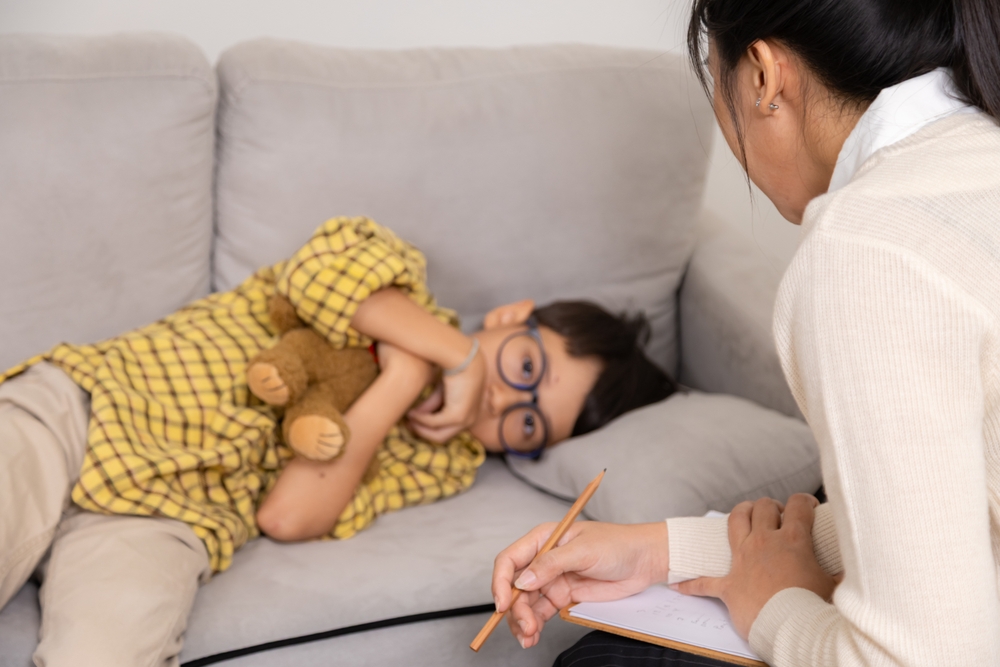
Every parent has moments when everything feels overwhelming — when your child’s big feelings collide with your own, and suddenly you’re reacting faster or stronger than you meant to. Maybe certain behaviors hit a nerve. Maybe stress rises in your body before you can slow it down. Or maybe you find yourself parenting in ways you promised you never would.
If this feels familiar, you’re not alone. Trauma-informed parenting doesn’t mean being perfect or calm all the time. It means understanding how your own history, your nervous system, and your child’s developing brain interact in those tough moments. When you can see the patterns with a little more clarity, it becomes easier to respond instead of react… and to repair when things get bumpy.
This kind of caregiving helps both you and your child feel more connected, safer, and more regulated — even when the day is hard.
What Trauma-Informed Parenting Really Means
Trauma-informed parenting is a framework that recognizes the potential impact of stressful or traumatic experiences on a child’s development and behavior. It’s a profound shift away from asking, “What’s wrong with this child?” to gently wondering, “What happened to this child, and what are they needing right now?” This approach is not just for children with known trauma histories; it is beneficial for all children, especially those who are sensitive or easily overwhelmed.
Moving from behavior-focused to nervous-system-focused parenting
Traditional parenting often focuses on correcting behavior. A child who is yelling might be sent to their room for being “disrespectful.” Trauma-informed parenting looks deeper. It sees the yelling not as disrespect, but as a signal from a dysregulated nervous system. The focus shifts from controlling the behavior to helping the child’s nervous system return to a state of calm and safety.
Why traditional discipline often backfires for sensitive or overwhelmed kids
Methods like time-outs, sticker charts, or taking away privileges rely on a child’s ability to access their “thinking brain” (the prefrontal cortex) to learn from consequences. For a sensitive or overwhelmed child whose nervous system is in a state of fight, flight, or freeze, that part of the brain is offline. Punitive measures in these moments only add more stress to an already overloaded system, often increasing the very behavior the parent is trying to stop.
The role of safety, connection, and co-regulation in healing
Trauma-responsive parenting is built on three pillars. First, safety: creating an environment where the child feels physically and emotionally secure. Second, connection: prioritizing the parent-child relationship above all else. Third, co-regulation: lending your calm nervous system to your child to help them manage their big emotions until they can do it on their own. These elements create the foundation for healing and resilience.
How Your Own History Can Impact How You Parent
Parenting doesn’t happen in a vacuum. We bring our entire life experience to the role, including our own childhood wounds and unresolved stress. Understanding your own history is a critical and compassionate part of trauma-informed parenting.
Understanding parenting triggers and why they show up so fast
A parenting trigger is an intense emotional reaction to your child’s behavior that feels disproportionate to the situation. Perhaps your child’s whining makes you intensely angry, or their defiance sends a jolt of panic through you. These triggers are often echoes of our own past experiences, activated in the present moment. They show up quickly because they are nervous system responses, not conscious thoughts.
When your child’s behavior awakens old memories or wounds
Your child’s helplessness might trigger your own memories of feeling helpless. Their anger might awaken old fears of a caregiver’s anger. When this happens, you aren’t just responding to your child; you’re responding to your child and the activated memory within you. Healing while parenting involves learning to notice when your younger self is being brought into the room.
The cycle of reactivity — and how to step out of it
The cycle often looks like this: your child has a big feeling, it triggers a big feeling in you, you react, and their big feeling escalates. This reactive cycle can leave everyone feeling disconnected and distressed. Stepping out of it begins with awareness—noticing the moment you feel activated before you react. This small pause is where your power to choose a different response lies.
Why parents with trauma often feel “too much” or “not enough”
Parents with a history of intergenerational trauma often swing between two extremes. They might feel their emotions are “too much” and try to suppress them, or they might feel they are “not enough” and constantly doubt their abilities as a parent. This is a common and understandable legacy of growing up in an environment that didn’t provide consistent safety and attunement.
What Happens in Your Child’s Brain During Big Feelings
When your child is having a meltdown, their brain is in a state of survival. Understanding the neuroscience behind their big feelings can help you respond with more empathy and effectiveness.
Stress responses: fight, flight, freeze, or cling
During emotional overwhelm, a child’s brain defaults to one of four survival responses. Fight can look like hitting, screaming, or defiant behavior. Flight can look like running away or hiding. Freeze can look like shutting down, staring blankly, or seeming not to hear you. A fourth response, often called fawn or cling, can look like excessive people-pleasing or becoming intensely clingy to the caregiver.
Why kids lose access to their “thinking brain”
When the brain’s alarm system (the amygdala) is sounding, it effectively hijacks the prefrontal cortex—the part of the brain responsible for logic, reasoning, and impulse control. Your child isn’t choosing to be irrational; in that moment, they physiologically cannot access their rational brain.
How co-regulation helps them calm down faster
A child cannot calm themselves from a state of high distress. They need a calm adult to help them. Co-regulation is the process of using your own calm to soothe their nervous system. Your gentle voice, steady presence, and empathetic tone send signals of safety to their brain, helping their internal alarm quiet down so their thinking brain can come back online. This is one of the most vital co-regulation tools.
Practical Tools for High-Stress Parenting Moments
Knowing the theory is one thing; applying it when your child is screaming on the floor is another. Here are some practical, trauma-informed parenting tools for those difficult moments.
The 10-second pause that changes everything
When you feel your own frustration rising, stop. Do nothing. Take one deep breath and count to ten. This simple act creates a crucial gap between the trigger and your reaction. It gives your own thinking brain a chance to catch up with your nervous system.
What to do when you feel triggered (before reacting)
First, name it internally: “I am feeling triggered.” Place a hand on your chest or feel your feet on the floor to ground yourself in the present moment. Remind yourself, “My child is having a hard time, not giving me a hard time.” Lower your voice and your body to appear less threatening.
Co-regulation scripts you can actually use in the moment
Instead of “Stop crying!” or “Calm down!”, try these phrases in a soft, low tone:
- “You are so mad. I hear you. I’m right here with you.”
- “This is a big feeling. I’m going to stay with you until it feels smaller.”
- “You are safe. Your feeling is safe. I’m not going anywhere.”
How to set boundaries without shame or fear
Boundaries are essential. The key is to set them from a place of calm leadership, not anger. Instead of “If you hit me again, you’re going to your room!”, try “I won’t let you hit me. Hitting hurts. I’m going to move your body to keep us both safe.” This sets a clear limit while avoiding shaming language.
Creating a calming environment during sensory overload
During meltdowns, reduce sensory input. Dim the lights, turn off the TV, and speak in a low voice. Offer a “cozy corner” with soft pillows and blankets where your child can go to feel safe. This helps lower the stress on their already overloaded system.
Helping Your Child Return to Safety After the Storm
Trauma-informed parenting is not about getting it right every time. It’s about what you do after you get it wrong. The repair process is where deep healing and trust are built.
Why repair matters more than perfection
Every parent makes mistakes. You will yell. You will react. What matters most is that you return to your child and reconnect. This process of rupture and repair teaches your child that relationships can withstand conflict and that you will always come back to them.
Simple repair phrases that support connection
After everyone is calm, approach your child and say something like:
- “I’m sorry I raised my voice. I was feeling frustrated, but it wasn’t okay for me to yell. I love you.”
- “My body felt really stressed earlier. Can we have a do-over?”
- “I miss you. Can I have a hug?”
What genuine accountability looks like (for both parent and child)
For the parent, accountability is owning your reaction without blaming the child. For the child, once they are regulated, you can gently talk about their behavior. “When you hit your brother, it hurt his body. What can we do to help him feel better?” This teaches responsibility without shame.
How repair teaches kids emotional safety and resilience
The process of parent-child repair is a powerful lesson in emotional safety. It teaches children that mistakes are not the end of the world, that love is unconditional, and that conflicts can be resolved. This is the foundation of secure attachment and lifelong resilience.
Building a Home Environment That Supports Healing
You can create a home that acts as a sanctuary for your child’s nervous system. This involves creating rhythms and connection points that build a felt sense of safety.
Predictable rhythms and why they soothe the nervous system
The brain loves predictability because it signals safety. Simple daily rhythms—eating meals at roughly the same time, having a consistent bedtime routine, knowing what to expect on a school day—can be deeply regulating for a child’s nervous system.
Micro-connections that strengthen attachment daily
Attachment is built in small, everyday moments. Make eye contact and smile when your child enters the room. Put down your phone for five minutes to listen to their story. Give them a quick hug as you walk by. These micro-connections are like small deposits into their emotional bank account.
How to lower stress during mornings, mealtimes, and bedtime
These transition times are common stress points. Prepare as much as you can the night before to make mornings calmer. Turn off screens and create a peaceful atmosphere during meals. Start the bedtime routine before your child is overtired, and make it a time for connection, not rushing.
What regulation looks like across different ages
For a baby, regulation is rocking and shushing. For a toddler, it might be sitting with them during a tantrum. For a school-aged child, it might be listening to their worries about a friend. Attachment-based parenting adapts these strategies to meet the child’s developmental needs.
When Extra Support Can Make a Meaningful Difference
While these tools are powerful, sometimes a family needs an outside guide to help them navigate difficult patterns.
Signs your child might need additional therapeutic support
If your child’s behaviors are causing significant distress at school or home, if they seem stuck in a state of high anxiety or withdrawal, or if you feel you are at your wits’ end, it’s a sign that seeking help from a trauma therapist for kids could be beneficial.
When parents benefit from dyadic or parent–child therapy
If you feel like your connection with your child is broken or that you are constantly in a power struggle, dyadic therapy can be transformative. This approach focuses on healing the relationship and strengthening the parent-child bond, which is often the key to behavioral change.
How trauma-informed therapy strengthens the whole family system
Therapy isn’t just for the child; it’s for the family. Our work with Parenting Services and Dyadic Therapy provides support for parents to heal their own triggers while learning new ways to connect with their children, creating a positive shift for the entire family.
What Growth Looks Like for You and Your Child
Healing through parenting is a gradual journey, but the changes are profound. You will begin to notice shifts in yourself and your child.
Increased flexibility, fewer power struggles
You’ll find that you and your child are less rigid. There will be more cooperation and fewer battles of will because the relationship is built on connection rather than control.
More emotional language and confidence
Your child may begin to use words to express their feelings, saying “I’m mad!” instead of hitting. You will feel more confident in your ability to handle their big emotions without becoming overwhelmed yourself.
Improved sleep, transitions, and overall regulation
As your child’s nervous system feels safer, you will likely see improvements in sleep, a greater ability to handle transitions, and a general sense of calm. These are tangible signs of developing child regulation skills.
How small shifts lead to long-lasting changes
The journey is made up of thousands of small moments. Every time you choose to pause, connect, and repair, you are strengthening new neural pathways in your brain and your child’s brain, leading to lasting change.
Encouragement for Parents on This Journey
This path is not easy, but it is deeply rewarding. It requires immense courage and self-compassion.
Why trauma-informed parenting is an act of breaking cycles
When you choose to parent in this way, you are not just helping your child; you are healing the legacy of intergenerational trauma. You are offering your child a different experience and breaking cycles for generations to come.
You don’t need to be perfect — just connected
Let go of the pressure to be a perfect parent. Your child doesn’t need perfection. They need your authentic, committed presence. They need to know that even when things get messy, you will always come back to them.
How compassion for yourself becomes compassion for your child
The more compassion you can offer yourself for your own struggles and imperfections, the more you will be able to offer to your child. Your journey of healing is inextricably linked to theirs.
If you’re curious about how trauma-informed parenting can ease stress in your home, we’re here to help. Therapy & Play offers gentle, developmentally-informed support for caregivers who want to shift old patterns and build calmer, more connected relationships with their children.
Reach out when you’re ready. You deserve support, too — and you don’t have to figure it out alone.

When a child goes through something overwhelming, it often shows up in ways that don’t look like “trauma” at first glance. You might notice more tears, more fear, more clinginess, or moments where they completely shut down. For some kids, memories come out through play or worries they can’t explain. And as a parent, it can be confusing to know what’s actually happening or how to help.
EMDR can be a powerful tool for kids because it meets them where they naturally are — in movement, imagination, story, and play. It supports their brain in processing experiences that felt too big at the time, while helping their nervous system feel safer and more settled again. When it’s done in a child-friendly, attachment-centered way, it can gently untangle the stress that’s been sitting underneath the behaviors you’re seeing.
If you’ve been wondering whether EMDR might help your child feel more regulated, confident, or connected again, you’re in the right place.
A Gentle, Kid-Friendly Look at EMDR Therapy and Why It Helps Children Heal
Eye Movement Desensitization and Reprocessing (EMDR) is a well-researched therapy that helps people of all ages heal from distressing experiences. When it comes to EMDR for kids, the approach is carefully adapted to be gentle, playful, and developmentally appropriate. For parents seeking child trauma therapy, it offers a hopeful path forward. Whether you’re looking for a trauma therapist for children in California or specialized EMDR for children in Washington, understanding how this therapy works can empower you to find the right support for your child.
How EMDR Is Adapted Specifically for Children
You can’t use an adult model of therapy with a child and expect it to work. EMDR for young children is thoughtfully modified to fit their unique developmental needs, ensuring the process feels safe and engaging, never overwhelming.
Making EMDR developmentally safe for young nervous systems
A child’s nervous system is still developing and is more sensitive than an adult’s. A trained child EMDR therapist understands this and paces the therapy accordingly. The goal is to gently process difficult memories without flooding their system with stress. Safety is the top priority, built through a warm, trusting relationship between the therapist, the child, and the parent.
How therapists use stories, art, movement, and play instead of adult-style processing
Children process their world through play, not talk. Instead of asking a child to recount a story verbally, a therapist might use puppets to act out a “story,” draw pictures of the “yucky part” and the “safe part,” or use sandplay to create a world that represents their feelings. Bilateral stimulation—the core component of EMDR—can be incorporated through drumming, tapping on “butterfly wings” (hands crossed over the chest), or passing a ball back and forth. This makes child-friendly EMDR feel like a game, not a procedure.
Why shorter sessions and pacing make EMDR easier for kids to handle
A child’s attention span and capacity for emotional processing are different from an adult’s. EMDR sessions for kids are often shorter, and the reprocessing periods are brief. The therapist carefully watches the child’s cues—their body language, their play, their energy levels—and adjusts the pace to ensure the experience remains within the child’s window of tolerance.
Understanding What Trauma Looks Like in Children
Children often don’t have the words to say, “I’m struggling with a traumatic memory.” Instead, their bodies and behaviors tell the story. Recognizing the signs of trauma in children is the first step toward getting them the help they need.
Signs of trauma that parents often overlook
Trauma symptoms in kids can be subtle and easily mistaken for other things. They might include new fears (of the dark, being alone, specific people or places), increased clinginess, or a regression in skills like sleeping through the night or toilet training. You might also notice a loss of previously enjoyed activities or a general sense of watchfulness.
Behavioral “symptoms” that are actually nervous system survival responses
What looks like “bad behavior” is often a child’s nervous system stuck in a survival state. A child who is frequently irritable or has explosive meltdowns may be stuck in a “fight” response. A child who is constantly anxious, restless, or can’t sit still might be in “flight.” And a child who seems zoned out, disconnected, or is described as a “space cadet” might be in a “freeze” response. These are not choices; they are physiological reactions to feeling unsafe.
Trauma presentation across ages 0–3, 4–6, and 7–8
In infants and toddlers (0-3), trauma can show up as feeding or sleeping difficulties, excessive crying, and being difficult to soothe. For preschoolers (4-6), you might see intense separation anxiety, re-enacting the event through play, or developing new, intense fears. In school-aged children (7-8), symptoms can look more like anxiety, difficulty concentrating at school, physical complaints like stomachaches or headaches, and social withdrawal.
Why Playful EMDR Works So Well for Kids
Integrating EMDR with play is not just about making therapy fun; it’s about tapping into the primary way a child’s brain learns, processes, and heals. This is why many therapists combine EMDR and play therapy.
How play lowers defenses and helps the brain feel safe
Play is the natural language of childhood. When a child is engaged in play, their defenses are down, and their brain is more open and receptive. A playful approach signals safety to a child’s nervous system, creating the optimal conditions for therapeutic work to happen without resistance or fear.
Why bilateral stimulation through tapping, movement, or games supports healing
Incorporating the back-and-forth rhythm of EMDR into playful activities feels natural to a child. The therapist might create a game of tapping knees back and forth, drawing a rainbow from one side of the paper to the other, or walking along a figure-eight on the floor. This playful bilateral stimulation helps the brain do its reprocessing work while the child feels engaged and in control.
The science behind “learning through the body” in childhood
Children learn through their senses and their bodies long before their verbal and cognitive skills are fully developed. Somatic EMDR for kids honors this reality. By engaging the body through movement and play, the therapy helps release trauma that is stored physically, allowing for a deeper and more integrated level of healing.
How Parent Involvement Strengthens EMDR Outcomes
In child therapy, the parent is not a bystander; you are an essential part of the healing team. Your involvement is crucial for helping your child feel safe enough to do this important work.
Why children heal faster with safe caregiver support
A child’s sense of safety is directly tied to their connection with their caregiver. When you are involved in the therapy process, it sends a powerful message to your child: “You are not alone in this. I am here with you, and we will get through this together.” This secure base allows the child to explore difficult feelings in therapy, knowing they have a safe harbor to return to.
What parents do before, during, and after sessions
Before a session, you might help your child feel prepared and calm. During the session, you may be in the room, offering a comforting presence and co-regulating with your child. The therapist will guide you on how to be a supportive anchor. After the session, your role is to provide a calm, predictable environment, as the child’s brain may continue to process.
How EMDR pairs with attachment-focused approaches like CPP
EMDR is often integrated with other attachment-based models like Child-Parent Psychotherapy (CPP). This powerful combination allows the therapy to address not only the child’s traumatic memory but also the impact it has had on the parent-child relationship. This dyadic therapy for kids helps repair the connection and strengthens the family’s ability to navigate stress together.
Signs Your Child Might Benefit From EMDR
It can be hard to know if your child’s struggles are a passing phase or a sign of something deeper. Here are some cues that might suggest EMDR could be helpful.
Emotional, behavioral, and physical cues that suggest overwhelm
If your child seems stuck in a pattern of big emotions (intense anger, sadness, fear), challenging behaviors (aggression, defiance, withdrawal), or persistent physical complaints with no medical cause (stomachaches, headaches), their nervous system may be overwhelmed.
When trauma from birth, medical experiences, or NICU stays shows up later
Difficult early experiences, even those that happened before a child could talk, can have lasting effects. EMDR can be very effective for medical trauma in children, helping to process the fear and helplessness associated with procedures, hospital stays, or a difficult entry into the world.
How to know when worry, fear, or shutdown needs therapeutic support
All children have worries and fears. But when these fears start to limit your child’s life—preventing them from going to school, making friends, or trying new things—or when you notice them frequently shutting down and disconnecting, it’s a sign that professional support is needed. If you’re wondering, “Does my child need EMDR?” consulting with a child trauma therapist in Washington or California can provide clarity.
How EMDR Helps Children Recover from Stress, Fear, or Trauma
The goal of EMDR is not to make a child forget what happened, but to help them feel free from its grip. The benefits of EMDR for kids are often seen across all areas of their life.
Reprocessing stuck feelings at a pace kids can handle
EMDR helps the child’s brain digest and file away the “stuck” memory. The memory becomes just a story from the past, rather than a threat that is happening now. This frees up the child’s emotional energy.
Strengthening the nervous system so daily life feels easier
By processing the old trauma, EMDR helps to calm the child’s nervous system. They are no longer living in a constant state of high alert. This makes it easier for them to handle the everyday ups and downs of life.
Improving sleep, separation, meltdowns, and emotional regulation
Parents often report significant improvements in areas that were once a major struggle. Children may start sleeping through the night again, have an easier time with separation at school, experience fewer and less intense meltdowns, and show a greater ability to manage their emotions.
What a Typical EMDR Session Looks Like for a Child
Knowing the steps of a child’s EMDR session can make the process feel less mysterious and more approachable for parents.
The playful warm-up phase that builds safety and trust
The first several sessions are all about building a strong, trusting relationship. The therapist will engage your child in play, get to know their interests, and work with them to build a “toolbox” of calming and coping skills. This ensures the child feels safe and empowered before any deeper work begins.
How therapists track cues, body signals, and emotional shifts
A skilled child therapist is an expert at reading a child’s non-verbal cues. They will watch your child’s play, posture, and energy to gauge how they are doing. They will track these signals to ensure the processing is happening at a pace that is just right for your child.
What parents can expect after the session ends
After an EMDR session, some children might be tired, while others might be more energized. It’s best to plan for a low-key, connecting activity afterward. Your therapist will give you specific guidance, but the general rule is to offer a calm, supportive presence as your child’s brain continues its healing work.
EMDR for Children in California and Washington: Getting the Right Support
Finding a therapist who is not only trained in EMDR but also skilled at working with children and families is key.
How telehealth EMDR works for older children in California
For school-aged children and pre-teens in California, online EMDR can be a very effective and convenient option. Therapists use creative online tools and parent coaching to deliver high-quality child trauma therapy via telehealth.
What in-person EMDR looks like for families in Washington
For families in Washington, in-person sessions at a location like our Federal Way office provide a dedicated therapeutic space with access to a wide range of play therapy tools. This can be especially helpful for younger children who benefit from the physical presence of the therapist. Finding a trauma therapist for kids in Federal Way or a child EMDR specialist in Seattle is a great first step.
When to combine EMDR with play therapy or CPP for deeper healing
The most effective child therapy is rarely a single approach. A skilled therapist will often blend EMDR with play therapy to facilitate processing and with CPP to strengthen the parent-child relationship, creating a comprehensive and holistic plan for healing.
When to Reach Out for Professional Support
Trust your parental instinct. If you feel that your child is struggling and that something is not right, it’s always a good idea to seek a professional opinion.
Why early intervention changes long-term emotional health
A child’s brain is incredibly adaptable. Addressing trauma and stress early on can prevent the development of more significant mental health issues later in life. Early intervention is a gift to your child’s future well-being.
What a consultation can help you understand
A child therapy consultation is a conversation, not a commitment. It’s a chance for you to share your concerns, ask questions, and learn about the therapeutic process. It can provide immense clarity and a sense of direction.
How to prepare your child for starting EMDR
Your therapist will guide you on how to talk to your child about therapy. Generally, you can frame it in a simple, positive, and non-shaming way, such as, “We’re going to see [Therapist’s Name] who is a feelings helper. We’ll play games and find ways to make those big, yucky feelings feel smaller.”
Helping Your Child Heal With Evidence-Based, Gentle EMDR Therapy
When a child begins to heal, the positive effects ripple outward, often transforming the entire family dynamic.
How healing can shift the entire family system
As a child becomes more regulated, the whole home environment can feel calmer. The decrease in stress and conflict creates more space for connection, joy, and ease for everyone in the family.
What parents often notice as their child begins to recover
Parents often share that their child seems “lighter” and more like their old self again. They notice more laughter, more flexibility, and a renewed curiosity about the world. They feel more connected to their child and more confident in their parenting.
How to connect with a therapist when you’re ready
Taking the step to find a trauma therapist for your child is a profound act of love. Look for a provider who specializes in EMDR for children and whose approach feels warm, safe, and collaborative.
If you’re ready to explore whether EMDR could support your child’s healing, you can reach out for a consultation anytime. We’ll talk through what you’re noticing, what your child has been navigating, and what a supportive therapy plan could look like. You don’t have to figure this out alone — we’re here to help your child feel safe, steady, and understood again.

When a child goes through something frightening, confusing, or overwhelming, the signs aren’t always obvious at first. Kids often show their worry through behavior long before they can put any of it into words. Maybe your child is more irritable than usual, suddenly clingy, having trouble sleeping, or acting much younger than their age. Or maybe you’re just sensing something is off, even if you can’t quite explain why.
These shifts can be unsettling, especially when you’re trying to figure out whether it’s “just a phase” or something that needs more support. But you’re not alone in wondering. Young children respond to stress differently than adults do, and their bodies and brains often speak before their words do. Learning how these signals show up — and how to help — can make a huge difference in how your child recovers and reconnects.
Understanding How Trauma Shows Up in Young Children
To understand child trauma signs, it helps to first understand that children process the world differently. Their brains are still developing, and they lack the life experience and verbal skills to make sense of scary events in the same way adults do.
Why children respond differently than adults
An adult might be able to talk about a car accident, process the fear, and understand that it’s over. A young child who was in the same accident might not have the words to describe their fear. Instead, their body holds onto the terror, and it might come out as nightmares, a new fear of leaving the house, or sudden, intense meltdowns whenever they hear a loud noise. Knowing how to tell if your child is struggling often means learning to read their non-verbal cues.
How the nervous system reacts to overwhelming events
When anyone experiences something overwhelming, the nervous system shifts into survival mode. It prepares the body to fight, flee, or freeze. In a child, this response is even more pronounced because their regulatory system is immature. After the event, their nervous system can get “stuck” in this high-alert state, causing them to be jumpy, anxious, or emotionally reactive long after the danger has passed.
Common triggers for child stress and trauma
Difficult experiences for a child can range from what we might consider “big T” traumas, like an accident, a natural disaster, or the loss of a loved one, to “small t” traumas. These can include a stay in the NICU, a medical procedure, a significant family change like a divorce, witnessing intense arguments, or even a scary fall at the playground. For a young child, the impact is less about the event itself and more about how it made them feel and whether they had a safe adult to help them through it.
Behavioral Shifts That May Signal Trauma
One of the clearest child stress signs is a noticeable shift in behavior. These changes can be confusing and frustrating for parents, but they are often a child’s way of communicating that their inner world feels unsafe.
Sudden defiance or increased meltdowns
A child who was once generally cooperative might suddenly become defiant, oppositional, or prone to explosive meltdowns over seemingly small things. This isn’t a sign of a “bad kid”; it’s often a sign of a nervous system on overdrive. Their capacity to cope with frustration is low because all their energy is being used to manage internal fear.
Clinginess, separation anxiety, and refusal to be alone
After a scary experience, the world can feel like a dangerous place. A child might become intensely clingy, shadowing you around the house or panicking when you leave the room. This separation anxiety is a raw, instinctual attempt to stay close to their source of safety.
Sleep changes—nightmares, trouble falling asleep, night waking
Sleep is often one of the first things to be disrupted by trauma. A child might suddenly have trouble falling asleep, start waking frequently throughout the night, or experience vivid nightmares. Their brain is trying to process the overwhelming event, and this work often happens during sleep, leading to disturbances.
Regression (bedwetting, baby talk, loss of skills)
Regression is one of the most common child trauma behaviors. You might notice your toilet-trained child starting to have accidents again, or a child who speaks in full sentences reverting to “baby talk.” This isn’t a step backward in a willful way; it’s the brain’s way of returning to an earlier developmental stage where things felt safer.
Withdrawal, shutting down, or seeming “numb”
Not all stress behaviors in kids are loud. Some children respond to overwhelm by shutting down. They may seem quiet, disconnected, emotionally flat, or “numb.” They might stop engaging in play they once loved or seem lost in their own world. This “freeze” response is a protective mechanism to cope with feelings that are too big to handle.
Emotional Signals That a Child Is Overwhelmed
Alongside behavioral changes, you will likely notice shifts in your child’s emotional landscape. Their feelings can become bigger, more intense, and harder for them to manage.
Big fears or sudden worry about everyday things
A child who was previously fearless might develop intense new fears. They might become afraid of the dark, dogs, strangers, or things that never bothered them before. This generalized anxiety is a sign that their internal alarm system is on high alert.
Irritability, mood swings, or quick tears
When a child is carrying the weight of a difficult experience, their emotional resilience is low. They may become extremely irritable, flying off the handle at the smallest provocation. You might wonder, “Why is my child so irritable?” The answer is often that their nervous system is exhausted from being in a constant state of stress.
Sensitivity to noise, transitions, or being corrected
A child struggling with emotional trauma may become highly sensitive to sensory input. Loud noises, bright lights, or unexpected touch can be startling. Transitions, which require flexibility, can become a major source of meltdowns. Even gentle correction can feel like a deep criticism to a child who already feels unsafe.
Physical symptoms: tummy aches, headaches, tension
Emotions live in the body, especially for children. Unprocessed fear and anxiety often manifest as physical complaints. If your child frequently complains of stomachaches or headaches with no clear medical cause, it could be a sign of emotional distress.
How emotional distress can look like “misbehavior”
It is crucial to understand that many of these emotional signals can look like simple misbehavior to the outside world. An irritable child might be labeled “defiant,” and a sensitive child might be called “dramatic.” Reframing these as signs of distress, not defiance, is the first step toward helping them heal.
What Happens in the Brain After Stress or Trauma
A child’s brain is fundamentally shaped by their experiences. When those experiences are stressful or traumatic, it can alter the course of their brain development, but this is not a permanent state.
The fight-flight-freeze patterns in young children
As mentioned, these survival responses become wired into the brain. A child might have a “fight” brain (quick to anger), a “flight” brain (anxious and avoidant), or a “freeze” brain (disconnected and zoned out). These patterns become the go-to response for any perceived threat, big or small.
Why their nervous systems need adult co-regulation
A child’s nervous system cannot calm itself down on its own. It learns to regulate through a process called co-regulation, where a calm adult lends their regulated state to the child. A soothing voice, a gentle hug, and a calm presence are powerful tools that help a child’s brain move from a state of fear back to a state of safety.
How overwhelming experiences shape emotional development
Childhood trauma symptoms can have a lasting impact if left unaddressed. A brain that is constantly in survival mode has less energy for higher-level functions like learning, problem-solving, and developing empathy. How trauma affects kids is by diverting resources away from growth and toward protection.
When to Consider Parent–Child Therapy
If you are noticing these signs in your child, seeking professional support can provide a clear path forward for healing. Parent-child therapy is a powerful way to support your child’s recovery.
How therapy supports both the child and the caregiver
In parent-child therapy, the child is not the only client; the relationship is. The therapist works to support you, the parent, in understanding your child’s behaviors and provides you with the tools to be the primary agent of their healing. Finding a trauma therapist for kids often means finding support for the whole family.
The role of attachment in healing early stress
The parent-child attachment bond is the most important ingredient in a child’s recovery. A secure attachment is like a healing balm for a stressed nervous system. Therapy focuses on strengthening this bond, helping your child feel deeply safe and understood by you.
Why connection—not correction—is the pathway forward
When a child is acting out due to trauma, the instinct can be to correct the behavior. However, what the child’s nervous system truly needs is connection. Therapy helps parents shift from managing behaviors to connecting with the feeling underneath the behavior.
What CPP (Child–Parent Psychotherapy) looks like in practice
Child-Parent Psychotherapy (CPP) is a highly effective, evidence-based model for treating trauma in young children. In a CPP session, the therapist helps the parent and child make sense of the scary event together, often through play. It gives the child a voice and helps the parent respond in a way that promotes healing and security.
When professional support is especially helpful
While parental support is vital, a trained child trauma therapist near you can offer specialized guidance. They can help identify the root of the behaviors, provide a diagnosis if needed, and create a roadmap for recovery that honors your child’s unique needs.
How to Support Your Child at Home While They’re Healing
Therapy is a powerful piece of the puzzle, but the healing also happens in the small, everyday moments at home. There is so much you can do to create a healing environment.
Creating predictability and a sense of safety
For a child whose world has felt chaotic and unsafe, predictability is deeply calming. Simple routines for meals, naps, and bedtime can create a rhythm that soothes the nervous system. Let your child know what’s coming next to reduce anxiety about the unknown.
Helping your child express feelings (even when they’re messy)
Make space for all feelings. You can say things like, “It’s okay to be mad, but it’s not okay to hit. Let’s stomp our feet instead.” This validates their emotion while guiding them toward safer expression. Art, play, and movement are wonderful ways for kids to get their feelings out.
Responding rather than reacting during big behaviors
This is one of the hardest but most important parts of helping kids after trauma. When your child is having a meltdown, try to take a deep breath and remind yourself, “This is a stress response, not defiance.” Your calm presence is the most powerful tool you have for helping them.
When to step in with co-regulation vs. giving space
Learning your child’s cues is key. Sometimes, a distressed child needs a firm, loving hug to help their body feel safe. Other times, they may be too overwhelmed for touch and need you to sit quietly nearby, letting them know you’re there without crowding them.
How your own nervous system influences theirs
Children’s nervous systems are like tuning forks; they resonate with the state of the adults around them. One of the most important things you can do is tend to your own regulation. Taking breaks, practicing deep breathing, and getting support for yourself are not selfish—they are essential for your child’s well-being.
What Healing Looks Like Over Time
Child trauma recovery is not a linear process. There will be good days and hard days. But over time, you will begin to see beautiful signs of healing.
Gradual behavioral shifts
You may notice that meltdowns become less frequent or less intense. Your child might start to show more flexibility and be able to handle small frustrations without falling apart.
Return of curiosity, play, and connection
A key sign of healing is the return of playfulness and curiosity. A child who has been withdrawn might start to engage in imaginative play again. Their eyes might look brighter, and they may initiate more moments of connection with you.
Increased flexibility during transitions
Transitions that were once a major battleground may become smoother. This is a sign that their nervous system is becoming more flexible and less rigid in its need for control.
More confidence and reduced fear
You might see your child venture out to try new things again, show less separation anxiety, or sleep more peacefully. These are all signs my child is improving and that their world is beginning to feel safe again.
What to remember on harder days
There will be days when old behaviors reappear. This is not a sign of failure. It’s a normal part of the healing childhood stress journey. On those days, offer yourself and your child extra compassion and return to the basics of connection and safety.
When to Reach Out for Trauma-Informed Support
Trust your gut. If you feel that your child is struggling and that you are in over your head, it is a sign of strength, not weakness, to ask for help.
Red flags parents shouldn’t ignore
If your child’s behaviors are causing significant disruption at home or school, if they are having persistent sleep issues, or if they seem stuck in a state of high anxiety or deep withdrawal, it’s important to seek an evaluation from a child trauma specialist.
Why early support creates long-term resilience
A child’s brain is incredibly malleable. Providing support early on can prevent the trauma from becoming deeply entrenched, allowing the brain to get back on its healthy developmental track. Early intervention is a profound gift to your child’s future.
How to find the right trauma therapist for your child
Look for a therapist who specializes in early childhood and has training in trauma-informed models like CPP. It’s important to find someone who you and your child both feel comfortable with. Whether you’re looking for a trauma therapist for kids in California or child therapy in Federal Way, WA, finding the right fit is key.
You Don’t Have to Figure This Out Alone
Navigating your child’s distress is one of the hardest things a parent can do. Please know that support is available and that you are not meant to carry this burden by yourself.
How Therapy & Play supports families through scary starts
Our practice is dedicated to supporting young children and their parents. We use evidence-based, relationship-focused approaches like Parent–Child Therapy and Child-Parent Psychotherapy (CPP) to help families heal together.
What your first session may look like
Your first session will be a conversation. It’s a chance for you to share your story and concerns in a safe, non-judgmental space. We’ll get to know you and your child and begin to map out a path toward healing.
Encouragement for parents who are worried about their child
You are your child’s best advocate and most important source of safety. The fact that you are reading this shows how deeply you care. With the right support, you can be the healing presence your child needs to navigate this difficult chapter and emerge with resilience and a deepened sense of connection to you.
If you’re noticing changes in your child and want support from someone who understands early childhood stress and trauma, we’re here to help. Therapy & Play offers gentle, relationship-based care for young children and their caregivers in California and Washington.
When you’re ready, reach out. We’ll walk through this with you, one step at a time.
When you’ve lived through something overwhelming, it’s easy to feel like your brain is “wired this way forever.” Maybe you shut down when things get too close, or your body jumps into panic before you even understand why. These patterns can feel stubborn and automatic—like they’re baked in.
But the truth is much softer and far more hopeful: your brain is designed to change.
Neuroplasticity is the reason healing is possible at any age, even if the trauma happened years or decades ago. Your nervous system is always learning, adapting, and searching for safety. With the right support, it can shift out of survival mode and begin to build new pathways that help you feel more grounded, connected, and steady in your body.
You’re not broken. Your brain did exactly what it needed to help you survive. Now it can learn something new.
What Neuroplasticity Really Means — A Simple, Hopeful Explanation
The concept of neuroplasticity offers a powerful message of hope for anyone who has experienced trauma. It dismantles the old, rigid idea that the brain is fixed after childhood. Instead, it presents a more accurate and compassionate view of a brain that is dynamic and capable of profound change.
The brain’s built-in ability to adapt and change
At its core, neuroplasticity is the brain’s natural ability to reorganize itself by forming new neural connections. Think of your brain’s pathways like trails in a forest. The more a trail is used, the wider and more defined it becomes. Neuroplasticity is the process that allows you to forge new trails, even after old ones have been deeply ingrained for years. This inherent capacity for change is what makes brain healing after trauma possible.
Why neuroplasticity matters in trauma recovery
For trauma survivors, neuroplasticity is everything. Trauma can create rigid, deeply carved pathways in the brain that are oriented toward threat and survival. Neuroplasticity means these pathways are not permanent. Through new experiences, particularly in the context of safe relationships, the brain can learn new ways of responding. Understanding neuroplasticity and trauma recovery means recognizing that healing isn’t just a psychological concept; it’s a biological process of rewiring.
How Trauma Rewires the Brain’s Pathways
Trauma is not just a bad memory; it is a physiological event that leaves a lasting imprint on the brain and nervous system. Understanding how trauma rewires the brain can help you view your responses with more compassion and less self-blame.
Why trauma shifts the brain toward survival mode
When you experience an overwhelming event, your brain’s survival system—primarily the amygdala, your internal smoke detector—takes over. It shifts all of your body’s resources toward fight, flight, or freeze. The thinking, rational part of your brain (the prefrontal cortex) goes offline. After the event, the brain can get stuck in this survival mode, constantly scanning for danger even when none is present.
How chronic stress shapes patterns of fear, shutdown, or hypervigilance
If the traumatic experience is prolonged or happens during childhood, the brain can adapt to a state of chronic stress. This shapes your trauma response patterns. You might become hypervigilant, always on edge and unable to relax. You might develop patterns of anxiety and fear, or you might adapt by shutting down and disconnecting from your feelings and your body to cope.
What happens in the nervous system during overwhelming experiences
During trauma, your nervous system is flooded with stress hormones like cortisol and adrenaline. This is a natural survival response. However, when the trauma is over but the system doesn’t reset, it can remain in a state of high alert or deep shutdown. This is why trauma and the nervous system are so interconnected; the experience gets locked in the body’s physiology, leading to symptoms that can persist for years.
The Encouraging Truth — The Brain Can Change at Any Age
One of the most persistent myths about the brain is that its development is complete after early adulthood. Modern neuroscience has proven this to be untrue, offering a powerful message of hope for anyone wanting to heal.
How neuroplasticity continues across the lifespan
While the brain is most plastic during childhood, it retains the ability to change throughout your entire life. Every time you learn a new skill, think a new thought, or have a new emotional experience, you are engaging in neuroplasticity. Adults can absolutely rewire their brain patterns, no matter how long they have been in place.
Why emotional learning is possible even decades later
The emotional centers of the brain remain capable of learning and adapting. This means that even if you didn’t receive the emotional comfort or safety you needed in childhood, you can learn to experience and internalize those feelings as an adult. Healing the brain is not about erasing the past but about creating new emotional experiences in the present.
How safe relationships help re-open neural pathways
Neuroplasticity is most powerfully activated within the context of safe relationships. When you feel seen, heard, and understood by another person, your brain’s threat-detection system can relax. This state of relational safety opens the door for new, more adaptive neural pathways to form. This is the foundation of effective, brain-based therapy.
How Therapy Uses Neuroplasticity to Support Trauma Healing
Therapy for trauma is not just about talking; it’s about providing the brain with the experiences it needs to rewire itself for safety and connection. A skilled therapist acts as a guide, helping your nervous system learn what it never had the chance to.
Why therapeutic safety is the foundation for brain change
For the brain to change, it must first feel safe. A good therapist creates a non-judgmental, compassionate, and predictable environment. This consistent safety calms the amygdala and allows the prefrontal cortex to come back online, creating the ideal conditions for neuroplasticity.
EMDR and bilateral stimulation as pathway rewiring tools
EMDR (Eye Movement Desensitization and Reprocessing) therapy directly harnesses neuroplasticity. The use of bilateral stimulation (like eye movements or tapping) helps the brain access and process “stuck” traumatic memories. It allows the brain to connect the distressing memory to more adaptive information, effectively rewiring the neural pathway associated with that memory.
Somatic therapy and the role of the body in brain healing
Trauma is stored in the body, so healing must involve the body. Somatic therapies help you gently notice and track physical sensations. This process helps release trapped survival energy and teaches the nervous system that it is safe to be in the present moment. This body-based work is a powerful way to promote brain healing.
Attachment-focused therapy and relational neural repair
Many traumas are relational in nature. Attachment-focused therapy uses the therapeutic relationship itself as a tool for healing. By providing a secure and attuned connection, the therapist helps your brain experience a new relational template. This process of relational repair is fundamental to our approach to Attachment & Healing.
Practical Ways to Strengthen New Neural Pathways in Daily Life
Therapy is a powerful catalyst for change, but the work of rewiring the brain after trauma also happens in the small moments of your daily life. You can actively support your brain’s healing process.
Repetition and gentle corrective experiences
The brain learns through repetition. Every time you choose a new, healthier response, you are strengthening a new neural pathway. This could be as simple as taking a deep breath instead of reacting with anger, or reaching out to a friend instead of isolating yourself. These small, corrective experiences, repeated over time, create lasting change.
Co-regulation and supportive relationships as rewiring tools
Spending time with people who make you feel safe and calm is a potent form of nervous system healing. When you are with a regulated person, your own nervous system can “borrow” their calm through a process called co-regulation. This is a direct way to help your brain learn what safety feels like.
Mindfulness and slow moments that calm the nervous system
Mindfulness is the practice of paying attention to the present moment without judgment. Even a few minutes of mindful breathing or noticing the sights and sounds around you can help shift your brain out of survival mode. These slow moments send a signal to your nervous system that you are safe right now.
Self-compassion as a neurological intervention
Treating yourself with kindness, especially when you are struggling, is not just a nice idea; it’s a way to change your brain. Self-criticism activates the brain’s threat system. Self-compassion, on the other hand, activates the brain’s soothing and caregiving systems, releasing oxytocin and reducing cortisol.
How You Know Brain-Based Healing Is Already Happening
Rewiring your brain is a gradual process. The changes may be subtle at first, but they are real. It’s important to acknowledge these signs of progress along the way.
Feeling more grounded or less reactive
You might notice that situations that used to send you into a panic now feel more manageable. You may find yourself able to pause before reacting. This is a sign that your nervous system is becoming more regulated and less dominated by the fight-or-flight response.
Noticing emotional patterns shifting
Perhaps you notice you are less prone to shutting down, or that you have a greater capacity for joy and connection. You might recognize an old, self-critical thought and be able to let it go without it taking over. These are signs that new, more flexible neural pathways are being built.
Moving from survival mode into connection
A key indicator of healing is a shift from a life organized around survival to one organized around connection. You may find yourself more willing to be vulnerable with safe people or more interested in social activities you once avoided.
Experiencing safety in small but meaningful ways
Healing often shows up in small moments. It might be the ability to truly enjoy a cup of tea, feel the warmth of the sun on your skin, or feel a genuine sense of peace, even for a few seconds. These moments are evidence that your nervous system is learning to feel safe.
When It Might Be Time to Reach Out for Support
While you can do much to support your own healing, the guidance of a trained professional can be invaluable, especially when patterns feel deeply entrenched.
If patterns feel stuck or overwhelming
If you feel like you are trying to change but keep falling back into the same painful patterns of anxiety, shutdown, or reactivity, it may be a sign that you need support to help your nervous system get unstuck.
If relationships feel harder than they should
When trauma has impacted your ability to trust and connect, relationships can feel like a minefield. If you long for closeness but constantly find yourself pushing it away or feeling anxious within it, therapy can help you heal the relational wounds that are getting in the way.
If regulation feels out of reach
If you feel like you are living on an emotional rollercoaster and are unable to find a sense of inner calm, a therapist can teach you the tools for nervous system regulation and provide the co-regulating presence your brain needs to learn them.
Moving Forward With Hope — Your Brain Is Capable of Change
The journey of healing from trauma is not about erasing your past. It’s about changing your brain’s relationship to it, so that you can live more fully in the present.
Why healing is possible even if it hasn’t happened yet
It doesn’t matter how old you are or how long ago the trauma occurred. Your brain’s capacity for neuroplasticity means that change is always possible. The right conditions and the right support can unlock this potential at any stage of life.
The power of consistent, supportive connection
The most powerful catalyst for brain change is a safe, consistent connection with another person. This is the heart of effective trauma therapy. It provides the relational ingredients that the brain needs to rewire itself for safety, trust, and connection.
Encouragement without pressure — rewiring takes time
Be gentle with yourself. Building new neural pathways is like creating a new trail in a dense forest. It takes time, patience, and consistent effort. There is no timeline for healing. Every step, no matter how small, is a move toward a more regulated and connected life.
If you’re ready to explore brain-based trauma therapy in a way that feels safe and steady, we’re here to walk with you. Healing isn’t about forcing change—it’s about giving your nervous system the experiences it never had the chance to receive.
You don’t have to navigate this alone. Reach out when you’re ready, and we’ll take the next steps together.

Attachment is something we all carry, whether we think about it or not. It’s the way we learned to feel safe, comforted, and understood in our earliest relationships — and it quietly shapes how we show up with partners, friends, and even our own children. When those early bonds were inconsistent, overwhelming, or confusing, the body adapts. It finds ways to protect itself that made perfect sense back then, even if those patterns feel frustrating or painful now.
Attachment-based therapy gives adults and parents a chance to understand those old protective strategies with compassion rather than judgment. It creates a space where you can explore why certain moments feel so triggering, why closeness can be hard, or why parenting brings up feelings you never expected. With the right support, attachment wounds can soften, and new relational experiences can help the nervous system feel safer than it did before.
Understanding What “Attachment” Really Means in Everyday Life
The term “attachment” is used a lot, but its meaning goes far deeper than just a bond or a connection. It’s a biological imperative for survival, rooted in our need for safety and protection from a caregiver. Attachment theory, originally developed by John Bowlby, explains how this fundamental need shapes our development. When parents wonder “what is attachment?” they’re really asking about the foundation of their child’s emotional world. Understanding this concept is the first step in exploring attachment therapy.
How early relationships shape the nervous system and sense of safety
From our very first moments, our nervous system develops in a relationship with our caregivers. When an infant is distressed and a parent responds with warmth and attunement—a soft voice, a gentle rock, a soothing presence—the baby’s nervous system learns to move from a state of high alert back to a state of calm. This process of co-regulation, repeated thousands of time, wires the brain for safety. It builds an internal sense that “I am safe,” “My needs will be met,” and “I am not alone.”
What secure attachment looks and feels like
A secure attachment is the outcome of these consistent, responsive caregiving experiences. It doesn’t mean perfect parenting. It means that a child learns they have a secure base to explore from and a safe haven to return to in times of distress. For a child, it looks like the freedom to play and explore, knowing they can run back to their parents for comfort if they get scared. For an adult, it manifests as a sense of inner security, the ability to trust others, and the capacity to navigate relationships with confidence and resilience.
Why attachment is more than a parenting style or trend
Attachment is not a rigid set of rules or a parenting fad. It’s a foundational aspect of human development. You cannot “do” attachment parenting incorrectly and ruin your child. Rather, attachment is the quality of the relational dance between a child and caregiver. It’s about the repair that happens after a misstep, the attunement to a child’s needs, and the overall feeling of safety that is built over time. It’s a biological process, not a checklist.
Common Attachment Adaptations and Why They Form
When early caregiving is not consistently safe or responsive, children’s nervous systems brilliantly adapt to survive the environment they are in. These are not “problems” or “disorders”; they are intelligent, protective strategies. Understanding these attachment adaptations can help adults make sense of their own patterns and their children’s behaviors.
Why children develop protective patterns, not “problems”
A child’s primary goal is to maintain a connection to their caregiver, no matter what. If expressing needs like sadness or anger leads to the caregiver pulling away, the child may learn to suppress those feelings to keep the parent close. If the caregiver is frightening or unpredictable, the child may learn to be hypervigilant and anxious. These are not character flaws; they are survival strategies.
Avoidant, anxious, and disorganized adaptations in simple language
In attachment-based therapy, we look at these patterns with compassion.
- Avoidant Adaptation: If a caregiver was consistently unavailable or dismissive of a child’s needs, the child learns, “My needs won’t be met, so I must rely only on myself.” They adapt by shutting down their emotions and becoming highly independent.
- Anxious (or Ambivalent) Adaptation: If a caregiver was inconsistently available—sometimes warm, sometimes distant—the child learns, “I have to work hard to get my needs met.” They may become clingy, anxious, and preoccupied with keeping the caregiver’s attention.
- Disorganized Adaptation: If a caregiver was a source of both comfort and fear, the child is put in an impossible situation. They want to move toward their caregiver for safety, but their caregiver is also frightening. This creates a disorganized response, where the child’s behaviors can seem confusing or contradictory.
How stress, trauma, or inconsistent care shape these patterns
These adaptations are often the result of childhood attachment wounds. They can be caused by overt trauma, but they can also stem from more subtle experiences like a parent’s chronic illness, postpartum depression, high levels of family stress, or a caregiver who, despite loving their child, was not emotionally attuned due to their own unresolved trauma.
How Attachment Patterns Show Up in Adulthood
The relational blueprint we develop in childhood doesn’t just disappear. It becomes the lens through which we view ourselves and our adult relationships. Many people seek therapy for adults because they feel stuck in painful relational cycles.
Relationship dynamics shaped by early experiences
Our early attachment patterns predict how we behave in adult romantic relationships. An adult with an avoidant adaptation might feel suffocated by intimacy and pull away when a partner gets too close. An adult with an anxious adaptation might feel a constant fear of abandonment and seek frequent reassurance. Recognizing these attachment patterns in adults is often the first step toward change.
Why conflict, distancing, or overwhelm can feel automatic
If you’ve ever wondered, “Why do I shut down in relationships?” the answer is often found in your attachment history. These reactions—distancing, shutting down, or becoming intensely emotional during conflict—are not conscious choices. They are automatic, nervous system responses that were wired in long ago as a way to protect you from relational threat.
How attachment affects self-worth, anxiety, and emotional regulation
Our attachment experiences form our core beliefs about ourselves. A secure attachment fosters a sense of being worthy and lovable. In contrast, attachment wounds in adulthood can lead to chronic anxiety, low self-worth, and difficulty managing emotions. The feeling of not being “good enough” is often a direct echo of early relational experiences.
How Attachment Influences Parenting and Co-Regulation
Parenting is one of the most common ways our own attachment history comes to the surface. The intense demands and deep love of raising a child can activate our oldest emotional blueprints.
Why parenting activates old emotional blueprints
The parent-child relationship is profoundly powerful. The vulnerability and dependence of your own child can subconsciously transport you back to your own childhood experiences. You are suddenly in the “parent” role of a dynamic you first experienced as the “child.” This can bring up unexpected and intense feelings.
When your child’s big feelings trigger your younger self
When your toddler has a meltdown or your baby won’t stop crying, their distress can trigger the parts of you that felt unheard or overwhelmed as a child. If your own big feelings were dismissed, it can be incredibly difficult to stay present and calm with your child’s emotions. This is a common aspect of intergenerational trauma.
Breaking cycles with awareness and support
The beautiful thing is that awareness is the first step toward change. By understanding your own attachment patterns, you can begin to respond to your child from a place of conscious choice rather than automatic reaction. Parent-child attachment support can provide the tools and compassion needed to break these cycles and offer your child a different experience.
How Attachment-Based Therapy Supports Healing and Change
Attachment-based therapy operates on a simple but profound principle: what was wounded in a relationship can be healed in a relationship. The safe, attuned therapeutic relationship provides a new relational experience where the brain can learn a different story about connection.
What “relationship-focused therapy” actually looks like
In attachment therapy, the therapist is not a blank slate. They are an active, engaged, and compassionate partner in your healing. They pay close attention not just to your words, but to your emotions and body language. They offer the attunement and emotional presence that may have been missing in your early life.
How therapy creates safety for new neural pathways
The brain is plastic, meaning it can change and form new connections throughout our lives. When you consistently experience a relationship with a therapist who is safe, reliable, and attuned, your brain begins to build new neural pathways. It starts to learn, on a cellular level, that connection can be safe and that you can depend on another person.
Why attunement and co-regulation repair what was missed early on
An attachment therapist provides the co-regulation that you may not have received as a child. They help you name and navigate your feelings, stay with you when you feel overwhelmed, and celebrate your moments of strength. This relational repair helps to heal old wounds and builds your own capacity for self-regulation. Finding an attachment therapist near you can be a life-changing step.
Modalities Commonly Used in Attachment-Focused Therapy
Attachment therapy is not a single technique but a framework. A skilled therapist will integrate various modalities to best support your healing journey.
EMDR for attachment and relational trauma
EMDR for attachment trauma is a powerful tool for processing specific relational memories that are stuck in the nervous system. It can help desensitize triggers and shift the negative beliefs about yourself that formed from these experiences.
Somatic therapy and nervous system repair
Because attachment patterns are stored in the body, somatic attachment therapy is crucial. This approach helps you become aware of your physical sensations and release the trapped survival energy, calming your nervous system and increasing your sense of safety.
Inner child work and parts-informed approaches
This work involves connecting with the younger parts of yourself that hold the original attachment wounds. By offering these parts the compassion and understanding they never received, you can begin to heal from the inside out.
Parent–child modalities (CPP, dyadic work, play-based healing)
For parents and children, specific modalities are used. A CPP therapist might work with you and your child together to heal from a traumatic event. Parent-child therapy and dyadic work focus on strengthening the bond and improving co-regulation, often through play-based healing.
How to Know if Attachment-Based Therapy May Help You or Your Child
If you recognize yourself or your child in these descriptions, attachment-based therapy may be a supportive path.
Signs of attachment distress in adults
This can include difficulty trusting others, fear of intimacy, a pattern of chaotic relationships, feeling emotionally numb or disconnected, chronic anxiety, or a deep sense of being flawed or unlovable.
Signs of attachment stress in babies and young children
In young children, this might look like intense separation anxiety, being difficult to soothe, frequent and intense tantrums, aggressive behavior, or being overly compliant and withdrawn. If you find yourself wondering, “Does my child have attachment issues?” it’s a sign that exploring support is a good idea.
When to reach out for support and what early intervention can shift
Trust your instincts. If you are struggling in your relationships or worried about your child, reaching out for an attachment therapy consultation is a sign of strength. Early intervention can make a profound difference, preventing years of pain and helping to establish a foundation of security for a lifetime.
What Healing Can Feel Like Over Time
Healing attachment wounds is a journey, not a destination. Over time, you can expect to feel tangible shifts in your internal and external worlds.
Increasing capacity for connection and emotional closeness
You may find that intimacy feels less frightening and that you are better able to trust and depend on safe people in your life. The push-pull of wanting closeness and fearing it begins to soften.
More grounded parenting moments
You will find you have more capacity to stay calm and present during your child’s storms. You will be able to respond with more compassion and less reactivity, strengthening your bond.
Feeling safer inside your own body and relationships
Perhaps the most profound change is a growing sense of internal safety. The constant feeling of being on alert can finally begin to quiet, replaced by a sense of peace and a belief in your own worthiness. This is the heart of the attachment healing process.
Exploring Attachment Support at Therapy & Play
We believe that healing happens in the context of safe, attuned relationships. Our work is grounded in the belief that everyone deserves to feel secure, connected, and understood.
How our approach integrates neuroscience, attunement, and relational repair
We combine the latest understanding of brain science with the timeless power of human connection. Our attachment therapy in California and Washington is designed to provide the relational safety your nervous system needs to heal and rewire old patterns.
When to consider attachment therapy for adults, parents, or young children
If you are an adult feeling stuck in painful relationship patterns, a parent wanting to break generational cycles, or you’re worried about your child’s emotional or behavioral struggles, attachment-focused therapy can help. We encourage you to explore our approach to Attachment & Healing.
If you’re curious about what attachment-focused support could look like for you or your child, you’re welcome to reach out for a consultation. We can talk through what you’ve been experiencing, what you’re hoping to shift, and whether attachment-based therapy feels like a good fit. You don’t have to navigate this alone — healing is possible, and support is here when you’re ready.
Start Your Healing Journey
If these topics resonate, therapy can help you take the next step toward emotional regulation, secure attachment, and self-compassion.

Want to Stay Connected?
Join our mailing list to get the latest updates on trauma healing, conscious parenting, and cycle-breaking insights.