
Attachment & Trauma Therapy Blog
Blogs & Resources
Explore trauma-informed blog posts on attachment healing, conscious parenting, postpartum mental health, and breaking generational cycles. Read our latest insights.
Trauma-Informed Insights for
Healing, Parenting & Growth
Welcome to the blog, your go-to resource for compassionate, trauma-informed guidance on healing emotional wounds, nurturing secure attachments, and fostering resilience—for adults, parents, and families alike.
Here, you’ll find evidence-based articles that explore the impact of trauma, the science of neuroplasticity, practical parenting tools, and more—all designed to support your healing journey and empower you to break cycles.


Latest Posts
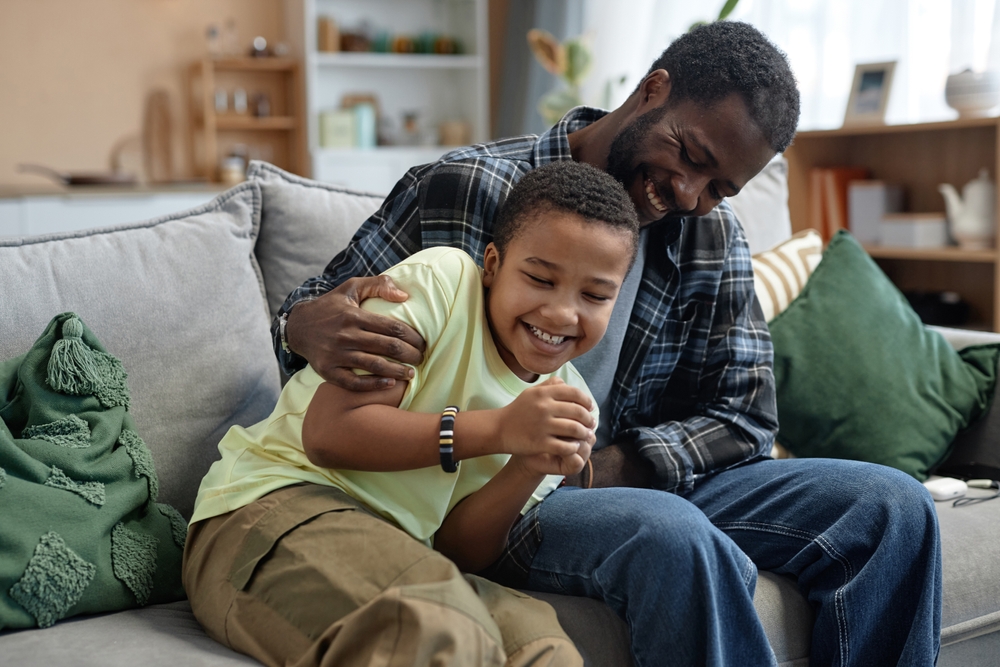
We often think of play as an activity—something we do with our children to keep them busy or help them learn. We schedule it, we buy toys for it, and we try to make it fun. But what if we saw play not as an activity, but as a place? A place where we meet our children, where we learn their language, and where the bond between us grows stronger with every shared giggle and every collapsed block tower.
Play is not separate from the parent-child relationship; it is one of the primary ways that relationship is experienced and expressed. It is in the quiet moments of shared attention and the boisterous moments of shared joy that connection deepens. For a young child, these moments are not just fun—they are the very fabric of feeling loved and secure.
At Therapy & Play, we see connection through play as a foundational element of a child’s well-being. It is not about becoming a perfect playmate, but about discovering that play is a way of being together. When we shift our focus from the doing of play to the being in it, we unlock one of the most powerful tools we have for nurturing a strong, resilient parent-child bond.
Play Is More Than an Activity — It Is a Way of Being Together
In a world that prizes productivity, it can be hard to embrace an activity that has no clear goal. Relational play isn’t about teaching letters or numbers; it’s about sharing a moment in time. It is a state of mind, a way of relating to one another that is open, curious, and free from the pressure to achieve.
The benefits of playing with your child are often less about the game itself and more about the emotional resonance of the interaction. It is the feeling of being in sync, of moving to the same rhythm. This shared experience is what builds the relationship.
Moving From Doing Play to Experiencing It Together
Many parents feel a sense of pressure to entertain or direct their child’s play. We come up with ideas, set up elaborate activities, and feel responsible for keeping the fun going. But this often puts us in the role of a cruise director rather than a partner.
Experiencing play together means letting go of the agenda. It means sitting on the floor, watching what your child is doing, and simply being present with them. It is the shift from “What should we do?” to “I am here with you.” This presence is what children are really seeking when they ask us to play.
Why Children Feel Connection Before They Understand It
A young child does not have the cognitive capacity to analyze a relationship. They don’t think, “My mother is a reliable attachment figure.” They simply feel it. They feel it in the warmth of your lap as you read a book. They feel it in your delighted gasp when they show you a drawing. They feel it in the steady rhythm of rolling a ball back and forth.
Connection is a felt sense. It lives in the body. Play provides endless opportunities for these positive, embodied experiences. Parent child connection activities are not about the activity itself, but about the feeling of safety and belonging that the activity generates.
Children Experience Relationship Through Shared Attention
One of the most powerful and subtle ways connection is built is through shared attention. This is when you and your child are both focused on the same thing, with a mutual awareness that you are sharing the experience.
It’s when you both look up at the sound of a bird, and then look at each other and smile. It’s when your toddler points to a dog, and you look and say, “Yes, a big, fluffy dog!” This is the parent child interaction that forms the bedrock of communication and connection.
The Power of Simply Noticing the Same Thing
Joint attention examples are woven throughout a child’s day. When you and your child are both focused on the tower they are building, you are in a state of shared attention. You are occupying the same mental space.
For a child, this is a profound experience. It confirms that their focus is valid and interesting to the most important person in their world. It teaches them that their interests are worthy of being shared. This is a fundamental building block of self-esteem.
When a Child Thinks, “You See What I See.”
The experience of shared attention sends a deep message: “You see what I see. You get me.” This feeling of being seen and understood is at the heart of secure attachment. Bonding with your toddler or young child often happens in these quiet moments of shared observation.
They learn that they are not alone in their experience of the world. There is someone beside them, looking at the same bug, marveling at the same block tower, and sharing the same world. This “we-ness” is the essence of a strong relationship.
Being Emotionally Available Matters More Than Leading the Play
Parents often feel pressure to be fun and engaging play partners. We worry that if we aren’t energetic or creative, our child will be bored. But children do not need a performer; they need a present and responsive parent.
Emotional availability in parenting is the capacity to be open and receptive to your child’s emotional state. It means being able to tune in to their feelings—their frustration, their joy, their excitement—and respond in a way that makes them feel understood. This is far more important than any game you could invent.
Presence Over Performance
Attuned parenting isn’t about putting on a show. It is about letting go of your own distractions and agenda to simply be with your child. Your calm, non-anxious presence is the most valuable toy you can bring to the playroom.
When you are emotionally available, your child can “borrow” your regulation. If they are getting frustrated with a puzzle, your steady presence can help them stay with the challenge a little longer. If they are giddy with excitement, your shared smile validates their joy. This is how to connect with your child on a deep, non-verbal level.
Letting Your Child Influence the Moment
Responsive parenting means allowing your child to have an impact on you. In play, this might look like letting them decide what game you play or what character you will be. It means when they hand you the pretend teacup, you accept it with delight.
When a child sees that they can influence you—that their ideas and actions change what you do—they experience a powerful sense of agency. It teaches them that they matter and that they have a voice in the relationship.
Shared Play Builds a Sense of “Us”
Every relationship has a story. The story of a parent-child bond is written in the small, repeated moments of connection. Shared play is a primary author of this story. It creates a shared history of inside jokes, favorite games, and cherished memories.
These experiences build a sense of “us”—a feeling of being part of a special team. This sense of belonging is a cornerstone of a positive parent child relationship and a powerful buffer against life’s stresses.
How Repeated Moments Create Belonging
Attachment building activities are not one-time events. A sense of belonging grows from the steady accumulation of small, positive interactions. It’s the way you always tickle them in the same spot, the silly song you sing during bath time, or the familiar rhythm of your nightly bedtime story.
In play, this might be a game you return to again and again. These rituals become part of your family’s unique culture. They create a predictable landscape of connection that tells a child, “This is your home. This is your family. You belong here.”
The Early Roots of Trust and Partnership
When you play with your child, you are not just a parent and a child; you are partners. You are working together to build something, solve something, or create a story. This experience of partnership is the early root of trust.
The child learns that you are on their side. You are someone who will help them, who will celebrate with them, and who will stay with them when things get hard. Strengthening family connection through play teaches children what a healthy, collaborative relationship feels like from the inside out.
Connection Often Grows Quietly — Not Just in Big Moments
We live in a culture that celebrates big, Instagram-worthy moments. But the deep, abiding connection between a parent and child is most often forged in the quiet, unremarkable moments in between.
Building connection daily doesn’t require a grand gesture. It requires a mindful awareness of the small opportunities for contact that present themselves throughout the day.
Ordinary Interactions With Lasting Impact
The small parenting moments that matter are often fleeting. It’s the moment you catch your child’s eye across the room and share a smile. It’s the way you gently brush the hair out of their eyes. It’s the two minutes you spend looking at a worm on the sidewalk together.
These ordinary interactions may seem insignificant, but they are the bedrock of the relationship. They are deposits in the emotional bank account. When we see these moments as opportunities for connection, our entire day becomes a landscape for bonding.
Why Consistency Feels Safe to a Child
For a child, consistency is another word for safety. When your responses are generally predictable and warm, they can relax. They don’t have to spend energy wondering which version of you will show up. Everyday ways to bond with your child are powerful because they create this reliable pattern.
This doesn’t mean you have to be perfect. It means that, on the whole, your child knows you are a safe harbor. They can count on your presence. This consistency in connection allows them to build a secure internal model of relationships that they will carry with them for life.
When Children Invite You Into Play, They Are Inviting You Into Their World
A child’s world of play is sacred ground. It is where their imagination lives, where their feelings are explored, and where they make sense of their experiences. So when a child says, “Will you play with me?”, it is a profound invitation. They are asking you to step out of the adult world and into theirs.
Accepting this invitation is a powerful act of love and respect. Understanding your child through play is one of the most intimate ways to know them.
Entering With Curiosity Instead of Direction
It can be tempting to enter a child’s play with our own ideas. We might want to make the play more “educational” or “organized.” But the most connecting way to enter is with quiet curiosity.
Instead of directing, try narrating. “I see you’re putting all the red cars in a line.” Instead of asking questions, make observations. This child led interaction shows them that you are there to learn about their world, not to change it.
Following Without Taking Over
Once you are in the play, the challenge is to follow your child’s lead without taking over. Let them be the director. If they assign you the role of the baby, embrace it. If they want you to make silly noises, do it.
This act of following communicates deep respect. It tells your child, “Your ideas have value. You are in charge here.” For a small person in a big world, this experience of being the leader, even for just a few minutes, is incredibly empowering.
Moments of Misattunement Are Part of Every Relationship
No parent is perfectly attuned 100% of the time. We get distracted. We are tired. We misunderstand our child’s cues. These moments of missing each other—of misattunement—are not just normal; they are an inevitable part of every human relationship.
What matters more than avoiding misattunement is what we do after it happens. The process of repairing connection with your child after a disconnection is where resilience and trust are truly forged.
Missing Each Other Happens
A rupture can be small—like checking your phone when your child is trying to show you something. Or it can be bigger—like losing your temper. The key is to recognize that a disconnect has occurred.
Shame often tells us we are a bad parent for these moments. But relationship repair in a parent child context starts with self-compassion. Acknowledging that missing each other happens allows you to move out of guilt and into the proactive work of reconnecting.
Returning to Play as a Way Back to Connection
After a hard moment, words can feel inadequate or even overwhelming for a child. A simple, gentle invitation back into play can be the most effective way to repair the bond. “Would you like to build with your Legos with me?”
This non-verbal apology says, “I want to be close to you again.” Returning to a familiar, enjoyable activity helps regulate both of your nervous systems. It smooths over the rough edges of the conflict and reminds you both that the relationship is bigger and more resilient than the rupture.
Play Supports Connection Even as Children Grow More Independent
A common fear among parents is that strong attachment will lead to clingy, dependent children. The truth is exactly the opposite. A secure connection is the launchpad for healthy independence.
Children who feel deeply secure in their relationships are more confident explorers. They know they have a safe harbor to return to, which makes them brave enough to sail into uncharted waters.
Why Strong Relationships Encourage Exploration
Think of a toddler at the park. They will often play for a few minutes and then run back to their parent for a quick hug or a check-in before running off again. This is secure attachment in action. The connection doesn’t hold them back; it refuels them.
Connection supports independence because it frees up the child’s energy. They don’t have to waste mental resources worrying about whether their caregiver is available. They can invest that energy into learning, socializing, and exploring their world.
Staying Connected Through Developmental Shifts
As children grow, the nature of play changes. The toddler who wanted to wrestle becomes the school-aged child who wants to play a board game, who then becomes the teenager who wants to share a favorite song with you.
The form of play evolves, but the function remains the same: it is a vehicle for connection. Staying connected through these developmental shifts requires us to remain flexible and attuned to what our child needs from us now, honoring their growing independence while still offering ourselves as a secure base.
You Don’t Need Endless Time — You Need Moments of Togetherness
In the crush of modern life, time feels like the most precious commodity. Many parents carry a heavy weight of guilt, worrying they are not spending enough quality time with their children. But connection is not measured in hours; it is measured in moments.
Connecting with your child in busy schedules is about finding small pockets of presence. It’s about choosing to be fully there, even if it’s only for a few minutes.
A Few Minutes Can Still Be Meaningful
You do not need to block out an hour of uninterrupted play to strengthen your bond. Five minutes of fully engaged play—with no phone, no distractions, no other agenda—can be more powerful than an hour of distracted, half-present time.
Look for the “in-between” moments. The two minutes while the water boils. The five minutes in the car before you get out. These small windows are opportunities. A quick game of “I Spy” or a shared silly face can be a meaningful point of contact.
Letting Connection Be Simple
We often overcomplicate connection. We think we need special activities or perfect conditions. But connection thrives in simplicity.
Let it be simple. Sit on the floor while your child plays. Read one more story. Ask them about their favorite part of the game. Let go of the pressure to make every moment magical and just let it be real. That is what children crave most.
When Shared Play Feels Difficult
For some families, the idea of joyful, connected play feels very far away. Shared play can feel forced, stressful, or awkward. A parent may feel bored or irritated, and a child may seem uninterested in playing together.
If you experience difficulty bonding with your child, or if connection feels hard, please know you are not alone. This is a common and often painful experience for many loving families.
Many Loving Parents Worry About This
There are many reasons why shared play can feel difficult. Parental stress, exhaustion, a history of trauma, or a mismatch in temperament can all create barriers to connection. Sometimes a child not interested in playing with a parent can be a sign of their own stress or a way of protecting themselves from the pain of repeated disconnection.
These struggles are not a reflection of your love or your worth as a parent. They are simply an indication that the relationship needs some support to find its rhythm again.
Support Can Help Relationships Feel More Natural
If parenting and connection feel like a constant struggle, seeking support can be a compassionate step for the whole family. Therapies that focus on the parent-child relationship can help identify the blocks to connection and provide tools to help it flow more easily.
Sometimes, having a guide can help you see your child and yourself with new eyes, making it possible to find joy and ease in your relationship again.
Over Time, Shared Play Becomes an Inner Sense of Security
The toys get put away, the children grow up, but the feeling of being seen, cherished, and enjoyed remains. The long term effects of secure attachment are not about memories of specific games, but about the internalization of a feeling.
What children carry with them from these early experiences is a deep, abiding sense of their own lovability and a foundational trust in the goodness of relationships.
What Children Carry With Them From These Early Experiences
From these thousands of moments of shared play, a child builds an internal working model of relationships. They learn that connection is possible, that conflict can be repaired, and that they are worthy of love and attention.
This emotional security in childhood becomes the blueprint for their future mental health and their capacity for intimacy. They carry your loving presence inside them, a steadying force that will guide them long after they have left your home.
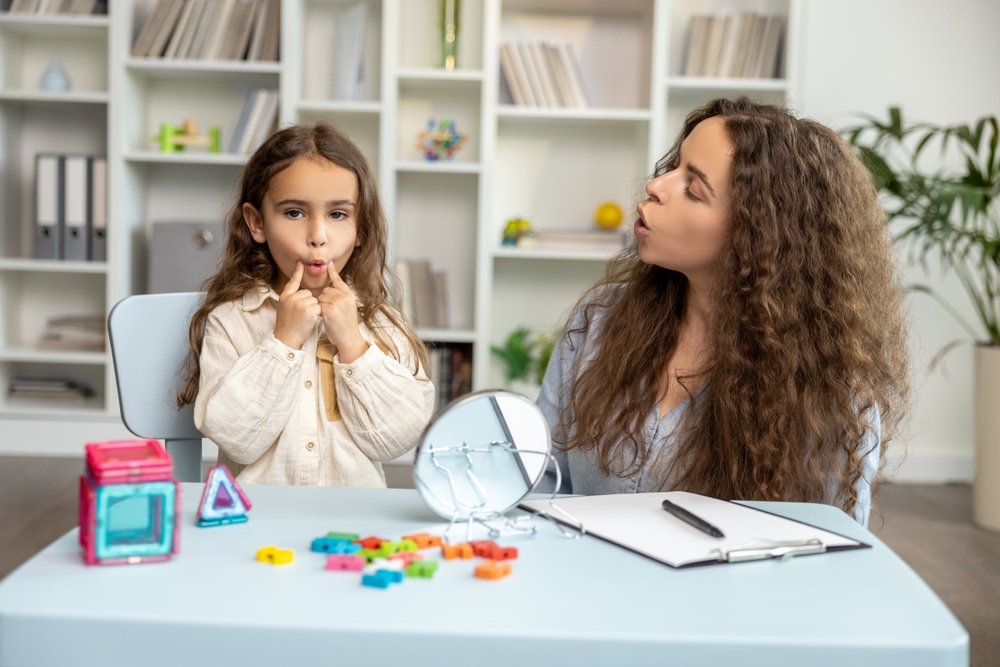
In the busy rhythm of parenting, we often worry about the “big” things: Are we teaching the right values? Are we setting the right boundaries? Are we providing enough enrichment? We want deeply for our children to feel secure and loved, yet we sometimes overlook the most powerful tool we have for building that foundation. It isn’t found in a lecture or a lesson plan. It is found on the living room floor, amidst the scattered blocks and the make-believe tea sets.
Playing with your child is far more than just a way to pass the time. It is the primary language through which safety, trust, and attachment are communicated. When you join your child in play, you aren’t just building a tower; you are building a relationship. You are telling them, without words, “I see you, I enjoy you, and I am here with you.”
At Therapy & Play, we believe that connection is the antidote to many of the challenges families face. Understanding why play is so vital for attachment can help shift our perspective from seeing play as “extra” to seeing it as essential—a quiet, steady investment in your child’s emotional future.
For Young Children, Connection Is the Foundation of Everything
We often think of independence as the ultimate goal of raising children. We want them to be capable and self-reliant. But paradoxically, true independence springs from a deep well of dependence. Before a child can confidently explore the world, they need to know they have a secure base to return to.
Secure attachment in early childhood is this base. It is the deep, internalized knowing that their caregiver is reliable, responsive, and available. This sense of security is not a luxury; it is a biological necessity. Just as the body needs food to grow, the developing brain needs connection to thrive.
Safety Comes Before Learning
A child’s nervous system is constantly scanning the environment for cues of safety or danger. When a child feels unsafe or disconnected, their brain shifts into survival mode. Their focus narrows to self-protection, and the parts of the brain responsible for curiosity, learning, and social engagement go offline.
Conversely, when a child feels safe and connected, their nervous system settles. They are free to turn their attention outward. Safety comes before learning because a brain in alarm cannot play, and it cannot explore. By prioritizing connection, we are essentially turning off the alarm system and creating the conditions in which development can flourish.
How Children Decide the World Is Safe Enough to Explore
Children are born as scientists, constantly testing hypotheses about the world. One of the most fundamental questions they ask is, “Is this world a safe place?” They answer this question not through logic, but through experience.
They look to their parents to gauge safety. If they see a parent who is calm, present, and responsive, they conclude that they are safe. This “emotional referencing” happens hundreds of times a day. When you sit on the floor and play with your child, you are providing a concentrated dose of safety. You are showing them that the world is a place where their needs are met, where joy is shared, and where they are not alone.
Play Is One of the Clearest Ways Children Experience Emotional Safety
For adults, safety often means physical security—locks on the doors, a roof overhead. But for children, emotional safety is just as tangible. Emotional safety for children means knowing that their feelings are welcome, that they will not be shamed for their mistakes, and that their relationship with you is solid even when things get messy.
Play creates a unique container for this safety. In the world of play, the stakes are low. A tower can fall without disaster. A “bad guy” can be defeated. This freedom allows children to exhale. It signals to their nervous system that they are in a place where they don’t have to be on guard.
What Safety Feels Like From a Child’s Perspective
To a child, safety feels like predictability. It feels like knowing that if they invite you to a tea party, you will accept the imaginary cup. It feels like knowing that if they roar like a lion, you won’t be scared away.
Helping your child feel secure often involves entering their world on their terms. When you follow their lead in play, you are validating their reality. You are saying, “Your ideas are important. Your world is safe.” This validation is a powerful builder of self-worth and emotional security.
Warmth, Predictability, and Being Welcomed In
There is a specific feeling of “being welcomed” that happens in good play. It’s the warmth in your eyes when your child shows you a drawing. It’s the predictability of your response when they ask you to play the same game for the tenth time.
Safe relationships in child development are built on this welcoming stance. It is an attitude of openness—a willingness to be impacted by the child. When a child feels this warmth, they relax. They stop working so hard to earn your attention and can simply rest in the knowledge that they already have it.
Trust Grows in Ordinary Moments Together
We often imagine that trust is built in big, dramatic moments—saving a child from a fall or having a deep heart-to-heart talk. But in reality, building trust with your child happens in the mundane, quiet moments of everyday life.
It happens when you help them find a lost Lego. It happens when you laugh together at a silly noise. It happens when you sit patiently while they struggle to put a shoe on a doll. These are the bricks that build the house of trust.
Why Small Interactions Carry So Much Weight
A young child’s brain is wiring itself based on repeated experiences. One big trip to Disneyland is fun, but it doesn’t wire the brain for security in the same way that daily, responsive interactions do. Everyday bonding with kids is powerful because of its frequency.
Every time you respond to a bid for connection—a look, a touch, a question—you are reinforcing the neural pathway that says, “I can trust people.” Responsive parenting examples are often small: nodding when they talk, getting down to their eye level, or simply putting down your phone to watch them play. These small signals accumulate into a massive sense of security.
The Power of Showing Up Again and Again
Trust is essentially predictability. It is knowing that you will show up, not just physically, but emotionally. Parent child relationship building is a long game. It isn’t about being perfect every single minute; it’s about the pattern.
When you show up for playtime again and again, even for just ten or fifteen minutes, you are establishing a reliable pattern. Your child learns that you are a consistent presence in their life. This reliability allows them to trust you with their vulnerability, their fears, and their big feelings.
Attachment Is Built Through Thousands of Back-and-Forth Exchanges
Developmental psychologists often talk about “serve and return” interactions. Imagine a game of tennis. The child serves the ball (by babbling, pointing, or handing you a toy), and the parent returns it (by answering, looking, or taking the toy).
This back-and-forth flow is the mechanism of attachment. How secure attachment develops is through thousands of these micro-interactions over time. Play is the most natural setting for serve and return to happen.
Noticing, Responding, and Staying Engaged
Attuned parenting is about tuning in to the frequency of your child. It means noticing the subtle cues—the way their shoulders slump when they are frustrated, or the sparkle in their eye when they have an idea.
In play, you practice this noticing constantly. You notice they need a specific block, and you hand it to them. You notice they are getting tired of the game, and you suggest a break. This responsiveness tells the child that they are seen and understood. Staying engaged, even when the play feels repetitive to you, communicates a deep level of respect and care.
How Children Learn, “Someone Is Here for Me.”
The core message of secure attachment is: “I am not alone. Someone is here for me.” Early relationships and brain development are inextricably linked. A brain that knows it has support develops differently than a brain that feels isolated.
When you play with your child, you are physically embodying this message. You are right there, on the floor, in their world. You aren’t distracted or busy; you are present. This physical and emotional proximity wires the brain for resilience, teaching the child that they have a partner in navigating life.
Following Your Child’s Lead Strengthens Their Sense of Worth
Many of us are used to being the director. We organize the schedule, make the meals, and set the rules. But in play, we have a unique opportunity to flip the script. We can let the child lead.
Child-led play benefits are profound. When we allow the child to be the boss of the play—to decide what the game is, who the characters are, and what happens next—we are giving them a powerful experience of agency.
Letting Your Child Be the Initiator
Attunement parenting involves waiting to see what the child is interested in before jumping in. Instead of saying, “Let’s build a castle,” you watch what they are doing with the blocks and say, “Oh, you are lining them all up.”
This might seem small, but it is huge for a child. It allows them to initiate the interaction. It tells them that their ideas are good enough to capture your interest. This builds confidence and encourages them to trust their own instincts.
The Quiet Message: “You Matter.”
When we follow a child’s lead, we send a quiet but resonant message: “You matter. Your thoughts matter. Your desires matter.” Respectful parenting connection is built on this foundation.
It is easy to inadvertently dismiss a child’s play as “just playing.” But to them, it is their work and their passion. When we take it seriously enough to follow their lead, we are validating their personhood. We are telling them that they are worthy of our time and attention, exactly as they are.
Shared Joy Deepens Emotional Bonds
Joy is a powerful glue. Neurobiologically, shared positive states create a surge of hormones like oxytocin and dopamine that strengthen the attachment bond. Bonding through play is often about finding that sweet spot of shared delight.
It’s the moment you both burst out laughing when the tower falls. It’s the secret smile you exchange when you are hiding under a blanket. These moments of connection are the “superglue” of the relationship.
Why Delight Is More Than Just Fun
We often undervalue delight, seeing it as just a nice bonus. But joyful parenting moments are essential for emotional health. When a child sees your face light up when they enter the room, or hears your genuine laughter during a game, they feel cherished.
This experience of being delighted in is foundational for self-esteem. It teaches the child that they are a source of happiness for others. It wires their brain to associate relationships with pleasure and safety, rather than just duty or instruction.
Positive Experiences That Children Carry Forward
The memory of shared laughter and fun creates a reservoir of positive associations. Positive parent child interactions act as a buffer against stress. When things get hard—when there is a conflict or a separation—the child can draw on these stored memories of connection.
Laughter and connection during play also help regulate the nervous system. It reduces cortisol (stress hormone) and increases the feeling of well-being. By prioritizing joy in your play, you are actively supporting your child’s physical and mental health.
Play Helps Repair Disconnection After Hard Moments
No relationship is perfect. We all lose our patience, get distracted, or misunderstand our children. These moments of disconnection, or “ruptures,” are inevitable. But what matters most is the repair.
Reconnecting with your child after a difficult moment is crucial for maintaining trust. Play offers a gentle, non-threatening bridge back to connection.
Every Relationship Includes Ruptures
It is helpful to normalize the fact that parenting involves mistakes. You might snap at your child when you are tired. You might miss a cue and hurt their feelings. This is human. Attachment repair is the process of acknowledging the breach and weaving the connection back together.
Children are incredibly forgiving, especially when they sense our genuine desire to reconnect. Accepting that ruptures are part of the process helps us let go of guilt and focus on the repair.
Returning to Connection Without Shame
After a hard moment, talking about it can sometimes be too heavy for a young child. They might not have the words to process what happened. But they can play.
Sitting down to play with them is a peace offering. It says, “We had a hard time, but we are okay now. I still want to be with you.” Rebuilding trust with children often happens through this return to shared activity. As you engage in a familiar game, the tension melts away, and the rhythm of connection is restored. It teaches the child that the relationship is stronger than the conflict.
You Don’t Have to Be a Perfect Play Partner
Parents often feel pressure to be entertaining, creative, or educational when they play. We see Pinterest-perfect activities and feel like we are falling short. But good enough parenting applies to play, too.
Do parents need to play with their child every second of the day? Absolutely not. Nor do you need to be an actor or a teacher. Your child doesn’t need a performance; they need a presence.
Consistency Matters More Than Creativity
You don’t need to invent new games or buy expensive toys. Parenting without perfection means showing up as you are. Sitting on the floor and rolling a ball back and forth is enough. Reading a book together is enough.
Realistic parenting expectations relieve the burden. If you are tired, it is okay to choose a low-energy game. If you are bored, it is okay to set a timer and play for ten minutes. What matters is the quality of your attention during those ten minutes, not the complexity of the activity.
Being Present Is What Children Remember
Years from now, your child won’t remember if the craft was perfect or if the game had educational value. They will remember how it felt to be with you. They will remember your presence.
They will remember that when they looked up, you were looking back. They will remember the feeling of your arm around them as you read a story. Being present is the greatest gift you can give. It is the active ingredient in attachment.
As Safety Grows, So Does Independence
There is a common misconception that holding a child close makes them clingy. The opposite is true. Secure attachment and independence go hand in hand.
Think of it like a refueling station. When a child feels filled up with safety and connection, they have the fuel they need to drive away and explore. When their tank gets low, they return to you to refuel.
Why Strong Bonds Encourage Exploration
A child who is confident in their connection with you feels brave. Raising confident children starts with making them feel safe. They know that if they fall, you will be there to pick them up. This knowledge acts as a safety net, allowing them to take healthy risks and venture further into the world.
Emotional security in kids allows them to be curious. Instead of worrying about whether you are still there, they can focus on the bug on the sidewalk or the new friend at the park. Your connection is the anchor that allows their boat to sail.
Confidence Begins With Connection
True confidence is not about being loud or outgoing; it is about an internal sense of security. How attachment supports resilience is by providing this internal stability.
When a child knows they are loved and valued, they carry that knowledge with them into the classroom, the playground, and eventually, the workplace. They approach the world with an expectation of goodness. They believe in their own ability to handle challenges because they know they have a team behind them.
When Playing Together Doesn’t Feel Natural
For some parents, playing with a child feels awkward, boring, or even stressful. Maybe you didn’t have parents who played with you. Maybe you are exhausted from work. Maybe your child’s style of play is difficult for you to engage with.
Struggling to connect with your child through play is incredibly common, and it is nothing to be ashamed of. Parenting stress and attachment can be a complicated mix.
Many Caring Parents Feel This Way
If you find yourself checking the clock or feeling restless during play, you are not alone. Difficulty bonding with a toddler or feeling disconnected from an older child happens to many loving parents. It doesn’t mean you are a bad parent; it just means this particular mode of connection isn’t your natural language yet.
Sometimes, a child avoids a parent or prefers solitary play, which can feel like rejection. This can create a cycle of disconnection. Recognizing that this is hard is the first step toward making it easier.
Support Can Help Connection Feel Easier
Connection is a skill, and like any skill, it can be learned and practiced. If play feels consistently hard, support can make a difference. Therapy & Play offers guidance for parents who want to strengthen their bond but feel stuck.
Sometimes, understanding your child’s unique developmental profile or working through your own blocks to play can unlock a new level of ease. Learning small, manageable ways to connect can shift the dynamic from duty to delight.
Simple Ways to Strengthen Attachment Through Play
You don’t need a complete overhaul of your parenting style to build better attachment. Ways to bond with your child can be woven into the fabric of your existing day.
Connecting with your child daily doesn’t require hours of free time. It requires intention. It is about quality over quantity.
Protecting Even Brief Moments of Togetherness
Attachment activities for toddlers can be as simple as a five-minute game of peek-a-boo while you are cooking dinner. It can be a silly song you sing during diaper changes. It can be ten minutes of “special time” before bed where they get to choose the activity.
Protecting these brief moments signals to your child that they are a priority. Put the phone away for those ten minutes. Let the dishes wait. Those small pockets of undivided attention add up to a lifetime of trust.
Letting Connection Be Imperfect and Real
Parent child bonding ideas don’t have to be Instagram-worthy. Wrestling on the bed is bonding. Making a mess with water in the sink is bonding. Sitting quietly side-by-side drawing is bonding.
Let connection be imperfect. Let it be messy. Let it be real. Your child doesn’t need a fantasy parent; they need you. They need your authentic, imperfect, loving self.
Long After the Toys Are Put Away, the Relationship Remains
The toys will eventually be donated. The blocks will be put away. But the relationship you are building now will last a lifetime. The long term effects of secure attachment are profound and far-reaching.
Early relationships shape adulthood. The safety and trust your child experiences with you now will become the blueprint for how they relate to partners, friends, and their own children in the future.
What Children Internalize From Feeling Safe With You
When a child feels safe with you, they internalize a deep belief: “I am lovable. People are trustworthy. The world is safe.” This emotional security in childhood is the greatest inheritance you can give them.
It is a shield against the hardships of life. It is a light that guides them when they are lost. It is the enduring legacy of all those hours spent on the floor, playing simply because you loved them.
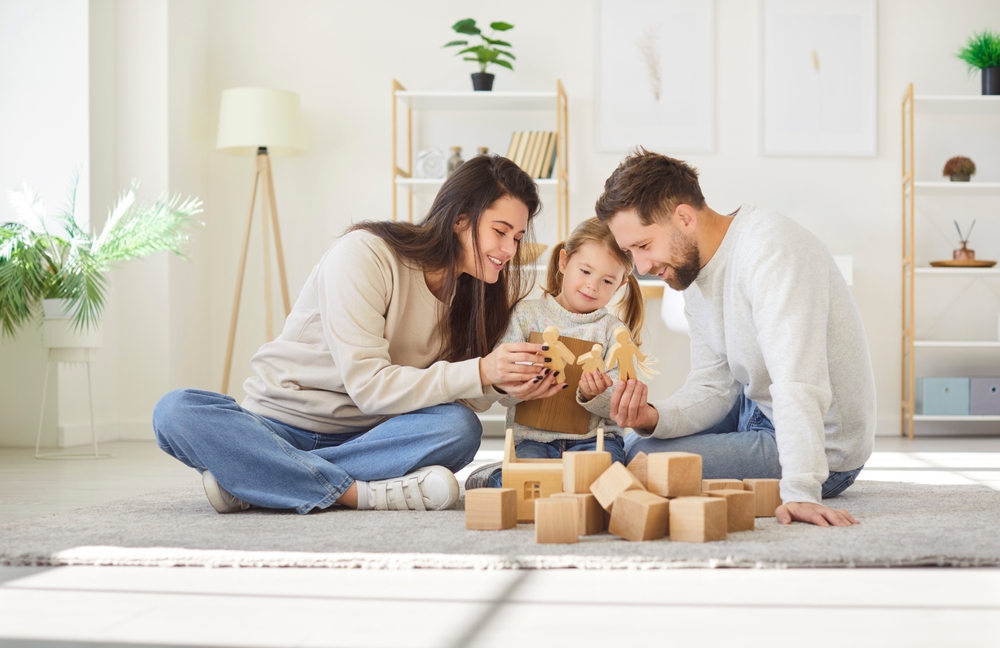
As parents, we often think about what we need to teach our children. We make lists in our heads: how to be kind, how to share, how to handle disappointment, how to be a good friend. We search for the right words and the perfect teachable moments. But what if the most powerful classroom for these life lessons is not in a conversation, but in the middle of the living room floor, surrounded by blocks and dolls?
Play is the natural rehearsal space of childhood. It is where children get to practice the complex art of being human in a low-stakes environment. Before they face the real-world challenges of a difficult friendship, a frustrating project, or a surprising change of plans, they get to try on these experiences in play. They learn how to regulate their bodies, understand others’ minds, and adapt when things don’t go their way. The benefits of play for emotional development are not about performance; they are about practice.
At Therapy & Play, we see play as the foundation for social and emotional well-being. It is how children learn the life skills that can’t be taught with flashcards. Understanding play as a form of emotional practice allows us to see our children’s messy, chaotic, and joyful explorations not just as fun, but as deeply important work.
Play Gives Children a Safe Place to Practice Life
Life is full of moments where we try, stumble, and get back up again. For adults, this process can feel high-stakes. But for children, play creates a safe container where this cycle can happen without fear of lasting failure. Why is play so important for child development? Because it provides a space to practice living.
In the world of play, a child can build a magnificent tower only to watch it crash to the ground. They can feel the sting of disappointment and then have the chance to start over. They can try to lead a game and have their friends reject their idea, giving them a chance to practice negotiation. Social emotional development through play is powerful because the consequences are temporary, but the learning is permanent.
Trying, Struggling, Recovering — All Within Safety
When a child learns to ride a bike, they fall. They scrape their knees. They get back on. We understand this as a necessary part of the process. The same is true for emotional skills. A child cannot learn resilience without experiencing a setback. They cannot learn to solve problems without first facing a problem.
Play provides a constant stream of manageable challenges. The puzzle piece won’t fit. The two dolls both want to wear the same dress. The blanket fort keeps collapsing. Each of these moments is a micro-opportunity to practice struggling and recovering. The child’s brain and nervous system learn, on a deep and cellular level, “This is hard, but I can handle it.”
Why Practice Matters More Than Perfection in Early Childhood
Our culture often puts pressure on children to perform—to get the right answer, to behave perfectly, to achieve the next milestone. But early childhood is not about performance; it is about process. A child’s developing brain needs countless repetitions to build strong neural pathways. It needs the freedom to get it “wrong” a hundred times before getting it “right.”
Play is inherently process-oriented. There is no final grade. There is no end goal, other than the exploration itself. This freedom from the pressure of perfection allows children to be brave. They can try a new role in a pretend game, attempt a difficult physical feat, or express a big, messy feeling without worrying about judgment. This is how genuine confidence is built—not from praise, but from the internal sense of competence that comes from trying.
Emotional Regulation Begins in Shared Experiences
One of the most important life skills is emotional regulation—the ability to manage our feelings and reactions. We often wish our children could just “calm down” when they are upset. But emotional regulation in early childhood is not a solo activity. It is a skill that is learned within the context of a safe relationship.
How children learn self regulation is by first “borrowing” it from a calm and attuned adult. This process is called co-regulation. When a child is overwhelmed, a parent’s steady presence, soothing voice, and gentle touch can help their agitated nervous system settle. Play provides a perfect, recurring opportunity for this to happen.
Borrowing Calm Before Finding It Within
Imagine a wrestling game with your child. The energy gets higher and higher, the giggles get louder, and then it tips into being just a little too wild. You, the parent, can pause the game and say, “Whoa, let’s take a deep breath together. My body is getting too excited.” In that moment, you are lending your child your prefrontal cortex—the part of your brain that can put on the brakes. You are co-regulating.
Through thousands of these shared experiences, the child’s brain starts to build its own capacity for regulation. They internalize your calm. The external support you provide becomes an internal skill they can access on their own. We don’t teach kids to manage emotions with charts or lectures; we model it with our own regulated presence.
How Play Helps the Nervous System Settle and Reset
Play naturally moves between states of high arousal and calm. A game of chase is followed by a moment of rest. A period of intense focus on building is followed by a gleeful crash. These rhythmic cycles are like a workout for the nervous system.
The nervous system learns to move between activation (the gas pedal) and settling (the brake pedal) with more ease. Physical play, in particular—like swinging, spinning, or deep pressure from a hug—can have a profoundly organizing effect. It gives the nervous system the input it needs to reset, helping a child move from a state of chaos or distress back to a state of balance.
Through Play, Children Learn to Understand Other Minds
Empathy—the ability to understand and share the feelings of another—is the foundation of kindness and connection. But it is not a skill we are born with. How children develop empathy is a gradual process of discovery, and play is their primary laboratory.
To feel empathy, you first have to realize that other people have thoughts and feelings that are different from your own. This is a huge cognitive leap, and it happens right in the middle of the playroom. Social skills through play emerge as children begin to practice perspective taking, trying on the experiences of others.
Pretend Play and Perspective-Taking
When a child pretends to be a firefighter, a doctor, or a baby, they are engaging in a sophisticated act of perspective-taking. They have to imagine: What would a baby want? How would a doctor feel? What would a firefighter do? This stretches their brain beyond their own immediate experience.
If they are playing “house” and their friend, playing the baby, starts to cry, they have to stop and think, “What does the baby need?” They might offer a bottle or a blanket. In that moment, they are practicing empathy. They are responding to the perceived emotional needs of another person. The more they practice this in play, the more natural it becomes in real life.
Discovering That Other People Have Feelings Too
Play with peers is a constant stream of social feedback. If a child snatches a toy, their friend might cry. This is a direct, real-time lesson in cause and effect: “My action caused a feeling in someone else.” While it may be an uncomfortable moment, it is an essential one for the development of empathy.
In a safe play environment, these moments aren’t seen as failures but as learning opportunities. The child learns that their friend’s face gives them clues about how they are feeling. They learn that certain actions lead to tears and others lead to laughter. This is how empathy development in toddlers begins—not through lectures about being nice, but through the lived experience of social interaction.
Flexibility Grows When Children Can Adapt in the Moment
Life rarely goes according to plan. The ability to adapt to unexpected changes, to pivot when things go wrong, and to see a problem from different angles is known as cognitive flexibility. This skill is a key component of resilience and is strongly linked to success in school and in life.
Cognitive flexibility in children is not something you can teach from a book. It is a muscle that gets strengthened through practice. Play is the ultimate gym for flexible thinking because it is, by nature, unpredictable.
When the Tower Falls Down
Every child who has ever played with blocks knows the experience. You are carefully building a magnificent tower, adding one block at a time. You are filled with pride and excitement. And then, it wobbles and comes crashing down.
In that moment, the child is faced with a choice. They can have a meltdown and give up, or they can take a deep breath and start again. Maybe this time, they will build a wider base. Maybe they will build something different altogether. This is problem solving for kids in its purest form. They are learning to cope with disappointment and adapt their plan. They are building resilience, one fallen tower at a time.
Learning That Plans Can Change — and That They Can Cope
In pretend play, the narrative is constantly shifting. One minute the cardboard box is a spaceship; the next minute, a friend declares it’s a pirate ship. The child has to be flexible enough to go with the new story.
This adaptable thinking in early childhood is a workout for the brain. It requires the child to let go of their own idea and incorporate someone else’s. It teaches them that there is more than one way to play the game, more than one right answer. This ability to mentally “shift gears” is crucial for navigating the social world and for creative problem-solving throughout life. Play teaches them, on a deep level, “My plan didn’t work out, and that’s okay. I can make a new one.”
Mistakes During Play Build Confidence, Not Shame
As a culture, we are often afraid of mistakes. We see them as failures. But in development, mistakes are simply data. They are information. Play is a space where mistakes are not only allowed, but expected. This is why it is so effective at building confidence in children.
When the stakes are low, children are willing to take healthy risks. They will try to jump from a slightly higher step or attempt a more complex Lego creation. If they fail, they haven’t disappointed anyone. There is no grade. There is no shame. There is only the opportunity to try again.
Why Low-Stakes Challenges Strengthen the Brain
Growth through mistakes is a core principle of child development. When a child tries something and it doesn’t work, their brain has to analyze the problem and generate a new solution. This process of trial and error is what forges new, stronger neural connections.
Resilience through play develops because the child experiences hundreds of these small cycles of challenge and mastery every day. They learn that effort pays off. They learn to trust their own ability to figure things out. This is a much deeper and more enduring form of confidence than that which comes from empty praise. It is an earned confidence, built from the inside out.
Encouraging Courage Without Pressure
Parents can foster this by resisting the urge to jump in and solve every problem for their child. If the puzzle piece isn’t fitting, let them struggle with it for a moment before offering help. If they are nervous about climbing the slide, offer your steady presence without pushing them.
Encouraging courage isn’t about eliminating fear; it is about supporting a child as they move through it. Your belief in their ability to handle a challenge is often all they need to try. By allowing for healthy risk taking in kids, we are communicating our trust in their competence.
Social Play Teaches Skills Children Carry Into School and Relationships
The transition to school is a huge step. While we often focus on academic readiness, social and emotional skills are far better predictors of a successful school experience. Kindergarten readiness social skills are not learned at a desk; they are learned in the sandbox.
Cooperative play skills are the foundation for being a good classmate and a good friend. Children learn to share materials, wait their turn, listen to others’ ideas, and work together toward a common goal.
Negotiating, Waiting, and Repairing
Imagine two children who both want to be the captain of the pirate ship. They have to negotiate. “Okay, you can be the captain first, then it’s my turn.” This is a high-level social skill. It requires impulse control (waiting) and compromise.
Sharing and turn taking development happens in these real, lived moments. It’s messy and often involves conflict. But conflict is part of the curriculum. When one child accidentally hurts another’s feelings, they have the chance to practice repair—to say “I’m sorry” and see that their friendship can survive a bumpy moment. These experiences are invaluable preparation for the social dynamics of the classroom and beyond.
The Early Roots of Healthy Relationships
The give-and-take of social play is a rehearsal for all future relationships. Children learn that relationships require effort. They require listening. They require being flexible. They learn that their needs matter, but so do the needs of others.
By practicing these skills in the relatively safe container of childhood friendships, they are building a blueprint for healthy connection. They are learning how to be in a relationship with another person, a skill that is far more important than knowing their ABCs.
Parents Play an Important Role — Even When They’re Not Leading
In this landscape of play, what is the role of parents in play? It can be tempting to either direct the play (“Let’s build this tower!”) or to stay out of it completely. The most supportive role is often somewhere in the middle.
Playing with your child benefits them immensely, but it doesn’t mean you have to be an entertainer. Supporting social emotional development at home is often about being a secure base—a calm, interested presence that allows your child to do their work.
Being a Steady Presence
Sometimes, the most powerful thing you can do is simply sit nearby and watch. Your quiet presence creates an anchor of safety. It tells your child, “I am here. You are safe to explore.” They might glance back at you to “check in” before trying something new. This is called “refueling,” and your calm, attentive face is the fuel.
This kind of responsive parenting and play doesn’t require you to do much at all. It just requires you to be available—to offer a smile, a nod of encouragement, or a quiet observation. “You are working so hard on that.”
When to Join, When to Watch, When to Follow
Knowing when to step in can be tricky. A good rule of thumb is to follow your child’s lead. If they invite you into their game, join them. But let them be the director. If they want you to be the baby, be the baby. If they want you to be the roaring monster, roar. Resisting the urge to take over communicates respect for their world.
If they are deeply engaged in their own solo play, respect that too. Watching from a distance allows them to build their independence and concentration. The art is in the attunement—reading your child’s cues and responding to what they need in that moment: a playmate, an audience, or just a quiet anchor.
Some Children Need More Time and Support to Build These Skills
While play is a natural language for most children, some find it difficult to speak. A child who struggles with emotional regulation may find the high energy of play overwhelming. A child with delayed social skills may find interacting with peers confusing and scary.
It is important to remember that there are wide differences in temperament and development. A sensitive child may need more time to warm up. A child who has difficulty with transitions may struggle when the game changes. These are not character flaws; they are simply signals that a child needs more support.
Differences in Temperament and Development
Every child arrives with their own unique nervous system. Some are naturally more cautious, while others are bold adventurers. Some are highly social, while others prefer quiet, solitary activities. Honoring your child’s individual style is crucial.
If you are concerned about your child’s development, try to look at their behavior with curiosity rather than judgment. What might their struggle to join in be telling you? Perhaps they feel overwhelmed by the noise and chaos. Perhaps they don’t know how to enter the play. They aren’t trying to be difficult; they are communicating a need.
Support Can Help Practice Feel Safer
When a child is consistently struggling to engage in play or to manage the social and emotional demands of it, it may be a sign that they need a little extra help. When to seek support for child development is a personal decision, but you don’t have to wait until things feel unbearable.
Therapies that use play can provide a specialized environment where a child can build these skills with the help of a trained professional. A therapist can help create that feeling of safety that is so essential for practice, allowing the child to gradually build their capacity for regulation, connection, and flexibility at their own pace.
In a Fast-Paced World, Play Protects Space for Growth
Our children are growing up in a world that values speed, productivity, and achievement. The importance of unstructured play is often overlooked in the rush to fill schedules with enriching activities. But the effects of overscheduled children are becoming clear: higher rates of anxiety and less opportunity for the deep, slow work of development.
Protecting playtime is an act of resistance. It is a declaration that we value our children’s internal growth as much as their external accomplishments. Free play benefits children by giving them the one thing they need most: time.
Why Children Still Need Time to Explore
Exploration cannot be rushed. A child needs time to get bored and then discover their own interests. They need time to follow a trail of ants across the sidewalk. They need time to lie on their back and watch the clouds.
These moments of “doing nothing” are actually moments of profound integration. It is when the brain consolidates learning, makes new connections, and recharges. When we protect this empty space in their schedules, we are protecting their mental health.
Growth Cannot Be Rushed
You cannot speed up development. Just as a plant needs time to put down roots and grow toward the sun, a child needs time to move through their developmental stages. Pushing them to read before they are ready or to socialize before they feel safe often backfires.
Trusting the process is one of the hardest parts of parenting. It requires us to have faith in our child’s innate developmental timeline. Play is the expression of that timeline. By honoring it, we are honoring our child.
Play Is Childhood’s Natural Rehearsal Space
Play is not a break from learning; it is the heart of it. It is where children build life skills in the most natural way possible. Every time they play, they are practicing for their future. They are rehearsing for the challenges and joys of being a friend, a partner, a student, and a member of a community.
The developmental benefits of play are not always obvious. We may not see the neural connections being formed or the empathy being wired. But the work is happening. Learning through play is quiet, steady, and profoundly powerful.
The Skills Practiced Today Become the Strengths of Tomorrow
The child who learns to share a coveted toy becomes the adult who can collaborate on a team project. The child who learns to cope when their block tower falls becomes the adult who can persevere in the face of a setback. The child who learns to comfort a crying doll becomes the adult who can offer compassion to a friend. The strengths of tomorrow are being forged on the playroom floor today.
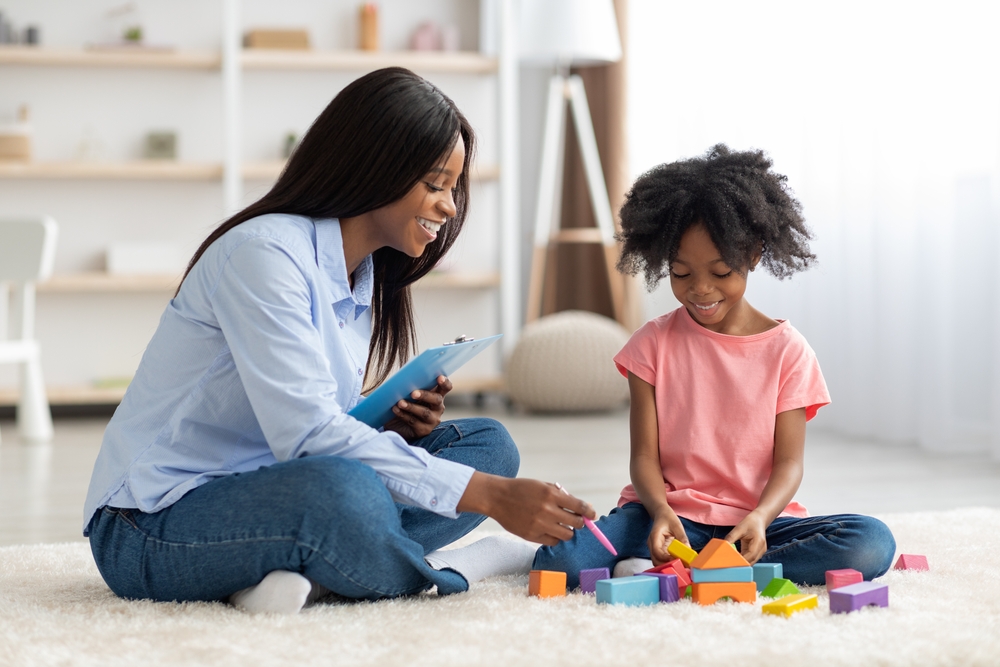
We often think of play as something children do for fun—a break from the “real work” of growing up. But if you watch closely, you will see that play is actually where the hardest work happens. It is where children grapple with the world, make sense of their experiences, and perhaps most importantly, learn about themselves and their feelings.
For a young child, emotions are big, messy, and often overwhelming. They don’t yet have the words to say, “I felt embarrassed when I dropped my ice cream,” or “I felt jealous when you held the baby.” Instead, they have play. Play is the language they use to speak about their internal world. It is the safe container where they can pour out their joy, their fear, their anger, and their confusion, and then step back to look at it all.
At Therapy & Play, we view play as the primary way children develop emotional literacy and resilience. It isn’t just a pastime; it is a rehearsal for life. When we understand what children are learning about their emotions through play, we can stop trying to simply “manage” their behavior and start supporting their deep, internal growth.
Play Is How Children Learn to Feel Safely
Imagine feeling a surge of emotion so powerful it takes over your entire body, but having no idea what it is, where it came from, or if it will ever end. This is the reality for many young children. Emotional development in early childhood is a process of moving from this raw, unorganized experience to a place of understanding and regulation.
Play provides the safety net for this learning. In the real world, big feelings can have scary consequences. Screaming might get you in trouble; hitting might hurt someone. But in the world of play, a stuffed bear can scream as loud as he wants, and a tower of blocks can be smashed to the ground without hurting anyone. This safety allows children to approach their feelings rather than run from them.
Before Words Come Feelings
Long before a child can say “I am sad,” they can act out a scene where a baby doll is crying. This is how children learn emotions—through embodiment and action. We often rush to give children the “right” words, urging them to “use your words” when they are upset. But for many children, the feeling exists long before the vocabulary does.
Play bridges this gap. It allows the feeling to exist and be expressed without the pressure of finding the perfect label. A child who is feeling small and powerless might play a game where they are a giant stomping through a city. They are exploring the feeling of power—what it feels like, what it does—without needing to explain it to anyone. This pre-verbal processing is essential. It validates the emotion as real and meaningful, laying the groundwork for language to catch up later.
Why Emotional Learning Starts in the Body
Emotions are not just thoughts in our heads; they are physical events in our bodies. A racing heart, a tight chest, a hot face—these are the signals of our emotional state. Play and emotional development are linked because play is an active, physical process.
When a child runs, jumps, crashes, or spins during play, they are experiencing and regulating physiological arousal. They are learning what “high energy” feels like and what “calm” feels like. Social emotional learning in young children often starts here, with the physical regulation of the body. By engaging in active play, children learn to tolerate the physical sensations of strong emotions. They learn that a racing heart doesn’t always mean danger (it can mean excitement!), and that they can move their bodies to help themselves feel better.
Big Feelings Show Up in Play for a Reason
Parents often worry when they see their sweet child acting out aggressive, loud, or chaotic themes in their play. It can be unsettling to watch a toddler smash cars together or bury a doll in the sand. But these big behaviors are rarely a sign of a “bad” kid. They are a sign of a child who is working hard to process toddler big emotions.
Emotional regulation in children is not about suppressing feelings; it is about metabolizing them. Play is the digestive system for these emotions. If a child has had a day full of being told “no” and having their choices limited, they might come home and play a game where they are the boss of everyone. This isn’t defiance; it’s balance. They are using play to regain a sense of agency and discharge the frustration of the day.
Anger, Fear, Excitement, and Joy All Belong
In the safe container of play, all feelings are welcome. There is no such thing as a “bad” emotion in the playroom. Tantrums and emotional development often go hand in hand because the tantrum is the explosion of feeling, while play is the processing of it.
You might see a child act out a scary scene involving a monster or a doctor’s visit. By playing the monster, the child takes control of the fear. They decide when the monster roars, who it scares, and when it goes away. By playing the doctor, they become the one with the power, rather than the one getting the shot. This role reversal is a powerful tool for a child expressing emotions. It turns passive experiences into active mastery. Whether it is the explosive energy of anger or the quiet withdrawal of sadness, play allows these feelings to be seen, felt, and integrated.
When Play Looks Intense, Messy, or Repetitive
Sometimes play looks less like a story and more like chaos. A child might dump all the toys on the floor, throw things, or run in circles screaming. While this can be overwhelming for parents to witness, it is often an attempt to organize a disorganized internal state.
Repetitive play—like crashing cars over and over—can be a way for a child to get “stuck” feelings moving. They are replaying a sensation or an emotional tone until it feels resolved. Instead of stopping this play (unless it is unsafe), we can view it with curiosity. What is this intensity telling us? Usually, it is telling us that the child is carrying a heavy emotional load and needs a safe place to set it down.
Play Helps Children Practice Emotional Regulation
We all want our children to be able to calm themselves down when they are upset. But self-regulation is a complex skill that takes years to develop. It is not something you can teach with a lecture; it has to be practiced. And play is the ultimate practice ground.
How children learn emotional regulation is often through the “stop and go” nature of play. Think of a game of tag. You run as fast as you can (high arousal), and then you reach “base” and have to stop and breathe (regulation). Or think of building a tower. You have to be careful and steady (regulation) even when you are excited to see how high it can go.
From Overwhelm to Settling
Self-regulation skills in early childhood are built in these moments of transition. Moving from high energy to low energy, from loud to quiet, from fast to slow—this is the workout the nervous system needs.
Parents can support calming strategies for toddlers by introducing play that involves these shifts. “Freeze dance” is a classic example. The music plays and the child dances wildly; the music stops and they have to freeze. This requires them to put the brakes on their impulses. Over time, this practice strengthens the neural pathways that allow a child to pause before reacting in real life. It helps them move from a state of overwhelm back to a state of settling, a skill they will use every time they feel frustrated or angry in the future.
Learning Limits Without Shame
One of the most powerful aspects of play is that it has natural limits. You can’t crash the car if you don’t build the track first. You can’t play the game if you don’t follow the rules. In the context of the parent-child relationship, play allows for co-regulation—the parent helps the child navigate these limits.
If a child gets too rough during a wrestling game, the parent can pause and say, “Whoa, that was too hard. Let’s slow down.” This sets a boundary without shaming the child or the emotion. It teaches the child that they can be excited and physical, but they also need to stay attuned to safety. This learning—that feelings are okay, but behavior has limits—is the cornerstone of emotional health.
Through Play, Children Learn What Emotions Mean
Feelings are confusing. Why does my tummy hurt when mom leaves? Why do I feel hot when my brother takes my toy? Play helps children connect these physical sensations to emotional meaning. It fosters emotional awareness in children by giving them a concrete way to explore abstract concepts.
Understanding emotions in toddlers is a process of cause and effect. In play, they can experiment: “If the baby doll doesn’t get her milk, she cries. She is hungry and sad.” This simple narrative helps the child understand their own internal signals. It builds the bridge between “I feel bad” and “I am sad because I wanted that cookie.”
Sorting Through Feelings at Their Own Pace
One of the beautiful things about play is that it happens at the child’s pace. There is no rush. Naming emotions in early childhood doesn’t have to happen immediately. A child might play out a separation theme—animals getting lost and found—for weeks before they ever talk about missing their grandma.
This slow sorting process is crucial. It allows the child to approach difficult feelings in small, manageable doses. They can dip a toe in, feel the feeling, and then retreat to safety. This titration prevents them from becoming flooded and allows them to truly integrate the emotional lesson.
Why Repetition Helps Emotions Make Sense
If you have ever read the same bedtime story fifty times in a row, you know that children love repetition. The same is true for play. A child might act out the same scene—the dog running away, the tower falling down—day after day.
This repetition is not a sign of getting stuck; it is a sign of mastery. Each time they replay the scene, they are processing a little bit more of the emotion attached to it. They are making sense of it. Emotional literacy is built on this repetition. It confirms for the child that feelings have patterns, that scary things can be resolved, and that they have the capacity to handle it.
Social Play Builds Emotional Understanding
As children grow, their play often moves from solitary to social. This shift opens up a whole new world of emotional learning. Social emotional development in children explodes when they have to navigate the complex waters of playing with others.
Learning empathy through play happens naturally when a peer says, “Stop! I don’t like that.” The child has to pause, look at their friend’s face, and realize that their actions caused a feeling in someone else. This is a profound realization. It shifts their perspective from “me” to “we.”
Learning Empathy, Turn-Taking, and Repair
Social skills in early childhood are learned in the sandbox, not the classroom. Cooperative play development requires negotiation, patience, and the ability to tolerate frustration. “I want the blue shovel, but Sarah has it.” The child has to manage their disappointment and find a solution—wait, ask, or find another toy.
These interactions are full of micro-ruptures and repairs. Kids argue, they get their feelings hurt, they storm off. And then, usually, they come back. They learn to apologize, to compromise, and to forgive. They learn that a relationship can survive conflict. This resilience is a vital emotional skill that will serve them in every friendship and partnership they have for the rest of their lives.
What Conflicts During Play Actually Teach
We often want to jump in and solve conflicts between children immediately. But if safety isn’t at risk, stepping back can be a gift. The conflict is the curriculum.
When two children are fighting over the rules of a game, they are doing high-level emotional work. They are advocating for their needs, listening (hopefully) to another perspective, and managing the heat of anger. By navigating these bumpy moments, they learn that conflict is a normal part of life and that they have the tools to work through it.
Children Learn Emotional Safety Through Relationships
Ultimately, the most important lesson children learn through play is about safety. Not just physical safety, but emotional safety for children. They learn that they can bring their whole self—the happy, the sad, the angry, the messy—into a relationship and still be loved.
Secure attachment and emotions are deeply connected. When a parent sits on the floor and plays with their child, following their lead and delighting in their ideas, they are sending a powerful message: “I am here with you. You are safe with me.” This parent child emotional connection is the foundation of mental health.
Why Presence Matters More Than Fixing
In our desire to be good parents, we often think we need to “fix” our children’s negative emotions. If they are sad, we want to cheer them up. If they are angry, we want to calm them down. But in play, we have the opportunity to just be with them.
Responsive caregiving in play looks like witnessing. It looks like saying, “Wow, that dinosaur is really mad!” instead of “Don’t make the dinosaur hit.” It honors the child’s expression without judgment. This presence teaches the child that their feelings are manageable and that they don’t have to face them alone.
Play as a Shared Emotional Language
Play creates a shared language between parent and child. It gives you a way to connect that doesn’t rely on logic or explanations. You can communicate understanding through a glance, a gesture, or a shared laugh.
This shared emotional language builds trust. It tells the child that you “get” them. When you enter their world and play by their rules, you validate their reality. This deepens the attachment bond and creates a reservoir of connection that you can draw on when times get tough.
Parents Are Emotional Guides During Play
You don’t have to be a play therapist to support your child’s emotional growth. You just have to be a willing companion. How parents support emotional development is less about leading and more about following.
Emotional coaching for parents can sound intimidating, but in play, it is quite simple. It means noticing what your child is doing and feeling, and reflecting it back to them. It means being a calm anchor in their stormy seas.
Following, Naming, and Staying Close
One of the most effective ways to support emotional learning is to narrate the play. “You are burying the baby. She is all covered up.” “Crash! That tower fell down hard.” This is not teaching; it is acknowledging.
Helping children manage emotions starts with validating them. If a child is acting out frustration, you can say, “You seem really frustrated that the block won’t stay.” This gives the feeling a name. It tames the overwhelming sensation by putting it into a container of words. And simply staying close—sitting nearby, watching with interest—provides the safety the child needs to keep exploring.
You Don’t Have to Get It Perfect
There is no “perfect” way to play. You might feel bored sometimes. You might get annoyed. You might not understand what your child is doing. That is okay. Playing with your child benefits them even if you aren’t doing it “right.”
Your effort to connect is what matters. If you miss a cue or misunderstand a feeling, you can repair it. “Oh, I thought the bear was sad, but you’re saying he’s angry. I get it now.” This models humility and the willingness to understand, which are powerful emotional lessons in themselves.
When Emotional Learning Through Play Feels Hard
For some children, play doesn’t come easily, or it seems to get stuck in dark or distressing places. A child struggles with emotions might show this through play that is rigid, repetitive without resolution, or consistently destructive.
Emotional delays in toddlers or a child avoids play altogether can be signals that the emotional burden they are carrying is too heavy to process on their own. It might mean their nervous system is in a state of protection rather than connection.
Some Feelings Need More Support
If a child has experienced trauma, loss, or significant stress, their play might reflect this. They might replay a scary event over and over without ever finding a “safe” ending. Or they might avoid themes of emotional vulnerability entirely.
In these cases, the child isn’t being “difficult.” They are showing us that they are overwhelmed. They need more support—more co-regulation, more safety, and perhaps a different kind of container—to process these big experiences.
When Extra Help Can Make Play Feel Safer
When to seek support child emotions is a question many parents ask. If play feels consistently hard, disconnected, or distressing for you or your child, it might be time to reach out.
Therapies like Play Therapy or Child-Parent Psychotherapy are designed exactly for this. They provide a specialized space where a therapist can help the child (and parent) navigate these stuck places. They help make the scary feelings manageable so that play can become a source of joy and healing once again.
Play Builds Emotional Skills That Last
The emotional work children do in the playroom lays the foundation for the adults they will become. Lifelong emotional skills like empathy, self-regulation, flexibility, and resilience are forged in the fires of pretend play.
Emotional resilience in children predicts better mental health outcomes, better relationships, and better ability to cope with stress in adulthood. The long-term benefits of play are profound. By protecting and prioritizing play now, we are investing in their future well-being.
From Early Play to Everyday Life
The skills learned in play translate directly to real life. The child who learned to wait their turn in a game becomes the adult who can handle traffic with patience. The child who learned to soothe a crying doll becomes the friend who can offer compassion in a crisis. Childhood emotional development is the blueprint for human connection.
Why Emotional Learning Can’t Be Rushed
We live in a fast-paced world, but emotional growth cannot be hurried. It is a slow, winding process. There will be regressions. There will be days when it feels like no progress is being made.
But when we trust the process of play, we allow development to unfold in its own time. We give our children the gift of being fully who they are, at every stage. We honor their unique pace and trust that through play, they are doing exactly what they need to do to grow.
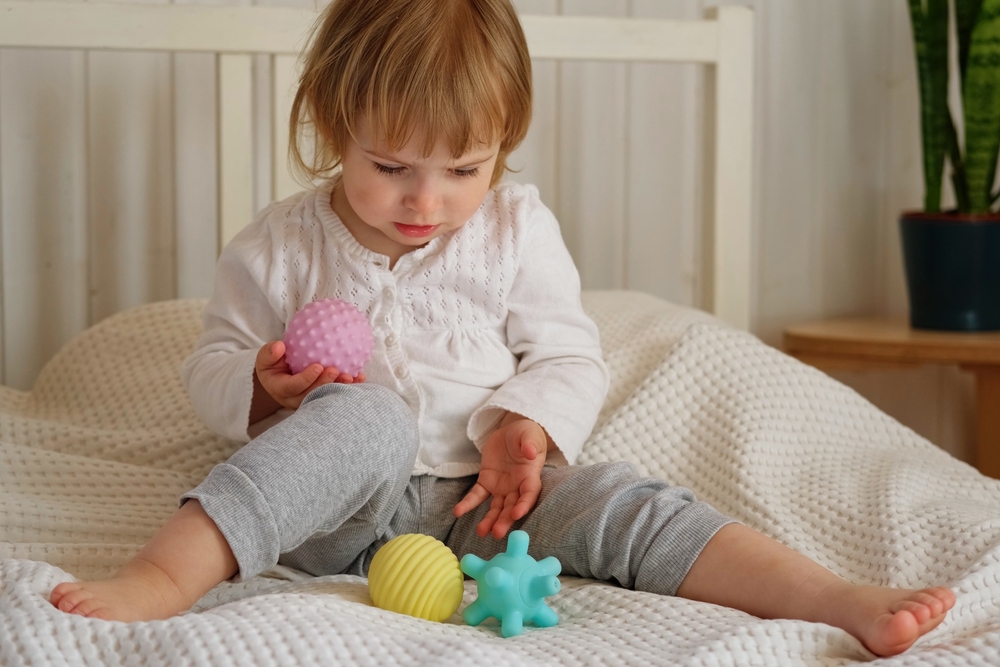
We live in a world that often measures childhood success by milestones, academic readiness, and structured activities. Parents are frequently bombarded with messages about the “right” educational toys, the “best” enrichment classes, and the importance of getting a head start. In this noise, it is easy to lose sight of the most fundamental, biologically driven tool for growth: play.
Play is not just a way to fill time between naps and meals. It is not merely a break from “real” learning. Play is the engine of early development. It is the primary way young children make sense of their world, build their brains, and develop the emotional and social skills they will rely on for the rest of their lives.
At Therapy & Play, we see play not as a frivolous activity, but as a critical developmental necessity. It is the language of childhood and the foundation upon which mental health, resilience, and cognitive flexibility are built. Understanding why play is so powerful can help us shift our perspective—from seeing play as “extra” to seeing it as essential.
Play Is How Young Children Make Sense of Their World
When you watch a toddler repeatedly fill a bucket with sand and dump it out, or a preschooler set up a tea party for their stuffed animals, you are witnessing deep cognitive work. The benefits of play in early childhood go far beyond simple amusement. Play is the laboratory in which children test hypotheses, explore cause and effect, and integrate new information.
Why is play important for child development? Because it is the mechanism through which children digest their experiences. Just as adults might talk through a difficult day or journal about their feelings, children play them out. If they went to the doctor and got a shot, you might see them giving shots to their dolls later that day. This isn’t just imitation; it is a way of mastering a scary experience and regaining a sense of control.
Children Don’t Separate Play From Learning — Their Brain Doesn’t Either
Adults often draw a hard line between “play” and “learning.” We tend to think of learning as something that happens at a desk with a teacher, and play as something that happens at recess. But for a young child, these concepts are inseparable.
When a child builds a tower, they are learning about physics, gravity, and balance. When they negotiate the rules of a game with a friend, they are learning about diplomacy, empathy, and social contracts. When they pretend to be a chef, they are learning about sequencing, roles, and symbols. Learning through play research consistently shows that when children are engaged in play, their brains are in a state of high plasticity—meaning they are open, receptive, and ready to wire new connections. Their brains do not distinguish between “fun” and “work”; they simply see engagement.
Exploration Is the Brain’s Favorite Teacher
The early childhood brain is wired for exploration. It craves novelty and sensory input. Early childhood development and play are linked because play provides the perfect vehicle for this exploration. It allows children to follow their curiosity wherever it leads, without the fear of failure that often accompanies structured learning.
In play, there are no wrong answers. There is only “What happens if I do this?” This freedom allows the brain to make unexpected connections and develop flexible thinking patterns. When a child is free to explore, they are not just memorizing facts; they are learning how to learn. They are building the neural architecture for curiosity, which is the driving force behind all future intellectual growth.
A Developing Brain Needs Experience, Not Just Instruction
In our desire to help our children succeed, we often rush to instruction. We buy flashcards to teach colors or apps to teach counting. While there is a time and place for direct instruction, the developing brain learns best through experience.
Experiential learning in early childhood is powerful because it engages the whole child—their body, their senses, and their emotions. Brain-based learning for toddlers isn’t about sitting still; it’s about moving, touching, and doing. When a child learns the concept of “heavy” by trying to lift a big rock, that knowledge is encoded in their muscles and their sensory system, not just their memory.
Why Worksheets Can’t Compete With Real Experiences
A worksheet can show a picture of an apple and the letter “A,” but it cannot replicate the experience of holding an apple, smelling it, feeling its smooth skin, and hearing the crunch when you bite into it. The brain builds its understanding of the world through multisensory input.
When we rely too heavily on active learning vs passive learning, we risk bypassing the deep, embodied understanding that young children need. Passive learning—like watching a video or filling out a sheet—uses a very small part of the brain. Active, playful learning lights up the entire neural network. It creates rich, multi-dimensional memories that are easier to recall and apply in new situations.
The Science Behind Hands-On Discovery
Neuroscience tells us that the brain learns by connecting neurons. The more frequently a connection is used, the stronger it becomes. Hands-on discovery provides the repetition and intensity needed to strengthen these connections.
When a child is trying to fit a square peg into a round hole, their brain is firing rapidly. They try one way, it fails. They turn it, it fails again. They push harder, no luck. Finally, they find the square hole and it slides through. That moment of success triggers a release of dopamine, the brain’s reward chemical. This reinforces the learning pathway and motivates the child to keep trying. This cycle of trial, error, and discovery is how deep learning happens, and it cannot be replicated by simply telling a child the answer.
Emotion Drives Attention — And Attention Builds the Brain
We often think of attention as a discipline—something children need to “pay.” But in reality, attention is driven by emotion. We pay attention to things that make us feel something—joy, surprise, curiosity, or even fear.
Emotional development and brain growth are deeply intertwined. When a child is emotionally engaged, their attention system is fully activated. This is why a child can spend an hour building a Lego castle but struggles to sit still for five minutes of circle time. The Lego castle engages their emotions; it matters to them. Attention development in toddlers grows not through forced focus, but through following their natural interests and passions.
Joy, Surprise, and Curiosity as Brain Activators
Positive emotions like joy and curiosity are like fertilizer for the brain. When a child is delighted by a game of peek-a-boo or fascinated by a bug on the sidewalk, their brain is flooded with neurochemicals that promote plasticity.
Secure attachment brain development relies on these positive emotional states. When a child feels safe and happy, their brain is in “growth mode.” They are open to new information and willing to take risks. Conversely, when a child is stressed or anxious, their brain shifts into survival mode, and the learning centers shut down. Play is the most reliable way to generate these positive emotional states, making it a potent activator for brain development.
When Children Feel Safe, the Brain Opens to Learning
How emotions affect learning is a critical piece of the puzzle. A stressed brain cannot learn well. It is too busy scanning for danger. This is why safety is a prerequisite for play.
True play only happens when a child feels safe. You won’t see a child playing deeply if they are terrified or in distress. Therefore, the very act of playing is a signal that the child’s nervous system is regulated. By prioritizing play, we are prioritizing the emotional safety that makes learning possible. We are creating an environment where the brain can relax, open up, and do the work of development.
Unstructured Play Builds Skills That Structured Activities Often Miss
In a culture that values productivity, we often fill our children’s schedules with structured activities—soccer practice, music lessons, organized playdates. While these have value, they cannot replace the unique benefits of unstructured play.
Free play vs structured activities is a balance many parents struggle with. Unstructured play is play that is directed by the child, not an adult. It has no specific goal or outcome. It is simply play for the sake of play. The importance of free play lies in the fact that it forces the child to be the driver. They have to decide what to do, how to do it, and when to stop.
Flexibility, Initiative, and Self-Trust
When a child engages in independent play benefits, they are practicing executive function skills. They have to come up with an idea (“I’m going to build a fort”), plan the steps (“I need blankets and chairs”), and execute the plan. If the fort collapses, they have to problem-solve and adapt.
This process builds cognitive flexibility—the ability to switch gears and try a new approach. It also builds initiative and self-trust. The child learns that they are capable of entertaining themselves and solving their own problems. They don’t need an adult to tell them what to do next. This sense of agency is a critical component of self-esteem and resilience.
Why Boredom Can Quietly Support Brain Growth
“I’m bored.” It’s a phrase every parent dreads. But boredom is not a problem to be fixed; it is an invitation. When we immediately rush to entertain a bored child, we rob them of a valuable opportunity.
Boredom is the precursor to creativity. It is the empty space where new ideas are born. When a child sits with their boredom for a little while, their brain starts to search for stimulation. They might pick up a stick and start drawing in the dirt. They might start singing a song. They might invent a new game. By allowing boredom to exist, we are giving the brain the space it needs to stretch and grow. We are teaching children that they have the internal resources to create their own engagement.
Play Strengthens the Brain Systems Children Will Rely on for Life
Play is like a gym for the brain’s executive functions. These are the high-level cognitive skills that allow us to plan, focus, remember instructions, and juggle multiple tasks. Executive functioning skills in children are better predictors of academic success than IQ, and play is one of the best ways to build them.
Cognitive flexibility in kids, memory development in early childhood, and self-regulation skills are all honed in the sandbox, the dress-up corner, and the block area.
Building Memory Through Repetition and Story
When children engage in pretend play, they are exercising their working memory. If they are playing “restaurant,” they have to remember who ordered the pizza and who ordered the spaghetti. They have to remember that the rock is a cookie and the leaf is a plate.
They also build memory through repetition. Young children love to hear the same story or play the same game over and over again. This repetition helps consolidate memories and strengthen neural pathways. It allows them to predict what comes next, which feels safe and empowering. Through story and repeated play, they are building the narrative structure of their own lives.
Growing Problem-Solving Without Pressure
In play, problems are challenges, not threats. If a block tower falls, it’s a chance to build it better, not a failure. If the doll’s dress doesn’t fit, it’s a puzzle to be solved.
This low-stakes environment is ideal for growing problem-solving skills. Because there is no pressure to get it “right” for a grade or an adult’s approval, children are willing to take risks and try unconventional solutions. They learn that failure is just data—information about what didn’t work so they can try something else. This growth mindset is essential for lifelong learning.
The Early Roots of Self-Regulation
Self-regulation—the ability to manage your emotions and behaviors in accordance with the demands of the situation—is a skill that takes years to develop. But its roots are in play.
In games with rules, like “Red Light, Green Light,” children have to practice impulse control. They have to stop their bodies even when they want to run. In dramatic play, they have to stay in character. If they are the baby, they have to crawl and cry, even if they can walk and talk. This constant practice of inhibiting impulses and following social rules helps wire the brain for self-regulation.
Connection Makes Play Even More Powerful
While independent play is valuable, play that happens within a relationship is supercharged. At Therapy & Play, we believe that connection is the active ingredient in development.
Parent child connection activities don’t have to be elaborate. They just have to be present. Attachment through play happens in the giggles, the eye contact, and the shared delight. When you get on the floor and play with your child, you are telling them, “I see you, I like you, and I enjoy being with you.” This builds a secure base from which the child can explore the world.
Why Being With Your Child Matters More Than Entertaining Them
Many parents feel pressure to be the “entertainer”—to constantly come up with fun activities and keep the energy high. But responsive parenting isn’t about performing; it’s about attunement.
Your child doesn’t need you to be a clown. They need you to be a partner. They need you to notice when they are frustrated and offer a little help. They need you to celebrate their victories. They need you to be a calm presence when the game gets too exciting. This co-regulation—lending your calm nervous system to their developing one—is what helps them learn to manage big feelings.
Shared Attention as Brain Fuel
Shared attention—when you and your child are both focused on the same thing—is a powerful driver of language and cognitive development. When you are both looking at a book and you say, “Look at that big bear!”, your child’s brain is mapping the word “bear” to the image.
This shared focus creates a synchrony between parent and child. Your brain waves actually align. This state of connection is incredibly fertile ground for learning. It teaches the child that their interests are valid and that communication is a two-way street. It turns play into a conversation, even before the child has words.
Play Also Supports the Body — And the Brain Depends on Both
We often think of the brain and body as separate, but they are deeply integrated. Movement and brain development in children are inextricably linked. The brain relies on sensory input from the body to organize itself.
Physical activity and cognitive development go hand in hand. When a child climbs a tree, they are not just using their muscles; they are planning their route, judging distances, and maintaining balance. Motor development and learning are two sides of the same coin.
Movement Helps Organize the Brain
The vestibular system (balance) and the proprioceptive system (body awareness) are foundational for all other learning. When a child spins, swings, or hangs upside down, they are stimulating these systems.
This sensory input helps organize the brain. It improves focus, attention, and emotional regulation. A child who has had plenty of time to move their body is often better able to sit still and focus when they need to. Movement discharges energy and reduces stress, leaving the brain in a calm, alert state that is optimal for learning.
Sensory Experiences That Support Integration
Sensory experiences brain development by providing the raw data the brain needs to build its map of the world. Playing with sand, water, playdough, or finger paint provides rich tactile input.
For some children, sensory integration can be a challenge. They may be over-sensitive or under-sensitive to certain stimuli. Play offers a safe way to explore these sensations at the child’s own pace. By gradually exposing themselves to different textures and sensations in a playful context, they can learn to integrate this information more effectively.
What Happens When Play Gets Pushed Aside
In our modern world, play is under threat. With the rise of technology, academic pressure, and structured schedules, the decline of play in childhood is a real concern.
The effects of less play on children are becoming increasingly visible. We are seeing higher rates of anxiety, attention issues, and sensory processing challenges. Overscheduled children often lack the downtime they need to decompress and process their experiences.
The Quiet Cost of Overscheduling
When every hour of a child’s day is accounted for, they lose the opportunity to develop their inner life. They become dependent on external stimulation and direction. They may struggle to know what they like or what they want, because they have never had the time to figure it out.
The cost of overscheduling is often a loss of autonomy. Children need to feel that they have some control over their lives. Play is one of the few places where they get to be the boss. When we take that away, we take away a crucial avenue for developing self-efficacy.
Why More Activities Don’t Always Mean More Growth
We often assume that “more is better”—more classes, more sports, more enrichment. But the brain has a limit to how much it can process. Screen time vs play is another battleground, but even “educational” screen time cannot replace the benefits of three-dimensional, active play.
More activities don’t always mean more growth. Sometimes, they just mean more stress. A brain that is constantly rushed from one thing to the next stays in a state of low-level alarm. It doesn’t have the time to consolidate learning or rest. Often, the best thing we can do for our child’s development is to do less—to clear the schedule and let them play.
You Don’t Need Special Toys to Support Brain Development
The toy industry is a multi-billion dollar machine designed to make parents feel like they need the latest gadget to help their child learn. But the truth is, the best play ideas for toddlers often involve things you already have at home.
How to support child development at home isn’t about buying more stuff. It’s about looking at your environment with new eyes. A cardboard box can be a spaceship. A pot and a wooden spoon can be a drum set. Laundry baskets, blankets, and Tupperware are some of the best toys available.
The Power of Ordinary Moments
Everyday play for toddlers happens in the margins of life. It happens while you’re folding laundry and they’re playing peek-a-boo with the towels. It happens while you’re cooking dinner and they’re “making soup” with water and bowls on the floor.
These ordinary moments are rich with developmental potential. They are grounded in the reality of family life, which makes them meaningful to the child. You don’t need to set up elaborate Pinterest-perfect activities. You just need to be open to the play that is already happening.
Following Interest Instead of Creating Perfection
No toy play ideas are often the most creative. When children have to invent their own fun, their imagination gets a workout. Instead of following the instructions on a Lego kit, they create something entirely new.
The key is to follow the child’s interest. If they are fascinated by bugs, go on a bug hunt. If they love water, let them wash their toy cars in a bucket. Following their lead shows them that their ideas have value. It builds confidence and keeps the motivation for learning high. We don’t need to create perfection; we just need to create space.
Play Is Not a Break From Development — It Is Development
If there is one thing we hope you take away from this, it is a shift in mindset. Play is learning. It is not distinct from it; it is the very substance of it.
Developmental benefits of play are woven into every giggle, every wobble of a block tower, and every game of tag. Why kids need play is not just so they can have fun (though fun is important!). It is so they can build the brain architecture that will support them for the rest of their lives.
Trusting What Children Naturally Move Toward
Children have an innate wisdom. They naturally move toward the experiences their brains need. If they need to organize their vestibular system, they will spin. If they need to process a fear, they will play it out.
Our job as parents is to trust this process. We don’t need to micro-manage their development. We need to provide a safe environment, a few open-ended materials, and a loving presence, and then step back and let the play unfold.
Seeing Play as Essential, Not Optional
When we see play as essential, our priorities shift. We protect playtime like we protect sleep and nutrition. We advocate for recess in schools. We resist the pressure to overschedule. We value the messy, loud, chaotic business of childhood because we know that deep, important work is happening.
When Parents Feel Unsure About Play
It is normal to have questions. “Is my child playing normally?” “Why doesn’t my child like to pretend?” “Is it okay that they only want to play with trucks?”
Developmental differences in play are vast. Every child is unique, and their play will reflect their individual temperament, interests, and developmental stage. There is a wide range of “normal.”
Every Child Approaches Play Differently
Some children are boisterous and physical. Others are quiet and observant. Some love fantasy; others prefer building and engineering. None of these are better or worse; they are just different.
A child not engaging in play or seeming stuck in repetitive loops can sometimes be a sign that they need a little extra support. But often, it’s just a variation in style. Comparing your child to others is rarely helpful. Instead, look at your child. Are they engaged? Are they curious? Do they seem happy?
Support Can Help Play Feel Easier
If you are concerned about your child’s development, or if play feels like a struggle in your home, know that you don’t have to figure it out alone. When to seek support child development professionals can offer guidance.
At Therapy & Play, we work with families to understand the unique language of their child’s play. We can help you identify if there are barriers getting in the way—like sensory processing issues or anxiety—and provide strategies to help play flourish. Sometimes, a little bit of support is all it takes to unlock the joy and connection that play is meant to bring.
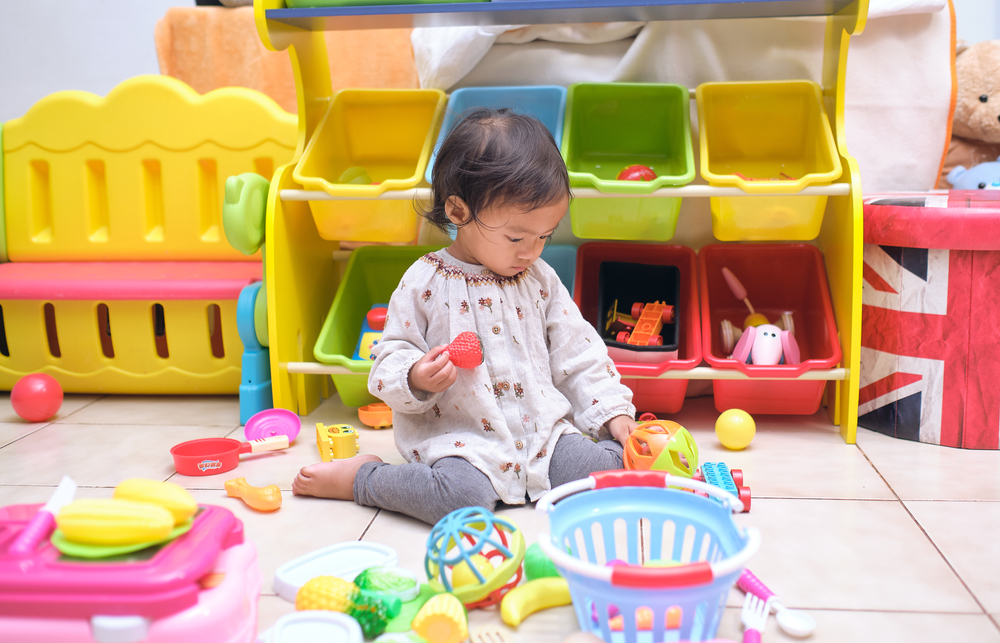
As parents, we are often told about the importance of play. We see our children drawn to it, whether they are stacking blocks, running in circles, or pretending to be a superhero. We instinctively know it’s good for them. But what if we understood that play is not just a way to pass the time? What if we saw it as the single most important activity for building a healthy, resilient, and well-organized brain?
Play is the deep, foundational work of early childhood. It is how a young child’s brain architecture is formed, one joyful and repetitive interaction at a time. It’s not about fancy toys or structured lessons; it is about the simple, instinctual drive to explore, connect, and make sense of the world. Understanding what is happening inside your child’s brain during these moments can shift how you see your role—not as an entertainer, but as a safe harbor and the source of all essential ingredients from which this incredible growth can unfold.
Play Is Not Just Fun. It Is How the Brain Grows.
When a young child plays, their brain is lighting up. It’s an active, dynamic process that is far more complex than it appears on the surface. The importance of play in early childhood is not a new idea, but modern neuroscience gives us a window into just how critical it is. Learning through play is not a passive activity; it is the brain’s preferred method for developing essential skills for life.
From the moment they are born, children are driven to understand their environment and the people in it. Play provides the perfect context for this exploration. It is a low-stakes, internally motivated activity where children can experiment with ideas, test physical limits, and process emotions. Activities that support brain development for toddlers are not about flashcards or apps; they are about giving them the time and space to engage with their world in a hands-on, curious way. Every time your child stacks a block, pours water from one cup to another, or engages in a game of peek-a-boo, their brain is hard at work, building and strengthening vital connections.
What Happens in the Brain During Play
During play, a child’s brain is engaged on multiple levels. The prefrontal cortex, responsible for executive functions like problem-solving and self-regulation, gets a workout as a child figures out how to build a tower that won’t fall. The cerebellum, which coordinates movement and balance, is activated as they climb, run, and jump. The limbic system, the brain’s emotional center, processes feelings of joy, frustration, and connection.
Simultaneously, play releases a cocktail of neurochemicals that make the brain more receptive to learning. Dopamine, associated with pleasure and motivation, surges when a child accomplishes a small goal, encouraging them to try again. Endorphins, which create feelings of well-being, are released during physical play. When play involves a safe, attuned caregiver, the brain is flooded with oxytocin, the “bonding hormone” that wires the brain for trust and connection. This neurochemical environment makes learning not only effective but also deeply relational and rewarding.
Why Repetition, Joy, and Safety Strengthen Neural Pathways
Have you ever wondered why your toddler wants to do the same puzzle over and over again? Or why do they find endless delight in dropping a spoon from their highchair, waiting for you to pick it up, only to drop it again? This repetition is not just a quirk of childhood; it is a fundamental mechanism of brain development.
Each time a child repeats an action, they are strengthening a specific neural pathway. Think of it like walking through a grassy field. The first time, you barely leave a trail. But if you walk the same path every day, you eventually create a well-worn dirt path. In the brain, this is called myelination. The more a pathway is used, the more it becomes coated in a fatty substance called myelin, which makes the transmission of neural signals faster and more efficient.
Safety, curiosity and joy are the secret ingredients that accelerate this process. When a child feels joyful and connected, their brain is in an optimal state to be curious for learning. Conversely, when a child feels stressed, scared, or disconnected, their brain shifts into a state of freeze and self-protection. The learning centers go offline as the survival-oriented parts of the brain take over. A safe, predictable environment and a warm, responsive relationship with a caregiver are what allow a child’s brain to move out of survival mode and into the state of discovery where true, lasting learning occurs.
The First Years Build the Brain’s Foundation
The first five years of life are a period of breathtakingly rapid brain growth. A child’s brain doubles in size in the first year and reaches about 90% of its adult volume by age five. During this critical period of brain development, early experiences have a profound and lasting impact on the brain’s architecture. The interactions, relationships, and environments a child is exposed to literally shape the physical structure of their brain, creating the foundation for all future relating, learning, behavior, and health.
This doesn’t mean parents need to orchestrate a perfect, endlessly stimulating environment. In fact, the opposite is often true. The brain development of children ages 0-5 thrives on simple, relational moments. Toddler brain development, in particular, is fueled by consistency, connection, and the freedom to explore within a safe container. It is the quality of these early experiences, not the quantity of activities, that shapes the brain in the most meaningful ways.
Why Everyday Moments Matter More Than You Realize
The most powerful brain-building moments are often hidden in the ordinary routines of daily life. The way you smile at your baby while changing their diaper, the tone you use when you talk to your toddler as you make breakfast, the patience you show when they struggle to put on their shoes—these are not small things. These are the bricks and mortar of your child’s developing brain.
Each of these interactions sends a message to your child’s nervous system: “You are safe. You matter. You are seen and loved.” When this message is sent consistently, the brain wires for security and resilience. It learns that relationships are a source of comfort and that the world is a generally predictable and manageable place. This felt sense of safety is the platform upon which all higher-level skills—like emotional regulation, social competence, and academic learning—are built. You don’t need a curriculum; you just need to be present in these small, everyday moments.
Serve-and-Return: The Back-and-Forth That Wires Connection
One of the most essential concepts in early brain development is “serve-and-return.” It is the simple, back-and-forth interaction between a child and their caregiver. A baby babbles (the serve), and the parent babbles back (the return). A toddler points at a dog (the serve), and the parent says, “Yes, that’s a big, fluffy dog!” (the return). A child looks at you with wide, teary eyes (the serve), and you scoop them up for a hug (the return).
These seemingly simple exchanges are the primary way the brain wires for connection. Each time you return your child’s serve, you are reinforcing a crucial neural circuit. You are telling their brain, “I hear you. I see you. What you do matters.” This responsive caregiving strengthens the parent-child bond and builds a child’s confidence that their needs will be met. Over thousands of repetitions, serve-and-return interactions create a robust neural foundation for social and emotional skills. They teach children how to communicate, manage their feelings, and form healthy relationships throughout their lives.
Play Helps Organize a Child’s Nervous System
A young child’s nervous system is still under construction. They do not yet have the fully developed capacity to manage big feelings or calm themselves down from a state of high alert. This is where co-regulation comes in. Co-regulation is the process by which a calm, regulated adult lends their nervous system to a child, helping them move from a state of distress back to a state of calm and balance. Play is one of the most powerful arenas for this process to unfold.
Through playful, connected interactions, we can support nervous system regulation in children. The predictable rhythm of a game, the shared laughter, and the physical comfort of a caregiver’s presence all send signals of safety to a child’s developing nervous system. This repeated experience of being brought back to a state of calm by a trusted adult is what eventually helps children learn to regulate their own emotions. This aspect of emotional development in early childhood is often overlooked, but it is fundamental to a child’s well-being.
From Big Feelings to Growing Regulation
Young children experience emotions in a big, all-encompassing way. When a toddler is angry, their whole body is angry. When they are sad, their sadness feels bottomless. They have not yet developed the brain pathways for emotional nuance or control. Play provides a safe container for them to experience and express these big feelings without becoming overwhelmed.
In play, a child can be the roaring lion, the crying baby, or the powerful giant. They can act out scenarios of frustration, fear, or excitement. When a parent joins this play without judgment, they are communicating, “All of your feelings are welcome here. They are not too big for me to handle.” This acceptance allows the child to move through the feeling, rather than getting stuck in it. Gradually, through thousands of these playful encounters, the child’s brain begins to build the pathways for self-regulation. They learn that feelings come and go, and that they have the capacity to manage them, especially with the support of a caring adult.
How Predictable Play Builds a Sense of Safety
Predictability is a balm for the developing nervous system. When a child knows what to expect, their brain can relax its state of high alert and move into a mode of rest and connection. Simple, repetitive games are a powerful way to provide this sense of predictability.
Think of a game of peek-a-boo. The cycle of disappearance and reappearance, always ending with a joyful reunion, is deeply reassuring for a baby. It teaches them on a pre-verbal, nervous system level that separations are temporary and that connection will be restored. Games with a clear rhythm, like pat-a-cake or rocking back and forth while singing a song, have a similar organizing effect. The predictable sensory input helps the child’s body and brain feel settled and secure. This felt sense of safety, built through simple, predictable play, is the bedrock of emotional resilience. It creates a baseline of calm from which a child can venture out to explore their world, knowing they have a safe place to return to.
Movement, Sensory Exploration, and the Developing Brain
For young children, thinking and learning are not activities that happen from the neck up. The brain learns through the body. Movement and sensory play are not just ways for kids to burn off energy; they are essential for building a well-integrated brain. Every time a child climbs, spins, touches something gooey, or splashes in water, they are feeding their brain critical information about their body and the world around it. The benefits of sensory play and physical activity are deeply tied to cognitive development.
Physical play for toddlers, whether it’s tumbling on the floor or carrying heavy objects, helps develop body awareness and motor skills. This physical competence translates directly to a sense of confidence and agency. When a child masters a new physical skill, their brain gets a powerful message: “I can do hard things.” This belief is foundational for all other types of learning.
Why the Brain Learns Through the Body
The brain’s map of the body, known as the sensory-motor cortex, is vast and complex. This map is not pre-programmed; it is built through experience. When a child moves and engages their senses, they are sending a constant stream of information to the brain, which uses this input to refine its understanding of where the body is in space, how to coordinate movements, and how to interpret sensory information.
This process, called proprioception, is our internal sense of body position. The vestibular system, located in the inner ear, governs our sense of balance and spatial orientation. Activities like swinging, spinning, and hanging upside down provide intense input to this system, which has a powerfully organizing effect on the brain. This is why many children instinctively seek out these movements. They are not being “wild”; their brains are actively seeking the sensory input they need to grow and organize themselves.
Climbing, Spinning,Building, Crashing — It All Has Purpose
It can be easy to look at a toddler’s seemingly chaotic play and see only mess and risk. But from a developmental perspective, this activity is rich with purpose. When a child climbs a play structure, they are not just strengthening their muscles; they are practicing problem-solving, risk assessment, and perseverance. Their brain is calculating distances, coordinating limbs, and managing a slight sense of fear with the thrill of accomplishment.
When children build a tower of blocks only to knock it down with a gleeful crash, they are exploring cause and effect, gravity, and power. This cycle of creation and destruction is a healthy and necessary part of understanding how the world works. When they spin in circles until they fall down dizzy, they are feeding their vestibular system the intense input it craves for organization. Seeing the purpose behind these actions can help us relax and trust that our children’s bodies know exactly what they need to do to help their brains grow. Our role is often just to provide a reasonably safe space for this essential work to happen.
Imagination Is Brain Work
When a child picks up a banana and pretends it’s a telephone, they are not just being silly. They are engaging in one of the most sophisticated forms of cognitive exercise: imaginative play. The ability to make one object stand in for another—a process known as symbolic thinking—is a giant leap in brain development. This skill is the foundation for understanding abstract concepts like letters and numbers later on.
Pretend play is a powerful engine for creativity and flexible thinking. It allows children to explore different roles, experiment with social rules, and create worlds where they are in charge. This is not frivolous; it is a critical way that children build problem-solving skills and develop a more nuanced understanding of themselves and others. The benefits of imaginative play are far-reaching, impacting everything from social competence to academic success.
How Pretend Play Strengthens Flexible Thinking
In pretend play, there are no fixed scripts. A cardboard box can be a car, a spaceship, or a castle, all within the span of a few minutes. This fluid shifting of rules and realities requires a high degree of mental flexibility. When children engage in this type of play, they are exercising their brain’s ability to hold multiple ideas in mind at once, adapt to changing circumstances, and think outside the box.
If a disagreement arises during play—”No, the spaceship can’t have wheels!”—the children have to negotiate, compromise, and come up with a new solution. This process strengthens the prefrontal cortex, the part of the brain responsible for negotiation, planning, and impulse control. Imaginative play is a safe laboratory where children can practice these complex social and cognitive skills without the high stakes of real-world consequences. This practice builds a more agile and adaptable brain, better equipped to handle the complexities of life.
Creativity Begins Long Before School
We often associate creativity with artistic pursuits like painting or music, but its roots are formed much earlier, in the open-ended world of childhood play. Creativity is, at its core, the ability to generate new ideas and make novel connections between existing ones. This is precisely what happens in imaginative play.
When a child decides that a pile of pillows is a mountain and a blanket is a river, they are making creative connections. They are looking at ordinary objects and seeing extraordinary possibilities. This habit of mind, cultivated in early childhood, is essential for innovation and problem-solving in adulthood. Protecting the time and space for this kind of unstructured, child-led play is one of the most important things we can do to nurture our children’s innate creativity. It does not require special materials or instruction; it simply requires the freedom for their minds to wander, explore, and invent.
The Brain Develops Best in Relationships
While all forms of play are beneficial, play that happens within the context of a safe and attuned relationship is uniquely powerful. The human brain is a social organ, wired to connect. When parents play with their children, they are doing more than just sharing a fun moment. They are strengthening the attachment bond, which is the very foundation of a child’s mental and emotional health.
These shared moments of joy, silliness, and connection fill a child’s emotional cup and reinforce their sense of safety and belonging. This doesn’t mean every interaction has to be playful, or that you need to be a perfect playmate. It simply means that making time to join your child in their world, on their terms, is one of the most profound investments you can make in their developing brain. These moments of connection with your child build a buffer of resilience that will last a lifetime.
Why Playing Together Matters More Than Perfect Parenting
In our fast-paced, high-pressure culture, it’s easy to get caught up in the idea of “perfect parenting.” We worry if we are doing enough, teaching enough, or providing enough enrichment. But the truth is, a child’s brain does not need perfect parenting. It needs connected parenting.
Taking just ten minutes a day to get on the floor and enter your child’s world—following their lead, showing interest in what they are doing, and sharing in their delight—is more powerful than any educational toy or structured activity. In these moments, you are not a teacher or an instructor; you are a fellow traveler. This sends a powerful message to your child: “You are worth my time. Your world is interesting to me.” This feeling of being seen and valued by the most important people in their life is what allows a child to thrive.
Shared Joy as a Builder of Trust
Joy is a relational experience. When you and your child share a genuine moment of laughter or delight, your brains and bodies synchronize. This experience of shared positive emotion is a potent builder of trust and security. It wires your child’s brain to see you as a source of comfort, pleasure, and safety.
These moments don’t have to be grand. It can be the shared giggle when a block tower tumbles, the smile you exchange when you finish a puzzle together, or the simple pleasure of blowing bubbles in the backyard. Each of these small moments of shared joy strengthens the attachment bond and deepens the well of trust between you. This trust is the foundation upon which your child will build their ability to form healthy relationships, navigate challenges, and move through the world with confidence.
Play Is Not Extra. It Is Essential.
In a world that often prioritizes academic achievement and structured activities from a very young age, it is easy to view play as an optional extra—something to be squeezed in after the “real” learning is done. This is a profound misunderstanding of how children develop. Free, unstructured play is not a luxury; it is a biological necessity for healthy brain development.
The benefits of unstructured play are immense. It is during this time, free from adult direction and performance expectations, that children develop their own interests, learn to manage their own time, and practice solving their own problems. When we protect time for free play, we are giving our children’s brains the space they need to integrate information, consolidate learning, and grow in the ways they are naturally wired to. Is play necessary for child development? The answer from neuroscience and developmental psychology is an unequivocal yes.
What Children Miss When Play Gets Replaced by Performance
When play becomes another area for performance—with the “right” way to do an activity or a focus on achieving a specific outcome—its brain-building power diminishes. The joy, curiosity, and internal motivation that fuel deep learning are replaced by pressure and anxiety. A child’s brain cannot be in a state of open, creative exploration and a state of performance-based stress at the same time.
When the schedule becomes too packed with lessons, sports, and other adult-led activities, children miss out on the crucial opportunities for self-discovery that unstructured play provides. They miss the chance to be bored and then find their own way out of it. They miss the chance to negotiate social rules with peers without an adult intervening. They miss the chance to simply be, to follow their own thoughts, and to discover what truly interests them. These are not trivial losses; they are losses of essential developmental experiences.
Protecting Time for Play in a Busy World
In our modern world, protecting time for play requires a conscious and deliberate effort. It means resisting the pressure to overschedule our children. It means prioritizing downtime and unstructured time as much as we prioritize homework or music lessons. It means valuing a lazy Saturday morning spent building forts in the living room as much as a soccer tournament.
This can be challenging, but it is one of the most important advocacy roles a parent can play. It involves saying “no” to some things so you can say “yes” to the open-ended time your child’s brain desperately needs. It means trusting that in those moments of seemingly “doing nothing,” your child is actually doing the most important work of all: building a healthy, resilient, and fully integrated brain.
Simple Ways Parents Can Support Brain-Building Play
Supporting your child’s development through play doesn’t have to be complicated or expensive. It’s less about what you do and more about how you are. The parent’s role in child development is not to be a director or entertainer, but to be a safe, curious, and present companion. Creating an environment that encourages play at home is often about simplifying, slowing down, and trusting your child’s innate wisdom.
You don’t need the latest toys or elaborate setups. Some of the best play ideas for toddlers involve simple, open-ended materials like cardboard boxes, blankets, pots and pans, or natural elements like water, sand, and leaves. The goal is to provide a foundation of safety and connection, and then get out of the way.
Follow Your Child’s Lead
One of the most powerful things you can do is to simply watch your child and follow their lead. Let them choose the activity and set the rules. If they want to spend twenty minutes lining up their cars, join them. Narrate what you see: “You are making a long line of cars. The red one is next to the blue one.” This shows them you are paying attention and that their interests are valid. Resisting the urge to redirect them to a “better” or more “educational” activity communicates profound respect for their inner world.
You Don’t Have to Entertain — Just Be Present
Many parents feel a constant pressure to keep their children entertained. This is an exhausting and unnecessary burden. Your child does not need a cruise director; they need a calm, present anchor. Sometimes, the best way to support their play is to simply sit quietly nearby while they explore independently. Your quiet presence creates a circle of safety that allows them to feel secure enough to take risks and dive deep into their imaginative worlds. You can be available for connection when they seek it, without feeling responsible for directing the action.
Connection Matters More Than Getting It “Right”
There is no “right” way to play with your child. You don’t have to be great at pretend play or have amazing ideas. The only thing that truly matters is your intention to connect. If you feel awkward or unsure, just be honest. You can say, “I’m not sure how to play this game. Can you show me?” Let your child be the expert. What your child will remember is not how well you played the game, but the feeling of being with you—the feeling of being seen, enjoyed, and loved. That is the connection that matters most.
When Play Doesn’t Come Easily
For most children, play is a natural, spontaneous activity. But for some, it doesn’t come so easily. A child who has experienced early stress, trauma, or has underlying developmental concerns may struggle to feel safe enough to play. For these children, the world may feel too threatening or overwhelming to allow for the vulnerability and openness that play requires.
A child not interested in play or a toddler who doesn’t seem to engage might be communicating that their nervous system is stuck in a state of high alert or shutdown. Their behavior is not a choice, but a reflection of their internal state. They may need more support to find the felt sense of safety that is the prerequisite for all playful exploration. Recognizing these signs is the first step toward getting them the help they need.
Some Children Need More Support to Feel Safe Enough to Play
A child who struggles with play may appear rigid, controlling, or repetitive in their activities. They might become easily frustrated or overwhelmed, or they may prefer to watch from the sidelines rather than join in. Sometimes, a child who has experienced trauma may repetitively act out scary themes without the sense of release or resolution that is typical of trauma play.
These are all signs that the child’s nervous system is struggling to regulate. They need a caregiver who can provide an exceptional amount of co-regulation, predictability, and gentle, patient invitations to connect. It’s not about forcing them to play, but about creating an environment of such profound safety that their natural impulse to play can slowly begin to re-emerge.
When It Might Help to Reach Out
If you are worried about your child’s play, or if you find yourself feeling consistently overwhelmed, frustrated, or disconnected when you try to engage with them, it can be incredibly helpful to reach out for professional support. A therapist specializing in early childhood and parent-child relationships can help you make sense of your child’s behavior and your own reactions.
Therapy can provide a space to explore what might be getting in the way of playful connection. It can offer you tools to help co-regulate your child’s nervous system and strategies to help them feel safe enough to explore their world. Reaching out is not a sign of failure; it is a sign of strength and a commitment to giving your child and your family the support you deserve.
Play Is the Language of Childhood
If we want to understand our children, we need to learn their language. And for young children, that language is play. It is through play that they show us their world: their joys, their fears, their questions, and their understanding of how things work. It is a direct window into their inner experience, offered to us without the filter of adult words.
Understanding children through play requires us to slow down, quiet our own agendas, and become curious observers. It asks us to trust that what they are doing has meaning, even if we don’t understand it at first. Play is not just something children do; it is how they communicate who they are.
What Children Show Us When We Slow Down and Join Them
When we take the time to get on the floor and join our children in their world, they will show us everything. We might see them process a recent trip to the doctor by giving their teddy bear a check-up. We might see them explore feelings of power and control by building the tallest tower and deciding when it falls. We might see them practice nurturing and care by gently tucking their dolls into bed.
In these moments, they are not just playing. They are making sense of their lives. They are integrating their experiences. They are building their brains. And by joining them with warmth and curiosity, we are telling them, in the most powerful way possible, that they are not alone.

The journey to parenthood is often painted as a time of pure joy, glowing pregnancies, and blissful bonding with a newborn. But for many, the reality is far more complex. The perinatal period—spanning from pregnancy through the first year after birth—is a profound and often tumultuous transformation. It can bring overwhelming anxiety, relationship strain, identity loss, and the resurfacing of old wounds. If you’re feeling more overwhelmed than overjoyed, you are not alone, and specialized support is available.
Perinatal therapy is a specific form of counseling designed to support individuals and couples through the unique psychological challenges of this life stage. Yet, many people hesitate to reach out because the process feels mysterious and intimidating. What actually happens in a session? Will you be judged? What if you don’t even know what to talk about?
This guide will pull back the curtain on perinatal therapy. We’ll explore what it looks like in practice, from the therapeutic approaches used to the crucial emphasis on safety and pacing. We will discuss the immense perinatal therapy benefits, what trauma-informed perinatal care entails, and help you determine if this form of support is the right fit for you.
Demystifying Perinatal Therapy: More Than Just “Talking About Your Feelings”
At its core, perinatal therapy is a safe, confidential space dedicated entirely to your well-being during one of the most demanding transitions of your life. It goes beyond generic “talk therapy” by focusing on the specific emotional, psychological, and relational shifts that occur during pregnancy and the postpartum period.
Unlike talking to a well-meaning friend or family member, a perinatal therapist is a trained professional who understands the intricate interplay of hormones, sleep deprivation, identity shifts, and societal pressures you’re facing. They won’t offer platitudes or unsolicited advice. Instead, they provide a non-judgmental container to process your experiences, learn coping skills, and heal.
The primary goal is not to “fix” you, because you are not broken. The goal is to support you, validate your experience, and provide you with the tools to navigate this intense period with more confidence and peace.
Who Is Perinatal Therapy For? Signs It Might Be Right for You
While anyone can benefit from extra support during the perinatal period, therapy can be particularly helpful if you’re experiencing any of the following. You don’t need to be in a crisis to seek help; in fact, therapy is often most effective when started as a proactive form of support.
Consider reaching out if you:
- Feel overwhelmed, anxious, or constantly worried: This goes beyond typical new-parent jitters. It might look like persistent, intrusive thoughts, panic attacks, or an inability to relax, even when the baby is sleeping.
- Struggle with feelings of sadness, rage, or irritability: If you feel a persistent sense of hopelessness, find yourself snapping at your loved ones, or feel a simmering anger you can’t explain, it could be a sign of a perinatal mood or anxiety disorder (PMAD).
- Feel disconnected from your baby: Many parents expect an instant rush of love, but bonding can be a slow and complicated process. If you feel numb, resentful, or just “not connected,” therapy can help you explore these feelings without shame.
- Are struggling with a traumatic birth experience: Birth trauma is real and can have lasting impacts. If you are having flashbacks, nightmares, or avoiding reminders of your birth experience, specialized support can help you process what happened.
- Find your relationship is under strain: The transition to parenthood is a major stressor for couples. If you and your partner are constantly fighting, feeling like roommates, or struggling with intimacy, therapy can help you reconnect.
- Are grieving the loss of your old self: It’s normal to mourn the freedom and identity you had before becoming a parent. Therapy provides a space to process this complex form of grief.
- Had a difficult or traumatic childhood: The vulnerability of the perinatal period often brings old wounds to the surface. If you’re noticing that your own childhood experiences are impacting your parenting, a trauma-informed therapist can provide essential guidance.
- Experienced a NICU stay or medical complications: Having a baby with medical challenges adds another layer of stress, trauma, and grief. Therapy can help you navigate the unique emotional toll of this experience.
If any of these points resonate, it’s a strong indication that you could benefit from dedicated therapy for new parents.
What Happens in a Perinatal Therapy Session? A Look Inside
Starting therapy can feel intimidating, so let’s walk through what you can generally expect.
The Initial Consultation and First Sessions
Most therapists offer a free, brief consultation call (typically 15-20 minutes). This is your opportunity to get a feel for their personality and approach, and to ask logistical questions about fees, scheduling, and availability. It’s a low-pressure way to see if you “click.”
Your first few full sessions are about building a foundation of safety and trust. Your therapist’s main goal is to get to know you and understand your world. You can expect them to ask questions like:
- “What brought you to therapy at this particular time?”
- “Tell me about your experience of pregnancy and birth.”
- “What does a typical day look like for you right now?”
- “What are your biggest sources of stress and support?”
- “What were you hoping to get out of our work together?”
There is no pressure to have a dramatic story or even to know exactly what’s “wrong.” You can simply say, “I’m not feeling like myself,” or “Everything just feels really hard right now.” A good therapist will meet you where you are and help you articulate your experience.
The Crucial Elements: Safety, Pacing, and Trauma-Informed Care
Effective perinatal therapy is built on three core principles that ensure you feel secure enough to do the vulnerable work of healing.
- Psychological Safety: This is the absolute priority. Your therapist will work to create a space where you feel seen, heard, and accepted without judgment. This means:
- Validation: They will validate your feelings, even the ones you feel ashamed of (like resentment towards your baby or partner). You’ll hear phrases like, “That makes so much sense,” or “It’s completely understandable that you would feel that way.”
- Confidentiality: Everything you share is confidential, creating a private container for your most honest thoughts and feelings.
- You are the expert on you: Your therapist is a guide, but you are the expert on your own life. They will not tell you what to do but will help you access your own inner wisdom.
- Pacing: The therapeutic process moves at your speed. In the exhaustion and overwhelm of new parenthood, the last thing you need is to feel pressured.
- No Rushing: A skilled therapist will not push you to talk about difficult topics before you are ready.
- Focus on the Present: While your past is important, much of the initial work may focus on immediate stabilization—helping you get more sleep, manage anxiety in the moment, and find practical support.
- Titration: When you do approach difficult material, especially trauma, the therapist will use a technique called “titration,” touching on the challenging memory or feeling for a brief period and then returning to a place of safety and resource in the present moment. This prevents you from becoming overwhelmed.
- Trauma-Informed Care: A trauma-informed approach is not just for those with a history of “big T” traumas. It’s a lens that recognizes that many people have experienced distressing life events, and it prioritizes preventing re-traumatization. This is especially vital in trauma-informed perinatal care. This looks like:
- Choice and Collaboration: You are an active partner in your therapy. Your therapist will explain different approaches and you’ll decide together what feels right.
- Emphasis on Regulation: A key focus is on helping you regulate your nervous system. This means learning practical, body-based tools to calm yourself when you feel anxious, panicky, or enraged.
- Connecting Past and Present: The therapist understands that your current reactions may be rooted in past experiences and helps you gently make those connections without blame or shame.
Therapeutic Modalities: The “How” of Perinatal Therapy
Perinatal therapists draw from a range of evidence-based approaches, often blending them to meet your specific needs. You don’t need to be an expert on these, but understanding some of the common therapy modalities can demystify the process.
For Individuals
- Somatic Therapy: This body-centered approach recognizes that stress and trauma are held in the body and nervous system. Instead of just talking about anxiety, you might be guided to notice where you feel it in your body (a tight chest, a knot in your stomach) and learn techniques like mindful breathing or gentle movement to help release that tension. It’s incredibly effective for managing the physical symptoms of anxiety and panic.
- EMDR (Eye Movement Desensitization and Reprocessing): EMDR is a highly effective, structured therapy designed to help the brain process traumatic or distressing memories. It’s particularly powerful for processing birth trauma, past abuse, or other frightening events. By using bilateral stimulation (like eye movements or tapping), EMDR helps the brain file away the memory properly so it no longer feels like it’s happening in the present.
- Inner Child Work / Parts Work (IFS): This approach helps you understand the different “parts” of yourself. You might have a “perfectionist parent” part, an “anxious child” part, and a “competent professional” part. In the perinatal period, these parts can be in conflict. Therapy helps you listen to each part with compassion and access your core, calm “Self” to lead with more balance.
- Acceptance and Commitment Therapy (ACT): ACT helps you stop struggling with difficult thoughts and feelings. Instead of trying to eliminate anxiety, you learn to notice it, make room for it, and choose to act on your values anyway. It’s a practical approach focused on building a rich, meaningful life even in the presence of pain.
- Trauma-Informed Cognitive Behavioral Therapy (CBT): This approach helps you identify and challenge the negative thought patterns that fuel anxiety and depression (e.g., “I’m a bad mother,” “I’m failing at this”). A trauma-informed lens ensures this is done gently, without invalidating the real experiences that may have led to those beliefs.
For Parent-Child and Family Dynamics
- Child-Parent Psychotherapy (CPP): This is a beautiful, relationship-based therapy for parents and their young children (ages 0-5). It is specifically designed to support families who have experienced stress or trauma. The therapist helps the parent understand the meaning behind their child’s behaviors and strengthens the parent-child bond. The focus is on healing together within the relationship.
- Dyadic Therapy: This is a broad term for therapy that involves two people—in this case, a parent and child—in the room together. The therapist observes the interaction and provides real-time coaching and support to help the parent tune into their child’s cues and respond in a way that builds connection and security.
Your therapist will work with you to find the approach or combination of approaches that feels most supportive and effective for your unique situation and goals.
Finding the Right Fit: Your Journey, Your Choice
The single most important factor in successful therapy is the quality of the relationship between you and your therapist. You deserve to work with someone you trust and feel comfortable with.
How to Find a Perinatal Therapist:
- Use Specialized Directories: Websites like Postpartum Support International (PSI) have directories of therapists who specialize in perinatal mental health.
- Ask for Referrals: Your OB-GYN, midwife, doula, or pediatrician may have a list of trusted local therapists.
- Search Online: Use specific search terms like “perinatal therapist near me,” “postpartum anxiety therapy,” or “birth trauma counseling.”
Questions to Ask a Potential Therapist:
During your initial consultation, don’t be afraid to interview them. This is your chance to ensure they’re a good fit.
- “What is your experience working with new parents?”
- “What is your approach to treating perinatal anxiety/depression/trauma?”
- “How do you incorporate trauma-informed principles into your work?”
- “What might a typical session with you look like?”
- “Do you offer virtual sessions?” (A crucial option for new parents!)
Trust your gut. If you feel heard, respected, and hopeful after the call, it’s a good sign. If something feels off, it’s okay to keep looking.
Taking the First Step Is the Hardest—and Bravest—Part
The perinatal period is a profound journey of becoming. It is a time of immense growth, but that growth often comes with significant pain and challenge. You were never meant to navigate it alone.
Reaching out for perinatal therapy is not a sign of weakness or failure. It is a radical act of self-care and a testament to your strength. It is an investment in your own well-being, in the health of your relationships, and in the foundation you are building for your child. By giving yourself the gift of support, you are not only healing yourself but also creating a legacy of emotional health for the next generation. You deserve to feel well. You deserve to be supported. And you don’t have to wait until you hit a breaking point to ask for help.

You’re running on three hours of broken sleep. The baby is crying, you haven’t showered, and the thought of figuring out what to eat for dinner feels like a monumental task. Your phone buzzes with a text from a friend: “Let me know if you need anything!” You type back, “We’re doing great, thanks!” and put the phone down, feeling a familiar pang of isolation. Why is it so hard to just say what you really need? Why does admitting you’re struggling feel like an impossible hurdle?
For new parents, this scenario is painfully common. The transition to parenthood is a period of immense joy, but it is also one of profound challenge and vulnerability. Logically, this is the exact time when you would need the most support. Yet, asking for that support can feel like one of the hardest things to do. This isn’t a personal failing; it’s a complex phenomenon rooted in deep psychological, cultural, and emotional barriers.
This article will explore the powerful forces that make asking for help so difficult after having a baby. We will uncover the unspoken societal rules, the internal pressures, and the echoes of your own past that keep you silent. Most importantly, we will provide actionable strategies to help you overcome these barriers and access the parenting support you need and deserve.
The Cultural Script: The Myth of the Perfect, Self-Sufficient Parent
From the moment you announce a pregnancy, you are handed an unspoken cultural script. This script is filled with images of blissful, capable, and entirely self-sufficient parents who handle the challenges of a newborn with grace and intuition. We see it on social media, in movies, and even in the stories our families tell. This myth creates a powerful and damaging set of expectations.
The Ideal of the “Natural” Mother
Society, in particular, places an immense burden on mothers. There’s a pervasive myth that mothering should be an innate, instinctual skill. You’re expected to instinctively know how to soothe your baby, how to breastfeed effortlessly, and how to feel nothing but overwhelming love and fulfillment.
When your reality involves struggling with a latch, feeling touched-out, or experiencing waves of anxiety and resentment, it creates a painful gap. Admitting you need help can feel like admitting you are not a “natural” mother, that you are somehow failing at the most fundamental level. This shame is a powerful silencer.
The Pressure of Individualism
Modern Western culture champions independence and self-reliance. We are taught from a young age that strong, competent people “pull themselves up by their bootstraps” and handle their own problems. This ethos is directly at odds with the reality of early parenthood, which is a fundamentally dependent state—not just for the baby, but for the parents as well.
Asking for help can feel like a violation of this core cultural value. It can be misinterpreted internally as a sign of weakness or incompetence. You may think, “Other people manage to do this, why can’t I?” This comparison game, fueled by the curated highlight reels of social media, convinces you that your struggles are unique and a sign of personal deficiency.
The Performance of Parenthood
In an age of constant documentation, parenthood has become a performance. There is pressure to present a picture of a happy, thriving family. Asking for help—whether it’s admitting you’re depressed, that your relationship is strained, or that you just need someone to watch the baby so you can sleep—can feel like pulling back the curtain and revealing the messy, unglamorous reality. This vulnerability can feel terrifying, as if you are shattering the carefully constructed image you believe everyone else expects to see.
The Internal Barriers: Your Psychology at Play
Beyond the external cultural pressures, there are deep-seated psychological reasons why asking for help is so challenging. Many of these are rooted in our earliest life experiences and our core beliefs about ourselves.
1. The Fear of Being a Burden
This is perhaps the most common internal barrier. As a new parent, you are acutely aware of the massive effort involved in caring for a baby. The thought of imposing on someone else’s time and energy can feel incredibly selfish.
This fear often stems from childhood experiences. If you grew up in an environment where your needs were treated as an inconvenience, or if you had to take on a caregiver role at a young age, you may have learned that your needs are a burden to others. As an adult, this translates into a powerful reluctance to ask for anything, even when you are desperate. You tell yourself that your friends are busy, your family has their own problems, and you shouldn’t add to their load.
2. Loss of Control and the Need for Competence
Parenthood can feel like a complete loss of control. Your time, your body, and your emotional state are no longer entirely your own. For many people, one way to cope with this chaos is to double down on an area they can control: how they manage the household and the baby.
Admitting you need help can feel like surrendering the last bit of control you have. It can challenge your sense of competence at a time when your identity feels fragile. If you’ve always been the capable one, the planner, the person who gets things done, it can be deeply disorienting to be in a position of need. Asking for help might feel like admitting, “I can’t handle this,” which your brain may equate with “I am a failure.”
3. The Activation of Old Wounds (A Trauma-Informed Perspective)
The perinatal period is a uniquely sensitive time that can bring old, unresolved emotional wounds to the surface. A trauma-informed therapy perspective helps us understand that our present-day reactions are often connected to our past experiences.
- Attachment History: Your relationship with your primary caregivers as a child created a blueprint for how you view relationships and whether you see others as a safe source of support. If your caregivers were consistently available and responsive to your needs, you likely developed a secure attachment style, making it easier to trust and lean on others as an adult. However, if your caregivers were neglectful, inconsistent, or critical, you may have learned that it’s not safe to be vulnerable or depend on others. When you become a parent, this old programming can kick in, telling you, “You’re on your own. No one will be there for you, so don’t even bother asking.”
- Perfectionism as a Trauma Response: For some, perfectionism is a learned survival strategy. Growing up in a chaotic or critical environment can teach a child that if they can just be “perfect,” they can avoid criticism, control the chaos, or finally earn love and approval. As a new parent, this manifests as an intense pressure to do everything right. Asking for help is fundamentally incompatible with this perfectionistic drive, as it requires admitting imperfection.
4. The Specifics of “What” and “How” to Ask
Sometimes, the barrier is purely logistical, but it’s wrapped in emotional exhaustion.
- You Don’t Even Know What to Ask For: When you’re in the thick of it, your needs can feel like a giant, overwhelming fog. You know you need something, but you can’t identify a specific, askable task. When someone says, “Let me know what you need,” it feels like another item on your to-do list: Figure out what I need and delegate it.
- The Inability to Receive: Even if someone does help, it can be hard to let go and actually receive it. You might feel obligated to host them, hover over them to ensure they’re doing things “the right way,” or feel intense guilt for taking a break. This difficulty in receiving is often tied to self-worth, and the belief that you don’t truly deserve rest or support.
Practical Strategies for Learning to Ask for and Receive Help
Overcoming these barriers is a process that requires self-compassion and intentional practice. It’s about unlearning old scripts and writing a new one where your needs are valid and support is accessible.
1. Reframe Asking as a Strength
Start by consciously challenging the belief that asking for help is a weakness. Reframe it as a sign of strength, resourcefulness, and wisdom. A strong leader knows how to delegate. A smart CEO builds a team. A good parent builds a village.
- Practice: Create a mantra you can repeat to yourself: “Asking for help is a sign of a good parent who is building a strong support system for their baby.” Or, “Meeting my own needs allows me to be a more present and patient parent.” This helps rewire the neural pathways that equate asking with failing.
2. Get Specific and Concrete
Vague offers of help are hard to act on. The most effective way to get support is to remove the guesswork for both you and the person offering.
- Create a “Help Menu”: Sit down with your partner (or by yourself during a quiet moment) and create a list of small, specific tasks that would genuinely help. Keep it on your phone or on the fridge. The next time someone asks what you need, you can consult the list.
- Examples for Your Menu:
- “Could you fold that basket of baby laundry?”
- “Would you be willing to drop off a coffee for me tomorrow morning?”
- “Could you hold the baby for 30 minutes so I can take an uninterrupted shower?”
- “Would you mind picking up our grocery order on your way over?”
- “I’d love some adult conversation. Could we have a 15-minute phone call while I’m on a walk with the baby?”
A specific, time-bound, and low-effort request is much easier for someone to say “yes” to, and it makes it easier for you to ask.
3. Start Small and Practice Receiving
If asking a friend for help feels too intimidating, start with a lower-stakes option.
- Practice with Professionals: Pay for help if you have the means. Order grocery delivery. Hire a house cleaner for one session. Use a meal delivery service. This allows you to practice the act of receiving support without the emotional baggage of feeling like a burden.
- Practice Receiving Graciously: When someone does help, your only job is to say “Thank you.” Resist the urge to apologize, justify why you needed the help, or minimize the value of their contribution. A simple, heartfelt “Thank you, that was a huge help” is all that’s needed. This trains you to accept support as your due.
4. Communicate with Your Partner
Your partner is your first line of defense, but they are not a mind reader. The same barriers that stop you from asking friends for help can stop you from communicating your needs clearly within your relationship.
- Schedule Check-Ins: Set aside 10-15 minutes each day to check in with each other, using a gentle start-up. Instead of, “You never help with the baby,” try, “I’m feeling really overwhelmed and touched-out today. I need 20 minutes of alone time this evening. Could you take the baby after their next feed?”
- Define Roles Clearly: Explicitly divide tasks so it’s clear who is responsible for what. This reduces the need to constantly ask for help and minimizes resentment over unspoken expectations.
5. Seek Professional Support
If you find that your inability to ask for help is deeply entrenched and connected to past experiences or is contributing to significant distress, perinatal therapy can be transformative. It provides a safe space to explore these barriers without judgment.
How therapy for new parents can help:
- Unpacking Your History: A therapist can help you understand how your upbringing and past traumas are influencing your current beliefs and behaviors.
- Building Self-Worth: Therapy can help you challenge the core belief that you are a burden or undeserving of care, building a foundation of self-worth that makes it easier to advocate for your needs.
- Developing Communication Skills: A therapist can provide you with the tools and language to ask for what you need more effectively, both from your partner and your wider support system.
- Processing Trauma: For those whose resistance to asking for help is rooted in trauma, modalities like EMDR (Eye Movement Desensitization and Reprocessing) can help process those painful memories, reducing their power in the present.
Building Your Village, One Request at a Time
The old adage, “It takes a village to raise a child,” is not a cliché; it is a biological and anthropological truth. Humans are not meant to raise children in isolation. Your desire for support is not a weakness; it is an ancient, hardwired need.
Learning to ask for help is a skill, and like any skill, it requires practice. It will feel uncomfortable at first. You may feel guilty or vulnerable. But with each small request, you are dismantling a lifetime of conditioning and rewriting the script. You are teaching yourself that your needs matter, that support is available, and that you are worthy of care.
By bravely and vulnerably reaching out, you are not only giving yourself a lifeline; you are modeling a crucial skill for your child. You are showing them that strength lies not in silent struggle, but in the courage to connect and lean on others. You are, in essence, building the village that will support both you and your child for years to come.

You’re holding your beautiful new baby, the culmination of months of anticipation. Your partner is nearby, friends are texting congratulations, and family members are eager to visit. You are, by all definitions, not alone. So why do you feel an ache of profound loneliness? Why does it feel like you’re on a deserted island in a crowded room? If this sentiment resonates, know that you are in good company. This experience, often called new parent loneliness, is incredibly common yet rarely discussed, leaving countless parents feeling isolated and ashamed.
The transition to parenthood is a seismic shift that rearranges every aspect of your life—your identity, your relationships, your daily rhythms, and your internal world. While you are physically with your baby almost constantly, this period can trigger a deep, emotional, and social isolation that feels paradoxical. You are more needed than ever before, yet you may feel more unseen and disconnected than you ever have.
This post will delve into the complex reasons behind new parent loneliness. We’ll explore the psychological, social, and biological factors that contribute to this isolating experience and offer practical, compassionate strategies for finding connection again. Understanding the roots of this feeling is the first step toward combating it and finding the support new parents so deeply deserve.
The Paradox: Surrounded by People, Yet Feeling Utterly Isolated
New parent loneliness isn’t about the physical absence of people. It’s a specific type of emotional and social isolation that stems from a disconnect between your internal experience and the world around you. You might be at a family gathering, smiling as relatives coo over the baby, while inside you’re grappling with anxiety, exhaustion, and a sense of being a stranger in your own life.
This loneliness often has several distinct layers:
- Emotional Loneliness: This is the feeling that no one truly understands what you’re going through. The intense mix of love, fear, resentment, and bliss can feel impossible to articulate. When friends without children offer well-meaning but unhelpful advice, or even your partner seems to be on a different wavelength, it deepens the sense that you are navigating this emotional gauntlet alone.
- Social Loneliness: Your old social life has likely evaporated. Spontaneous coffee dates, late-night hangouts, and even simple errands are now complex logistical operations. You may feel left behind as you see friends continue their child-free lives. The connections that once filled your social meter are now difficult to maintain, leaving a significant void.
- Identity Loneliness: You are no longer the person you were nine months ago. You are a parent now, a role that can feel all-consuming. This loss of your old self—the professional, the artist, the adventurer—can be deeply disorienting. It can feel like you’re mourning a person that no one else even realizes is gone, which is an inherently lonely experience.
Acknowledging these different facets of loneliness is crucial. It validates that what you’re feeling is not just “baby blues” or a simple sadness; it’s a complex response to a monumental life change.
The Key Drivers of New Parent Loneliness
Why is this experience so pervasive? The causes are a complex interplay of societal pressures, psychological shifts, and the sheer logistical reality of caring for a newborn.
1. The Shock of the New Reality
There’s a significant gap between the cultural fantasy of parenthood and the messy, relentless reality. Social media feeds are filled with curated images of serene mothers and blissfully sleeping infants. The reality, however, involves sleep deprivation, cluster feeding, inconsolable crying, and a body that feels alien after birth.
This discrepancy creates a powerful sense of isolation. You may feel like you’re the only one who isn’t finding it magical, the only one who is struggling. You might think, “Everyone else seems to be loving this. What’s wrong with me?” This self-imposed isolation, born from shame and a fear of being judged, is a primary driver of loneliness. You feel you can’t be honest about your struggles, so you retreat inward.
2. The Loss of Your Old Social Fabric
Your relationships inevitably change after a baby arrives. This happens in a few key ways:
- Drifting from Child-Free Friends: Your priorities and daily schedules are now drastically different from those of your friends who don’t have children. They may not understand why you can’t just “get a babysitter” or why you’re too exhausted for a phone call. While the love is still there, the shared daily experience is not, which can create a painful distance.
- Superficial “Mom Friends”: You might be encouraged to join a “new moms’ group,” which can be a lifesaver for some. For others, these new relationships can feel superficial. Conversations might revolve solely around baby logistics—sleep schedules, feeding methods—while avoiding the deeper, messier emotional truths. You can be in a room full of other new mothers and still feel completely alone if you can’t be vulnerable.
- Partner Disconnect: Even the strongest partnerships are tested. You and your partner are both exhausted, stressed, and navigating your own identity shifts. You may feel like two ships passing in the night, your communication reduced to a series of logistical hand-offs. This emotional distance from the person who is supposed to be your primary support can be the most painful loneliness of all.
3. The Invisibility of a Caregiver
As a new parent, your needs are suddenly and completely eclipsed by the baby’s. You become a provider, a source of food, comfort, and safety. Your entire being is oriented around another person’s survival. In the process, your own needs—for rest, for adult conversation, for a hot meal, for a moment of quiet—can feel indulgent or impossible to meet.
This constant self-abnegation can make you feel invisible. Friends and family visit to see the baby. Conversations start with, “How’s the baby sleeping?” You can begin to feel like a support system for the baby, rather than a human being with your own complex inner world. This lack of being seen and cared for is a core component of loneliness.
4. The Activation of Your Own Past
The perinatal period is a time of immense vulnerability, which can bring old emotional wounds to the surface. The way you were parented becomes a central theme, consciously or not. This is a key insight of trauma-informed therapy.
- Unmet Childhood Needs: If you didn’t feel seen, soothed, or secure in your own childhood, the demands of parenting can be incredibly triggering. When your baby cries for you, it can activate a deep, buried part of you that is also crying out for care. This can lead to feelings of being overwhelmed, resentful, or inadequate, which you then feel you must hide from others, deepening your isolation.
- Pressure to be a “Perfect” Parent: If you grew up in a household with high expectations or criticism, you may put immense pressure on yourself to be a perfect parent. This leaves no room for mistakes or struggles. The shame of not living up to this impossible standard can cause you to withdraw from others, certain that if they knew the “truth” about your struggles, they would judge you.
Your current loneliness may not just be about your present circumstances; it may be an echo of past hurts. You’re not just feeling alone as a new parent; you’re connecting with a younger part of yourself that also felt alone.
Actionable Strategies for Reclaiming Connection
Feeling lonely is a signal, not a life sentence. It’s your system’s way of telling you that you need more connection and support. Here are some practical steps you can take to address that need.
1. Shift Your Expectations of Socializing
Your social life won’t look the same, and that’s okay. The key is to adapt your expectations from big outings to “micro-connections.”
- Embrace the 10-Minute Phone Call: Let a friend know you only have 10 minutes while the baby naps, but you’d love to hear their voice.
- Utilize Voice Notes: Voice notes are a lifeline for new parents. They allow you to have an asynchronous conversation, sharing your thoughts when you have a free moment, and listening to a friend’s reply while you’re washing bottles. It feels more personal than texting but doesn’t require scheduling.
- The “Walk and Talk”: Invite a friend to join you for a walk with the baby in a stroller. Movement and fresh air can make conversation flow more easily, and there’s less pressure than a sit-down meeting.
2. Seek Out Deeper, More Authentic Connections
Focus on the quality of your interactions, not the quantity. It’s better to have one conversation where you feel truly seen than ten superficial ones.
- Go First with Vulnerability: When a friend asks how you are, try moving past the automatic “I’m fine.” You could say, “I’m so glad to see you. Honestly, today has been really tough.” By sharing a small piece of your real experience, you give the other person permission to do the same and open the door for a real connection.
- Find Your People: Look for parent groups that explicitly focus on emotional support rather than just baby advice. These might be groups led by a therapist or doula. Online communities can also be a source of deep connection, but be mindful of finding ones that foster authenticity and avoid comparison.
- Be Specific in Your Asks: When people offer to help, they usually mean it, but they don’t know what you need. Instead of saying, “I’m lonely,” try a concrete request: “I’m feeling really cooped up. Would you be willing to come over and hold the baby for 20 minutes so I can take a shower in peace?” A specific ask is easier for people to respond to and directly addresses your need.
3. Reconnect with Yourself
A significant part of new parent loneliness is the disconnect from your pre-baby self. Finding small ways to honor that person is crucial.
- Create a “Sense of Self” List: What were the small things that made you feel like you before the baby? Was it a certain type of music? A specific author? A 15-minute creative hobby?
- Schedule 10 Minutes of “You” Time: Find just 10 minutes in your day to engage with something from your list. Listen to one album from your favorite band. Read two pages of a novel. Sketch in a notebook. This isn’t about being productive; it’s about reminding your brain and body who you are outside of your role as a parent. This small act of identity maintenance can powerfully combat feelings of isolation.
4. Practice Self-Compassion
The antidote to the shame that fuels loneliness is self-compassion. This means treating yourself with the same kindness you would offer a struggling friend.
- Name the Feeling: When loneliness washes over you, pause and acknowledge it without judgment. “This is loneliness. It’s painful to feel this way.”
- Remember Common Humanity: Remind yourself that you are not alone in this feeling. Say to yourself, “Millions of parents have felt this exact way. This is part of the human experience of becoming a parent.” This simple reminder breaks the illusion that you are uniquely failing.
- Offer Yourself Kindness: Put a hand on your heart—a gesture that is physiologically soothing—and offer yourself a kind phrase. “May I be gentle with myself. May I find moments of connection today.” This practice won’t make the loneliness disappear instantly, but it changes your relationship to it, meeting it with care instead of shame.
How Professional Support Can Bridge the Gap
Sometimes, new parent loneliness is a symptom of a deeper issue, like perinatal depression or anxiety, or it’s deeply entangled with past trauma. In these cases, self-help strategies may not be enough. Seeking professional support is a courageous act of self-care and an investment in your family’s well-being.
Therapy for parents and young children provides a dedicated, confidential space where you can be completely honest without fear of judgment. A therapist specializing in perinatal mental health understands the unique pressures you’re facing.
What Therapy Can Offer:
- A Place to Be Seen: In therapy, the focus is entirely on you. It may be the only hour of your week where someone asks, “How are you doing?” and truly wants to know the full, unfiltered answer. This experience of being seen and heard is a powerful antidote to loneliness.
- Tools for Coping: A therapist can provide you with evidence-based strategies for managing anxiety, regulating your nervous system when you feel overwhelmed, and challenging the negative thought patterns that fuel isolation.
- Healing Old Wounds: Using a trauma-informed approach, a therapist can help you gently explore how your own history may be impacting your current experience. Modalities like EMDR or Somatic Therapy can help process past hurts so they have less power over your present.
- Navigating Relationship Strain: If loneliness is stemming from a disconnect with your partner, couples counseling can provide a structured environment to improve communication, rebuild intimacy, and learn to navigate your new roles as a team.
Reaching out to a therapist is not admitting defeat. It’s claiming your right to be supported during one of the most challenging and transformative periods of your life.
You Are Not Alone in Your Loneliness
The journey into parenthood is not the seamless, sun-drenched photo album that society often portrays. It is a wild, complex, and often messy transformation. Feeling lonely in the midst of it is not a sign that you are doing something wrong; it is a sign that you are a human being undergoing a profound change.
Your need for connection, for understanding, and for your own identity to be seen does not vanish when you become a parent. That need becomes more vital than ever. By being honest about your experience, seeking out authentic connection, and treating yourself with radical compassion, you can begin to navigate your way out of the fog of isolation.
Remember, every parent who looks like they have it all together has moments of struggle. The greatest gift you can give yourself, your baby, and your family is to honor your own needs and reach for the support you deserve. You don’t have to navigate this alone.
Start Your Healing Journey
If these topics resonate, therapy can help you take the next step toward emotional regulation, secure attachment, and self-compassion.

Want to Stay Connected?
Join our mailing list to get the latest updates on trauma healing, conscious parenting, and cycle-breaking insights.